Why Home EV Charging Is Getting Smarter in 2026
Bidirectional charging, smart energy management, and V2G tech are reshaping home EV charging in 2026. Here's what's real, who's shipping, and what matters now.
Reader-supported: we may earn a commission from links on this page, at no extra cost to you. It never affects our picks. Learn more.
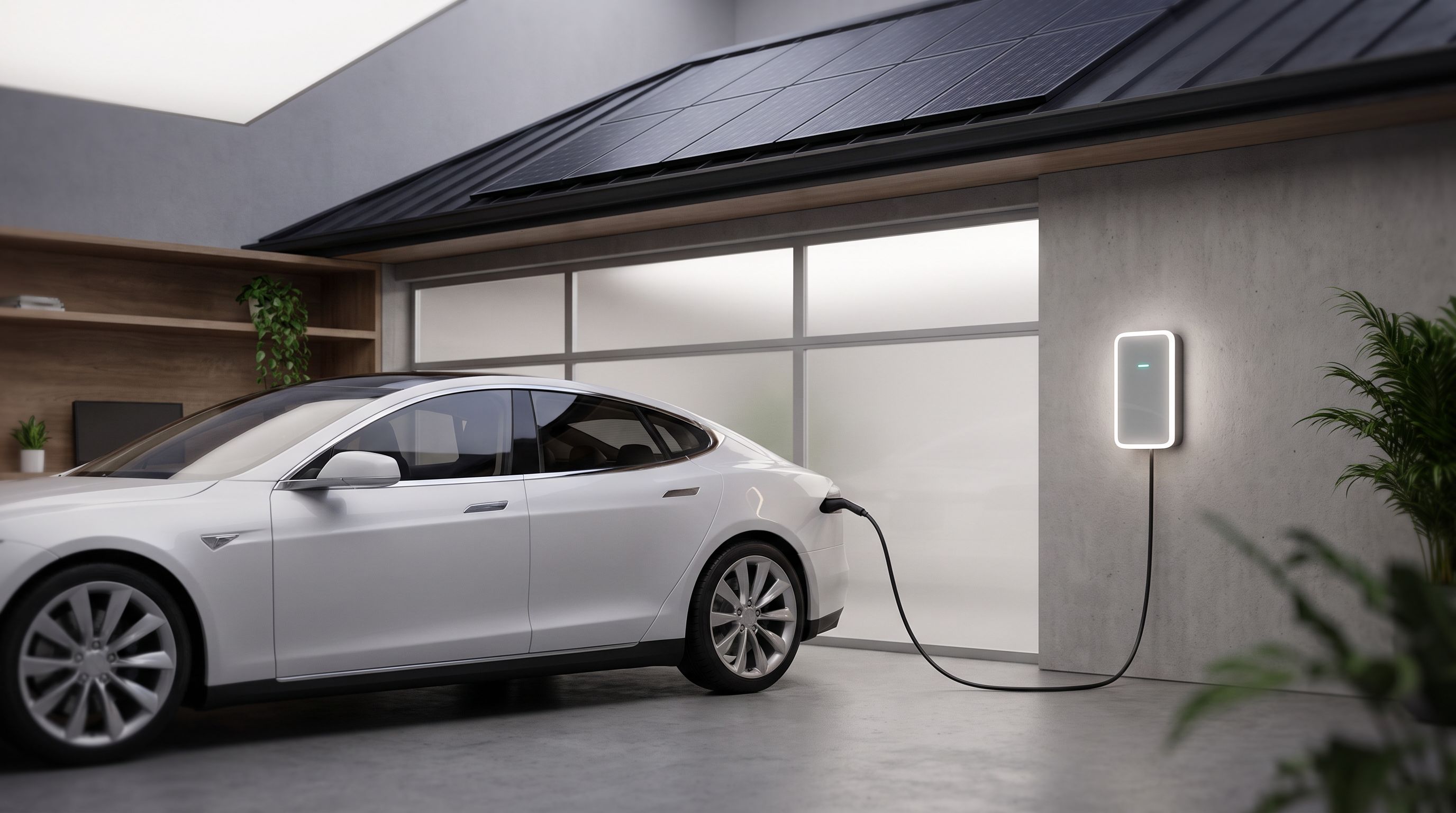
Your next EV charger might do a lot more than charge your car. In 2026, the home charging landscape is shifting from "dumb box on the wall" to a genuine energy management hub — one that can talk to your solar panels, feed power back to your house during an outage, and schedule every kilowatt-hour around time-of-use rates. The buzzwords are bidirectional charging, vehicle-to-grid (V2G), and smart energy integration. But how much of this is actually shippable today, and how much is still a conference-stage demo? Let's break it down.
What's Happening Now
The EV charging industry in 2026 is pivoting hard from raw charger quantity to real-world usability. According to multiple industry analyses, the key trends reshaping home charging this year fall into three buckets: smarter software, bidirectional power flow, and tighter integration with home energy ecosystems.
Smart charging is arguably the most mature of the three. Level 2 home chargers from companies like ChargePoint, Emporia, Wallbox, and Grizzl-E now routinely ship with Wi-Fi or Bluetooth connectivity, app-based scheduling, and energy monitoring. The practical benefit is straightforward: set your charger to draw power only during off-peak hours and you can shave meaningful dollars off your electricity bill every month. Some utilities even offer managed charging programs that reward you for letting the grid influence when your car charges.
Bidirectional charging — the ability for your EV's battery to send power back — is the bigger structural shift, but it's arriving in stages. Vehicle-to-home (V2H) lets your car act as a backup battery during outages. Vehicle-to-grid (V2G) goes further, letting you sell stored energy back to the utility. Ford's Intelligent Backup Power system for the F-150 Lightning was the most visible early mover, and in 2026 the ecosystem is expanding. Multiple automakers are building bidirectional capability into new models, and charger manufacturers are racing to support the hardware side. However, V2G at scale still depends on utility program availability and regulatory frameworks that vary wildly by state and country.
Home energy integration ties it all together. The vision is a single system where your solar panels, home battery (like a Tesla Powerwall), EV charger, and main panel all communicate — optimizing when to store, draw, or export energy. Products like the Tesla Wall Connector and the Wallbox Quasar 2 are explicitly designed with this ecosystem play in mind.
 Best for Tesla ecosystem · Tesla Wall Connector — Check price on Amazon →
The Real Players and Shipping Products
Not every product announced at CES or touted in press releases is something you can actually buy and install. Here's who is shipping real hardware in 2026:
| Brand / Product | Key Feature | Bidirectional? | Smart Scheduling | Approx. Power |
|---|---|---|---|---|
| Wallbox Quasar 2 | DC bidirectional charger for home V2H/V2G | Yes (DC) | Yes, app-based | Up to 11.5 kW |
| ChargePoint Home Flex | Adjustable amperage, wide compatibility | No | Yes, app-based | Up to 50A (12 kW) |
| Emporia EV Charger | Budget-friendly with energy monitoring | No | Yes, app-based | Up to 48A (11.5 kW) |
| Tesla Wall Connector | Tesla ecosystem integration, solar pairing | No (AC only) | Yes, Tesla app | Up to 48A (11.5 kW) |
 Most versatile smart charger · ChargePoint Home Flex Level 2 EV Charger — Check price on Amazon →
The Wallbox Quasar 2 is the standout for anyone chasing true bidirectional capability at home. It's a DC charger — meaning the conversion happens in the unit, not the car — and it supports CHAdeMO and CCS depending on the variant. Availability and compatible vehicles remain the catch: you need a car that supports bidirectional DC charging, and in practice that still limits you to select Nissan, Hyundai, Kia, and Ford models depending on market.
The ChargePoint Home Flex remains one of the most versatile Level 2 chargers on the market, with adjustable amperage (16A to 50A) that makes it compatible with a wide range of electrical panels. It's not bidirectional, but its app-based scheduling and broad vehicle compatibility make it a workhorse.
For budget-conscious buyers, the Emporia EV Charger pairs solid Level 2 charging with Emporia's energy monitoring ecosystem — useful if you already use their Vue energy monitor to track whole-home consumption.
And the Tesla Wall Connector, while locked into Tesla's ecosystem for its smartest features, is a natural fit for Tesla owners who also have Solar Roof or Powerwall installations. Tesla has hinted at broader bidirectional support, but as of mid-2026, the Wall Connector itself handles AC charging only.
What It Means If You're Shopping Today
If you're buying a home EV charger right now, the honest advice is: buy for today's needs, but wire for tomorrow's potential.
That means installing a 60-amp circuit even if your current charger only draws 40 amps, and choosing a charger with smart connectivity (app scheduling, energy monitoring) rather than a basic hardwired unit. The price difference between a "dumb" charger and a smart one has narrowed significantly — often less than $100 — and the energy savings from off-peak scheduling alone can recoup that in months.
Bidirectional charging is compelling but still early for most households. The Wallbox Quasar 2 is genuinely shipping and functional, but the total cost (unit, installation, compatible vehicle, and potentially a utility interconnection agreement) is substantially higher than a standard Level 2 setup. Unless you live in an area with frequent outages, have solar, or your utility offers a V2G incentive program, it's reasonable to wait for the ecosystem to mature and prices to drop.
One practical note: plug-in (NEMA 14-50) chargers offer more flexibility than hardwired units. If you move or upgrade, you unplug and go. Many of the top smart chargers, including the ChargePoint Home Flex and Emporia EV Charger, support both plug-in and hardwired installation.
What to Watch Next
Several developments could accelerate the shift in the next 12–18 months:
- CCS bidirectional standardization. The industry is coalescing around CCS as the bidirectional standard (replacing the aging CHAdeMO protocol for V2H/V2G). Once CCS-based bidirectional chargers and vehicles reach critical mass, the addressable market for home V2G expands dramatically.
- Utility V2G programs. Pilot programs in California, Texas, and several European markets are testing real financial incentives for car owners who export stored energy back to the grid. If these scale, the economics of a bidirectional charger improve overnight.
- BYD's Flash Charging arriving in Europe is a commercial/public infrastructure story, but it signals that ultra-high-speed DC charging architectures are advancing rapidly — technology that eventually trickles into home-scale products.
- Solar + EV bundling. Expect more installers to offer packaged deals: solar panels, home battery, and EV charger as a single managed system. Tesla is already positioning for this, and competitors like Enphase and SolarEdge are building EV charger integrations into their energy platforms.
The bottom line: 2026 is the year home EV charging shifts from a commodity hardware purchase to an energy strategy decision. The charger you bolt to your garage wall is increasingly a node in a larger home energy network — and the smarter that node is, the more money and resilience it can deliver over time.
FAQ
Do I need a bidirectional charger to charge my EV at home? No. A standard Level 2 smart charger (like the ChargePoint Home Flex or Emporia EV Charger) handles everyday home charging perfectly well. Bidirectional chargers add V2H/V2G capability but are not required for basic charging.
Which EVs support bidirectional charging in 2026? The list is growing but still limited. The Ford F-150 Lightning, Nissan Leaf (CHAdeMO), Hyundai Ioniq 5, Kia EV9, and select other models support some form of bidirectional power flow, though compatibility varies by charger and market. Check your specific vehicle's specs before investing.
Is vehicle-to-grid (V2G) available in my area? V2G availability depends on your utility and local regulations. Several pilot programs exist in California, the Northeast U.S., the UK, and the Netherlands, but widespread commercial V2G programs are still rolling out. Contact your utility to ask about current or upcoming programs.
How much does a smart home EV charger cost to install? The charger itself typically ranges from roughly $400 to $700 for a quality Level 2 smart unit. Installation costs vary widely — from $200 for a simple plug-in setup to $1,500+ if your panel needs an upgrade or a new circuit run. Bidirectional DC units like the Wallbox Quasar 2 carry a higher upfront cost for both hardware and installation.
Our picks
ChargePoint HomeFlex Level 2 EV Charger, Hardwired NACS Charging Station
Adjustable 16-50A output, app scheduling, and broad vehicle compatibility in one unit.

Wallbox Pulsar Plus Level 2 Ev Charger 40A, Electric Car Charger EVSE J1772
Shipping DC bidirectional charger supporting V2H and V2G for compatible vehicles.

EMPORIA Level 2 EV Charger w/ J1772 Connector — 48 Amp, 240V WiFi Enabled Electric Vehicle Charging Station, 25ft Cable, Hardwired with Whip, White
Affordable Level 2 charging with built-in energy monitoring and app control.
Tesla Universal Wall Connector - Electric Vehicle (EV) NACS / J1772 Charger with Dual Plug Type - Compatible for All North American EVs - Level 2 - up to 48A with 24' Cable
Seamless integration with Tesla Solar and Powerwall for whole-home energy management.
Get the best tech deals in your inbox
Join the BytePlaza newsletter for hand-picked gadget deals and new buying guides. No spam, unsubscribe anytime.
Related reads
Why Home EV Charging Is Getting Smarter in 2026
Bidirectional charging, V2G tech, and smart Level 2 chargers are reshaping home EV charging in 2026. Here's what's real and what to buy today.
Why Home EV Charging Is Getting Smarter in 2026
Bidirectional charging, smart scheduling, and V2G are reshaping home EV charging in 2026. Here's what's real, who's shipping, and what it means.
Home EV Charging in 2026, Explained
Bidirectional charging, smart load management and NACS have reshaped home EV charging in 2026. Here's what's actually shipping — and what it means for buyers.