Home EV Charging in 2026, Explained
Bidirectional charging, smart load management and NACS have reshaped home EV charging in 2026. Here's what's actually shipping — and what it means for buyers.
Reader-supported: we may earn a commission from links on this page, at no extra cost to you. It never affects our picks. Learn more.
Your garage is quietly becoming the most interesting part of the grid
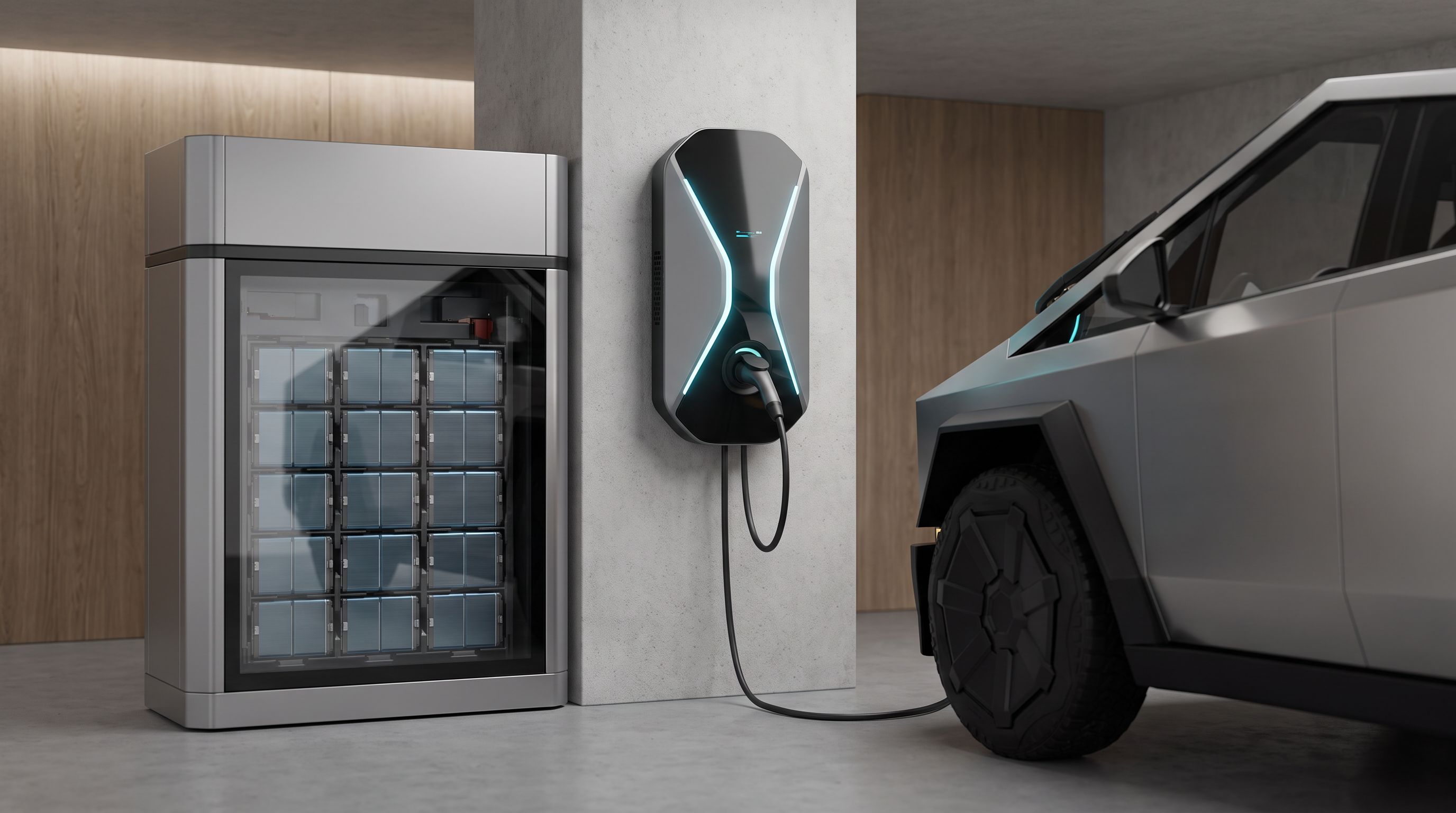
For a decade, home EV charging was boring in the best way: a box on the wall, a cable, a few amps of configuration, done. In 2026 that box is being asked to do considerably more — talk to your utility, dodge peak rates, share a circuit with a heat pump, and in a growing number of cases push electricity back out of the car into your house.
That shift is real, but it's also uneven. The trend coverage heading into 2026 is dominated by headlines about megawatt charging, five-minute top-ups and wireless pads — things that are mostly happening on highways, in labs, or in a handful of luxury homes. The stuff that actually changes your electricity bill this year is less cinematic: smarter scheduling, load management, and bidirectional hardware that is finally shipping instead of being demoed.
Here's an honest read on where home charging actually stands, who's shipping what, and how that should shape a purchase you make today.
What's actually happening now
Three structural changes are converging.
The connector war ended. NACS (the Tesla-derived plug, standardized as SAE J3400) has been adopted by essentially every major automaker selling in North America, and 2025–2026 model-year vehicles from Ford, GM, Hyundai, Kia, Rivian, Volvo and others have begun shipping with native NACS ports. For home buyers this is mildly disruptive: a J1772 charger bought three years ago still works with an adapter, and new NACS-native home units are now widely sold. Adapters, in both directions, have become a permanent part of the EV glovebox.
Charging got scheduled, not just metered. Utility time-of-use rates and managed-charging programs have made "when" more valuable than "how fast." Most mainstream home chargers now support scheduling, and several integrate directly with utility rate plans or demand-response programs. The practical consequence: a 48A charger and a 32A charger produce nearly identical outcomes for a typical commuter who plugs in overnight. Speed at home is mostly a solved problem; timing is not.
Bidirectional charging left the pilot phase. This is the genuinely new capability. Vehicle-to-home (V2H) lets your car act as a backup battery during an outage; vehicle-to-load (V2L) lets it power tools and appliances from an outlet; vehicle-to-grid (V2G) sells energy back. V2L is common and cheap — Hyundai Ioniq 5, Kia EV6/EV9, Ford F-150 Lightning and others include it. V2H is the expensive, permitted, electrician-required version, and it's shipping in limited but real volume.
The real players and what's actually shipping
Ford has been the most visible: the F-150 Lightning paired with its Home Integration System and an inverter package has been marketed for whole-home backup since launch, and Ford has publicly moved toward broader bidirectional support across its lineup. GM has pushed the same idea harder under its GM Energy banner, with a PowerShift charger plus V2H enablement kit sold for Silverado EV, Blazer EV, Equinox EV and Cadillac Lyriq. Both require a transfer-switch-class installation — this is a panel-level project, not a plug-in purchase.
Tesla's Powerwall 3 remains the most mature home-battery-plus-solar story, and Tesla has said its newer vehicles are built with bidirectional-capable hardware, with Cybertruck offering Powershare for home backup. Nissan, the original V2G evangelist with the LEAF and CHAdeMO, has largely been overtaken by the CCS/NACS world.
On the dedicated hardware side, Wallbox has been selling the Quasar line as a bidirectional DC home charger, and companies like Emporia, Enphase, SolarEdge and dcbel are pushing "home energy hub" devices that fold EV charging, solar and storage into one controller rather than three apps.
For most people, though, the shipping reality is a good AC smart charger. The ChargePoint Home Flex is still the default recommendation in most reviews thanks to adjustable amperage and a mature app. The Wallbox Pulsar Plus is the compact, well-reviewed alternative with power sharing between two units. Emporia's Level 2 charger — now available in a NACS version — is the value play that leans hardest into energy monitoring and circuit-level load management, which matters if your panel is already crowded. And a Lectron Tesla to J1772 adapter remains cheap insurance for households straddling both plug standards.
 Plug-standard insurance · Lectron Tesla to J1772 Adapter — Check price on Amazon →
 Compact app-controlled option · Wallbox Pulsar Plus Level 2 EV Charger — Check price on Amazon →
 Best-known smart charger · ChargePoint Home Flex — Check price on Amazon →
| Capability | What it does | Shipping today? | Typical install |
|---|---|---|---|
| Smart AC charging (L2) | Scheduling, rate-aware charging, monitoring | Yes, mainstream | 240V circuit, often DIY-adjacent |
| Load management | Shares a circuit with other big loads | Yes, on select chargers | Electrician, sometimes panel work |
| V2L (vehicle-to-load) | Outlets on the car power tools/appliances | Yes, built into many EVs | None |
| V2H (vehicle-to-home) | Car backs up the house during outages | Yes, limited models + kits | Major: inverter, transfer switch, permits |
| V2G (vehicle-to-grid) | Sell energy back to the utility | Pilot programs only | Utility-dependent |
| Wireless home pads | Park-and-charge, no cable | Niche/early, luxury builds | Specialist install |
What it means if you're shopping today
Be blunt with yourself about which of those rows you'll actually use.
If you're buying a charger in 2026, the decision tree is short. Confirm what your panel can support before you shop amperage — a 48A charger on a 60A circuit is pointless if your service can't spare it, and a 32A unit on a shared circuit with load management is often the smarter, cheaper answer. Buy a hardwired unit if your jurisdiction or installer prefers it; buy a plug-in NEMA 14-50 unit if you rent or expect to move.
On connectors, buy for the car you'll own next, not just the one in the driveway. A NACS-native charger plus a J1772 adapter, or a J1772 charger plus a NACS adapter, both work — just budget for the adapter rather than discovering it later.
On bidirectional: don't buy a car solely for V2H unless you've priced the full installation with a local electrician, because the enabling hardware and panel work typically dwarf the charger cost. V2L, by contrast, is free capability you should check for on any spec sheet. And if you have solar or are adding a battery, look seriously at the integrated energy-hub products — running three disconnected apps for solar, storage and charging is the most common real-world complaint in owner reviews.
What to watch next
Megawatt-class charging — BYD's flash-charging rollout in Europe, and the MCS standard taking shape for trucks — is a highway story, not a home one. Your 240V circuit isn't going to deliver 1,000 kW, ever. But it matters indirectly: as public charging gets faster and more reliable, the pressure to over-spec your home charger drops further.
Wireless home charging pads continue to appear in high-end custom builds and at CES, and robotic charging arms remain the perennial showfloor crowd-pleaser. Treat both as watch-items, not purchase-items.
The thing to actually track is V2G compensation. Bidirectional hardware is useless without a utility willing to pay you for the electricity. Where those programs land in 2026 and 2027 will decide whether your car becomes a grid asset or just a very expensive backup generator.
FAQ
Is a 48A charger worth it over 32A? For most overnight charging, no. The difference matters mainly for large-battery trucks, multi-EV households, or short mid-day top-ups — and it demands a bigger circuit.
Do I need a NACS charger now? Only if your car has a NACS port and you'd rather skip an adapter. Adapters work reliably in both directions and are far cheaper than replacing hardware.
Can any EV power my house? No. V2L (outlets on the car) is common; true V2H whole-home backup requires a compatible vehicle plus dedicated inverter/transfer hardware, currently from a short list including Ford, GM and Tesla.
Is wireless home charging buyable yet? Only in niche, specialist installations. It isn't a mainstream option in 2026.
Our picks

EMPORIA Level 2 EV Charger - NEMA 14-50 EVSE w/NACS, Compatible with Tesla - 48 amp EV Charger Level 2, 240v Electric Vehicle Charging Station, UL/Energy Star, 25ft Cable, White
Energy-monitoring smart charger with load management and a native NACS connector for Tesla-standard ports.
ChargePoint HomeFlex Level 2 EV Charger, Hardwired NACS Charging Station
Adjustable amperage up to 50A, scheduling and utility rate integration through a mature app ecosystem.
Wallbox Pulsar Plus Level 2 Ev Charger 48A, Electric Car Charger EVSE J1772
Small-footprint 40A/48A charger with scheduling, power sharing and a well-reviewed mobile app.
Lectron [Only for J1772 EVs Tesla to J1772 Charging Adapter, Max 48 Amp & 250V - Compatible with Tesla High Powered Connectors, Destination Chargers, and Mobile Connectors (Black)
Bridges the NACS/J1772 gap so a charger choice today isn't wasted on tomorrow's car.
Get the best tech deals in your inbox
Join the BytePlaza newsletter for hand-picked gadget deals and new buying guides. No spam, unsubscribe anytime.
Related reads
Home EV Charging in 2026, Explained: V2H and Smart Chargers
Bidirectional charging, smart load management and solar-aware Level 2 chargers are reshaping home EV charging in 2026. Here's what actually ships today.

Ambient Computing 2026: Why Sensors Beat Screens
Ambient computing in 2026 explained: presence sensors, always-listening hubs, and local AI. What actually works today, what to skip, and the gear to start with.

The Robot Vacuum Arms Race, Explained
Mopping, self-emptying docks, stair-climbing legs and literal robot arms: how home-cleaning robots got so capable, and what's actually worth buying now.