Home EV Charging in 2026, Explained: V2H and Smart Chargers
Bidirectional charging, smart load management and solar-aware Level 2 chargers are reshaping home EV charging in 2026. Here's what actually ships today.
Reader-supported: we may earn a commission from links on this page, at no extra cost to you. It never affects our picks. Learn more.
Your garage is quietly becoming the most interesting part of the grid
For most of the last decade, a home EV charger was a boring appliance: a box on a wall that pushed electrons into a car overnight. The only real decision was how many amps you could afford to run to the garage.
That framing is breaking down. The headline news in EV charging right now is all about speed — BYD's Flash Charging platform, which the company says peaks at up to 1,000 kW (and which BYD has been promoting with claims of roughly 400 km of range in five minutes), has started appearing in Europe, and CES 2026 was full of robotic charging arms that plug themselves in. Those are genuinely impressive demos. They are also almost entirely irrelevant to your driveway.
What is relevant at home is quieter and more useful: chargers that talk to your utility, your solar array, your panel, and — increasingly — push power back out of the car. That last one, bidirectional charging, is the shift worth understanding before you spend money.
What's actually happening now
Three things are converging.
One: the charger became an energy device, not a plug. Modern Level 2 units ship with Wi-Fi, scheduling, and open protocols (OCPP in many cases) so they can respond to time-of-use rates or utility demand-response programs. Utilities in several US states now offer rebates or bill credits specifically for enrolling a connected charger. Practically, that means a "dumb" 40A charger and a "smart" 40A charger deliver identical electrons but very different annual bills.
Two: load management stopped being a luxury. The real constraint on home charging is rarely the car — it's the panel. A 48A charger needs a 60A circuit, which many older 100A or 150A services simply can't spare alongside an electric dryer, heat pump and oven. The industry's answer has been dynamic load management: the charger (or a paired current sensor) watches total household draw and throttles the car in real time. Emporia built its reputation on exactly this pairing; Tesla's Wall Connector handles a related problem with power sharing across multiple units on one circuit. These features let people add charging without a service upgrade that can run into four figures.
Three: bidirectional charging is shipping — narrowly. Vehicle-to-load (V2L), where the car acts as a giant power bank with household outlets, is the easy, already-common version: Hyundai Ioniq 5, Kia EV6 and EV9, Ford F-150 Lightning and several others offer it. Vehicle-to-home (V2H), where the car backs up your actual breaker panel, is real but requires a specific vehicle, a specific bidirectional unit, and a transfer switch or home integration system. Ford's Intelligent Backup Power with the Home Integration System and the F-150 Lightning was the first mainstream US example. GM has been rolling out V2H capability across Ultium-based vehicles with its GM Energy equipment, and Tesla enabled bidirectional hardware on the Cybertruck with Powershare. Vehicle-to-grid (V2G) — selling energy back — remains mostly pilots, utility programs and school-bus fleets, not a consumer product you buy off a shelf.
The real players and what's genuinely shipping
The home charging market now splits into three tiers that are easy to confuse.
| Tier | What it does | Representative shipping hardware | Who it's for |
|---|---|---|---|
| Smart Level 2 (AC) | 32–48A charging, app scheduling, utility programs, load management | ChargePoint Home Flex, Emporia Level 2, Wallbox Pulsar Plus, Tesla Wall Connector Gen 3 | Almost everyone |
| V2L (from the car) | Car's own outlets power tools, appliances, campsites | Built into Ioniq 5, EV6, EV9, F-150 Lightning, Silverado EV | People who want occasional backup, no install |
| V2H / bidirectional | Car backs up the house during an outage | Ford Charge Station Pro + Home Integration System, GM Energy V2H Bundle, Tesla Powershare (Cybertruck), Wallbox Quasar 2 (CHAdeMO/CCS depending on market) | Outage-prone homes with a compatible EV |
 Best for multi-car households · Tesla Wall Connector (Gen 3) — Check price on Amazon →
 Compact pick for tight garages · Wallbox Pulsar Plus Level 2 EV Charger — Check price on Amazon →
A few things stand out about that table.
First, every V2H option is tied to the automaker's ecosystem. There is no universal bidirectional wallbox you can buy and expect to work with any EV, because the handshake (CCS DC bidirectional, ISO 15118 support, battery warranty terms) is vehicle-specific. Wallbox's Quasar line is the closest thing to an independent product, and even that is constrained by connector and vehicle compatibility.
Second, the price gap is stark. A well-regarded smart Level 2 charger is a few hundred dollars plus install. A full V2H setup — bidirectional charger, inverter/controller, transfer equipment, electrician — is a home-energy project closer in scale to installing a battery like a Tesla Powerwall or Enphase IQ Battery. Several reviewers and installers have noted the economics only make sense if you have frequent outages or an unusually favorable utility rate structure.
Third, the "wireless charging pad in the garage" story that keeps appearing in trend roundups is still a high-end/custom-home and pilot-project phenomenon. WiTricity and partners have demonstrated it; Porsche has discussed inductive charging for the Cayenne Electric. It is not a mainstream retail purchase in 2026.
What it means if you're shopping today
The honest guidance is unglamorous: buy a good smart Level 2 charger now, and treat V2H as a separate, later decision tied to your next car.
Specifically, three criteria matter more than brand loyalty.
Amperage headroom with the ability to dial down. The ChargePoint Home Flex is popular precisely because its amperage is adjustable, so the same unit works on a 20A circuit in an apartment garage and a 60A circuit later. That flexibility is worth more than peak numbers you can't actually use.
Load management, if your panel is tight. The Emporia Level 2 charger's selling point is its integration with Emporia's energy monitoring, letting it throttle when the dryer and oven fire up. If an electrician has told you a service upgrade is needed, this is the feature that can avoid it.
Physical fit and cable length. The Wallbox Pulsar Plus is notable for how small it is, which matters more than spec sheets suggest in a crowded garage. And for households running two EVs on one circuit, the Tesla Wall Connector's power-sharing behavior is a practical answer — it works with non-Tesla EVs using the appropriate adapter, though NACS-native vehicles are the cleanest fit.
What you should not do is pay a large premium for a charger marketed as "V2G ready." Grid export for residential customers depends on utility tariffs, interconnection rules and vehicle firmware that don't exist uniformly yet. Hardware readiness doesn't guarantee a program you can enroll in.
What to watch next
NACS standardization. Nearly every major automaker has committed to the connector, and 2026 model-year vehicles are shipping with native NACS ports. Home chargers are following, but adapters remain the practical bridge.
ISO 15118 "Plug & Charge" and automatic authentication spreading from public DC fast charging into home and workplace contexts — mostly a convenience and billing story.
Bidirectional going from automaker-bundled to standardized. The signal to watch is whether a third-party bidirectional wallbox earns broad multi-brand vehicle certification. That is the moment V2H becomes a normal purchase.
Megawatt charging staying where it belongs. BYD-style ultra-fast charging and the truck-focused Megawatt Charging System are infrastructure stories. They will change road trips. They will not change your garage, where 7–11 kW overnight remains plenty for almost every driver.
FAQ
Do I need a 48A charger? Usually not. Most EVs charge overnight comfortably at 32–40A, and many vehicles' onboard AC chargers cap below 48A anyway. Panel capacity, not charger ceiling, is the real limit.
Can I buy a bidirectional charger for any EV? No. V2H today is vehicle-specific — Ford's Charge Station Pro with the Home Integration System, GM Energy's V2H hardware, Tesla Powershare on Cybertruck. Check your exact model and trim before budgeting.
Is V2L the same as V2H? No. V2L means outlets on or in the car for appliances and tools. V2H means the car feeding your breaker panel through dedicated equipment. V2L is included on many EVs at no extra cost; V2H is an installation project.
Will wireless home charging be worth waiting for? Based on current announcements, it's still limited to pilots and premium custom installations. Buying a conventional Level 2 unit now doesn't lock you out of anything.
Does a smart charger actually save money? It can, if your utility has time-of-use rates or a managed-charging rebate program. The savings come from scheduling and enrollment, not from the hardware itself.
Our picks
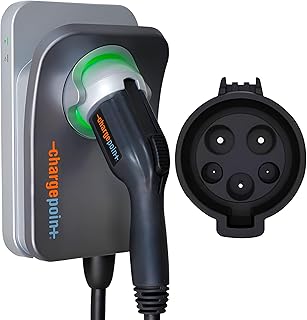
ChargePoint HomeFlex Level 2 EV Fast Charger, J1772, Smart, Hardwired, 50A
Adjustable amperage up to 50A, Wi-Fi scheduling, and plug-in or hardwired install options.
Emporia Level 2 EV Charger (48A)
48A Energy Star charger that pairs with Emporia's energy monitor for whole-home load management.
Wallbox Pulsar Plus Level 2 Ev Charger 48A, Electric Car Charger EVSE J1772
One of the smallest 40A/48A units around, with app scheduling and power-sharing support.
Tesla Universal Wall Connector - Electric Vehicle (EV) NACS / J1772 Charger with Dual Plug Type - Compatible for All North American EVs - Level 2 - up to 48A with 24' Cable
Wi-Fi connected, supports power sharing across multiple units, and works with non-Tesla EVs via adapter.
Get the best tech deals in your inbox
Join the BytePlaza newsletter for hand-picked gadget deals and new buying guides. No spam, unsubscribe anytime.
Related reads

Ambient Computing 2026: Why Sensors Beat Screens
Ambient computing in 2026 explained: presence sensors, always-listening hubs, and local AI. What actually works today, what to skip, and the gear to start with.
Smart Pet Tech in 2026, Explained: Robots, Feeders, AI Collars
Robot companions, AI health collars and wet-food feeders dominated CES 2026. Here's what's actually shipping, what's still a concept, and what to buy now.

On-Device AI in 2026: Why the Cloud Is Losing Ground
On-device AI is reshaping phones, PCs and wearables in 2026. Here's what actually runs locally, which shipping gadgets do it, and what it means for buyers now.