Whole Home Air Purifier vs Room Unit in 2026: Which Setup Wins?
Whole home air purifier vs room air purifier — we compare coverage, cost, filtration, and maintenance so you can pick the right setup for cleaner indoor air in 2026.
Reader-supported: we may earn a commission from links on this page, at no extra cost to you. It never affects our picks. Learn more.
The Core Question: One System or Many?
If you've ever priced out putting a portable HEPA purifier in every bedroom, the home office, and the living room, you've probably wondered whether a single whole-home unit mounted to your furnace would be simpler — and cheaper. The answer depends on your home's layout, your HVAC system, your air-quality goals, and how much maintenance you're willing to handle. Below, we break down every factor that matters so you can make the right call.
How Each Type Works
Whole-Home (HVAC-Integrated) Purifiers
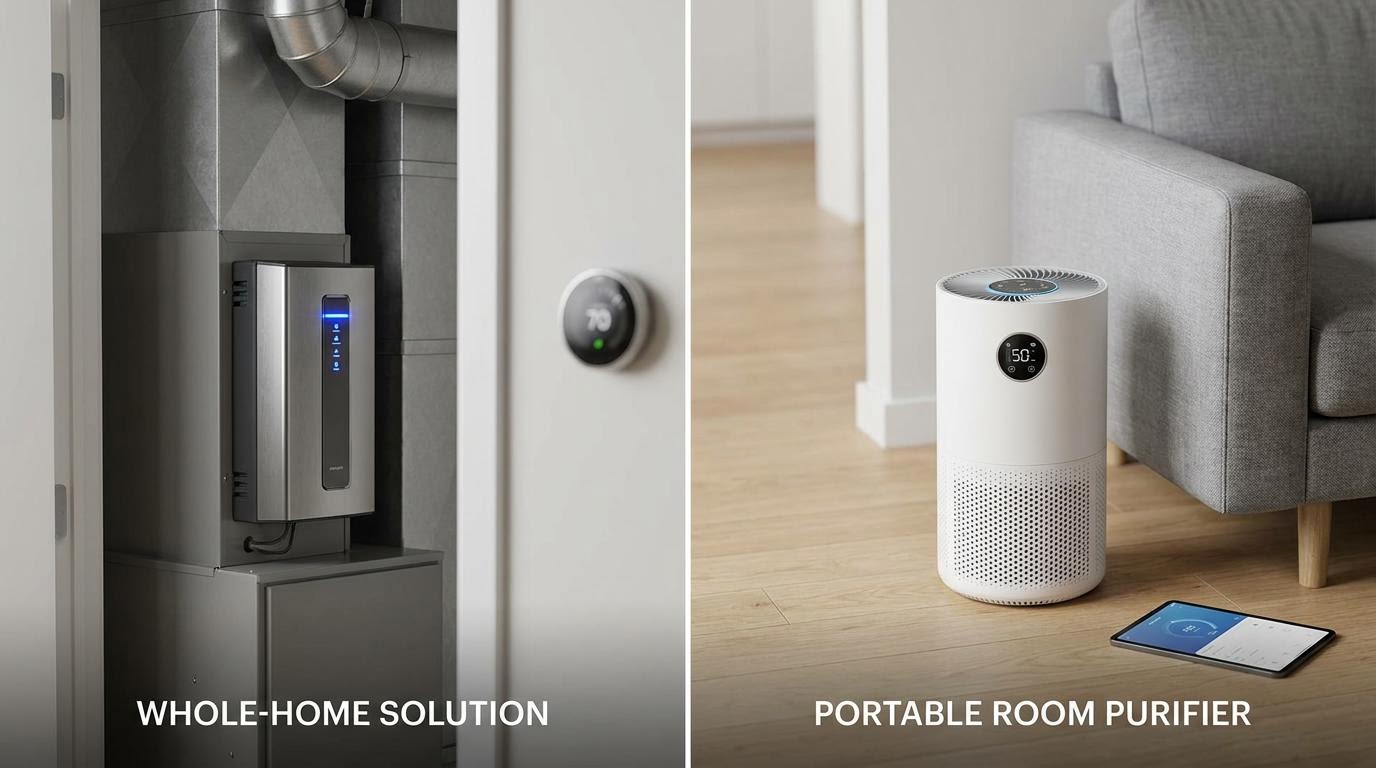
A whole-home air purifier installs directly into your ductwork, usually between the return-air duct and the furnace or air handler. Every time the blower runs, air from every room passes through the unit's media filter (typically MERV 11–16) or, in some models, a UV-C or photocatalytic stage. The cleaned air is then distributed back through the supply ducts.
Popular examples include the AprilAire 2410 (MERV 13 media) and the Honeywell F100 Media Air Cleaner, both designed for standard residential HVAC systems.
 Best whole-home value · Honeywell F100 Media Air Cleaner — Check price on Amazon →
Portable Room Purifiers
A room air purifier sits in a single space and draws air through its own fan and filter stack — usually a pre-filter, activated carbon layer, and True HEPA media rated to capture 99.97 % of particles down to 0.3 microns. Units like the Coway Airmega 250, the Coway Mighty 2, and the Blueair Blue Pure 311i+ Auto are standalone; plug them in, turn them on, done.
 Best smart room purifier · Blueair Blue Pure 311i+ Auto — Check price on Amazon →
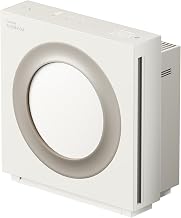 Best budget room purifier · Coway Mighty 2 Air Purifier — Check price on Amazon →
 Best room purifier overall · Coway Airmega 250 Air Purifier — Check price on Amazon →
As Wirecutter's 2026 guide notes, one purifier per room is the most effective portable strategy because purifiers work best in a contiguous space.
Head-to-Head Comparison
| Factor | Whole-Home (Duct-Mounted) | Portable Room Unit |
|---|---|---|
| Coverage | Entire home via ductwork | Single room (typically 150–550 sq ft per unit) |
| Filtration standard | MERV 11–16 media; some add UV-C | True HEPA (99.97 % @ 0.3 µm) common |
| Gas / odor removal | Limited unless carbon stage added | Many include activated-carbon layer |
| Installation | Professional HVAC install required | Plug-and-play, no tools |
| Noise | Silent in living spaces (blower noise at furnace) | 20–55 dB depending on fan speed |
| Maintenance | Filter swap every 6–12 months | Filter swap every 6–12 months; pre-filter cleaning monthly |
| Upfront cost | Unit + professional installation | Per-unit cost × number of rooms |
| Operating cost | Negligible extra electricity; furnace fan must run | 30–70 W per unit; adds up with multiple rooms |
| Smart features | Rarely; relies on thermostat schedule | AQI sensors, auto mode, app control common |
| Best for | Whole-home baseline, allergen reduction, families with central HVAC | Targeted deep cleaning, renters, homes without ducts |
When a Whole-Home Purifier Makes More Sense
You have central forced-air HVAC. Without ducts, a whole-home unit simply isn't an option. But if you do have them, a single install covers every room the ductwork reaches.
You want set-and-forget simplicity. No cords on the floor, no units to move, no five different filter-replacement schedules. A media filter like the one in the AprilAire 2410 typically lasts 6–12 months before it needs swapping.
You're focused on allergens and particulates. MERV 13 media captures pollen, dust mites, mold spores, and most fine particulates effectively. For general allergen reduction throughout a home, this is hard to beat.
The math tips in your favor. If you'd need four or five portables to cover every occupied room, the combined purchase price and ongoing filter costs can exceed a single whole-home install within a year or two.
The Catch
Whole-home units rely on the HVAC blower running. In mild weather when you're not heating or cooling, you either run the fan continuously (increasing electricity use) or accept that the air isn't being filtered. A MERV 13 media filter also won't match True HEPA efficiency for the smallest particles, and most duct-mounted units lack an activated-carbon stage, so they do little for volatile organic compounds (VOCs) or cooking odors.
When Stacking Portables Is the Better Move
You rent or lack ductwork. No ducts, no dice for whole-home. A portable like the Coway Mighty 2 plugs in anywhere and delivers True HEPA filtration at a very accessible price point.
You need True HEPA or carbon filtration. If wildfire smoke, VOCs, or strong odors are your primary concern, a quality room purifier with a thick carbon bed — like the Blueair Blue Pure 311i+ Auto — will outperform most duct-mounted media filters on gas-phase pollutants.
You only need to treat one or two rooms. If you mainly care about your bedroom air quality at night, a single quiet purifier is far cheaper and simpler than an HVAC install.
You want real-time feedback. Many 2026 portables include onboard air-quality sensors and auto modes that ramp the fan in response to detected particles. The Coway Airmega 250 and Blueair Blue Pure 311i+ Auto both offer this. Whole-home units rarely provide that kind of visibility.
The Hybrid Approach
Many air-quality experts recommend combining both: a whole-home MERV 13 filter — like the Honeywell F100 — handles baseline dust and allergen control across every room, while a portable HEPA unit in the bedroom or home office provides an extra layer of deep filtration where you spend the most time. This hybrid strategy keeps costs reasonable while maximizing air quality where it matters most.
Maintenance Reality Check
Both approaches require filter replacements, but the logistics differ:
- Whole-home: One filter, swapped once or twice a year. Filters are bulkier and usually ordered online.
- Portables: Each unit has its own replacement cycle. If you run three portables, that's three sets of filters to track. Pre-filters may also need monthly vacuuming.
Neither option is truly "maintenance-free," but a single whole-home filter is objectively less to manage than a fleet of room units.
FAQ
Does a whole-home air purifier replace room purifiers entirely?
It depends on your goals. A MERV 13 whole-home filter handles most allergens and large particulates effectively. However, it won't match True HEPA efficiency for ultrafine particles or remove VOCs and odors the way a carbon-equipped portable can. For most allergy sufferers, a whole-home unit alone is sufficient; for smoke or chemical sensitivity, adding a room unit in key spaces is worthwhile.
Can I install a whole-home purifier myself?
Some media-filter cabinets are marketed as DIY-friendly, but cutting into ductwork and ensuring a proper seal typically requires HVAC experience. Improper installation can reduce airflow and strain your system. Professional installation is recommended for most homeowners.
How many room purifiers do I need to match whole-home coverage?
As a rough guide, one purifier per occupied room with a closed door. Open-concept spaces may share a single higher-CADR unit, but Wirecutter's 2026 testing confirms purifiers are most effective in a single contiguous space. For a typical three-bedroom home, expect to need three to four portables.
Do whole-home purifiers increase energy costs?
The purifier itself uses no electricity — it's passive media. However, if you run the HVAC fan continuously to keep filtering in mild weather, you'll see a modest increase in your electricity bill. A higher-MERV filter also adds slight static pressure, which can marginally increase blower energy use.
Which option is better for wildfire smoke?
Portable HEPA purifiers with activated-carbon filters are generally more effective for smoke events because they combine fine-particle capture with gas-phase filtration. A whole-home MERV 13 filter will reduce smoke particulates but won't address the gaseous compounds that cause the smell and health irritation.
Our picks
AprilAire 2410 Whole-Home Air Purifier
MERV 13 media filter covers your entire duct system with minimal airflow resistance.
Honeywell MERV 11 Media Air Cleaner - 16x25-4 inch F100F1625
Affordable HVAC-integrated cleaner with easy filter changes and solid particle capture.
Coway Air Purifiers for Home Large Room Up to 1,860 ft², Washable Pre-Filter and HEPA Filter for Smoke, Allergies, Pet Dander, Odor, AQI, App Control, Smart, 3yr Warranty, Airmega 250S Wifi
True HEPA with strong CADR, quiet operation, and a compact modern design.
Coway Airmega Mighty2 Air Purifier, Next Gen of AP-1512HH, for Large Room & Home Cleans up to 1,800 ft², HEPA and Active Carbon for Allergies, Smoke, Dust, Pets & Mold, AP-1512N(BG)
Excellent value with True HEPA filtration for small-to-medium rooms.
BLUEAIR Air Purifiers for Home up to 2,107 Ft², Blue 311i Max
Auto-adjusting fan speed, real-time AQI monitoring, and whisper-quiet low setting.
Get the best tech deals in your inbox
Join the BytePlaza newsletter for hand-picked gadget deals and new buying guides. No spam, unsubscribe anytime.
Related reads
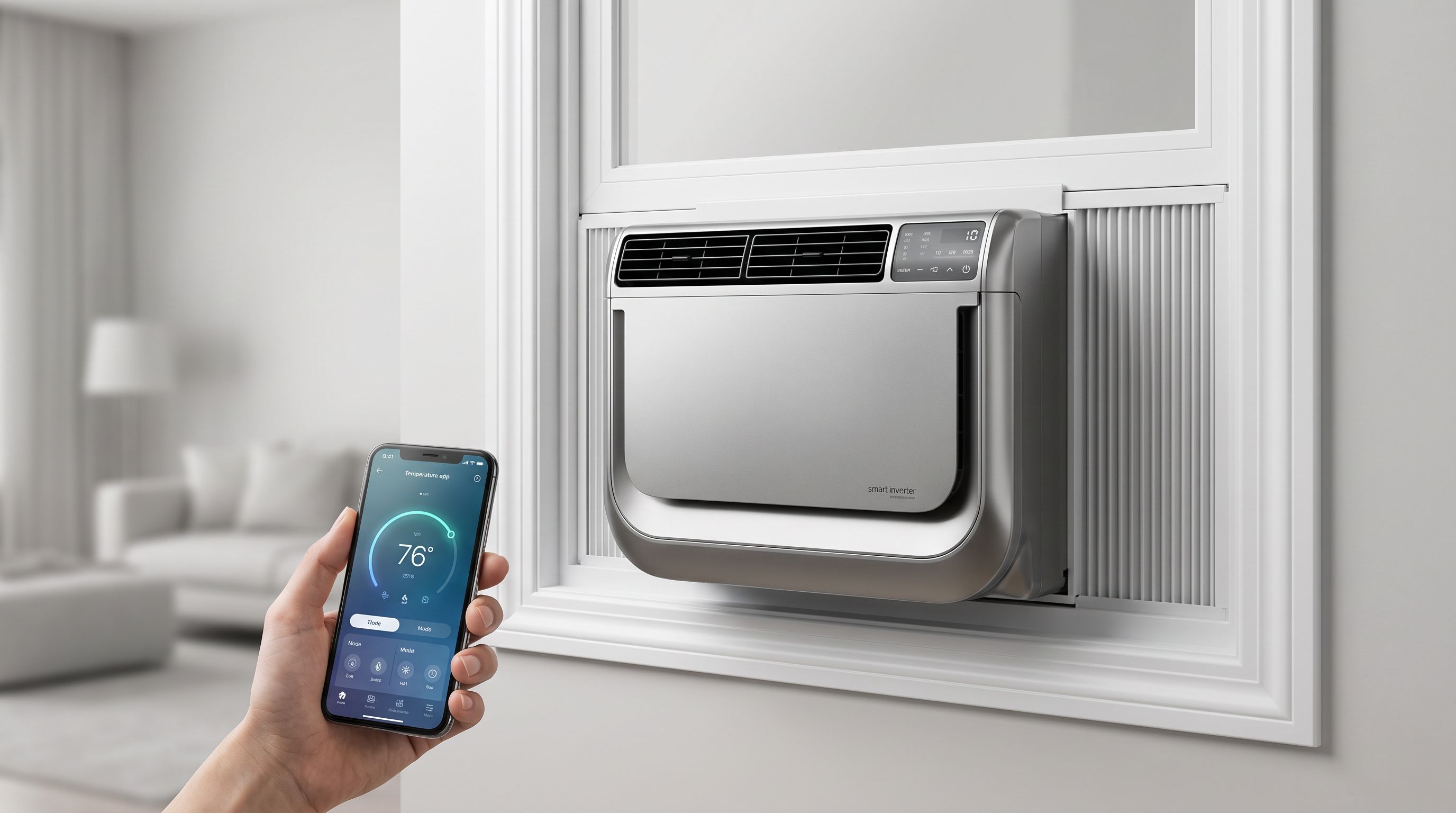
Window Heat Pump vs Window Air Conditioner in 2026
Window heat pump vs window air conditioner in 2026: how BTU sizing, inverter efficiency, app ecosystems and winter heating stack up for renters.
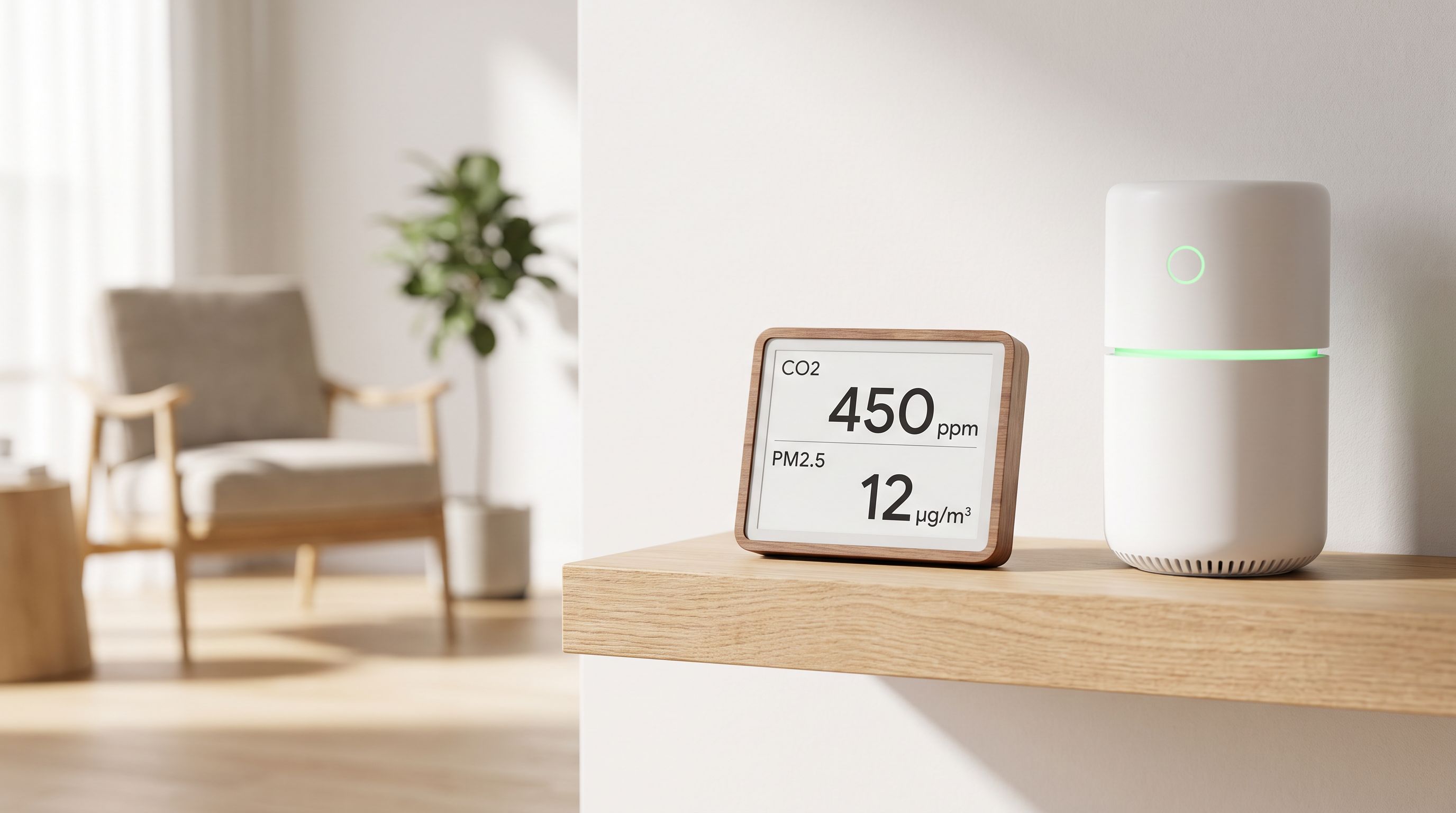
Which Air Quality Monitor Should You Buy in 2026?
The best air quality monitor for your home in 2026, compared on CO2 sensor type, PM2.5 accuracy and smart-home integration — plus which pairs best with a purifier.
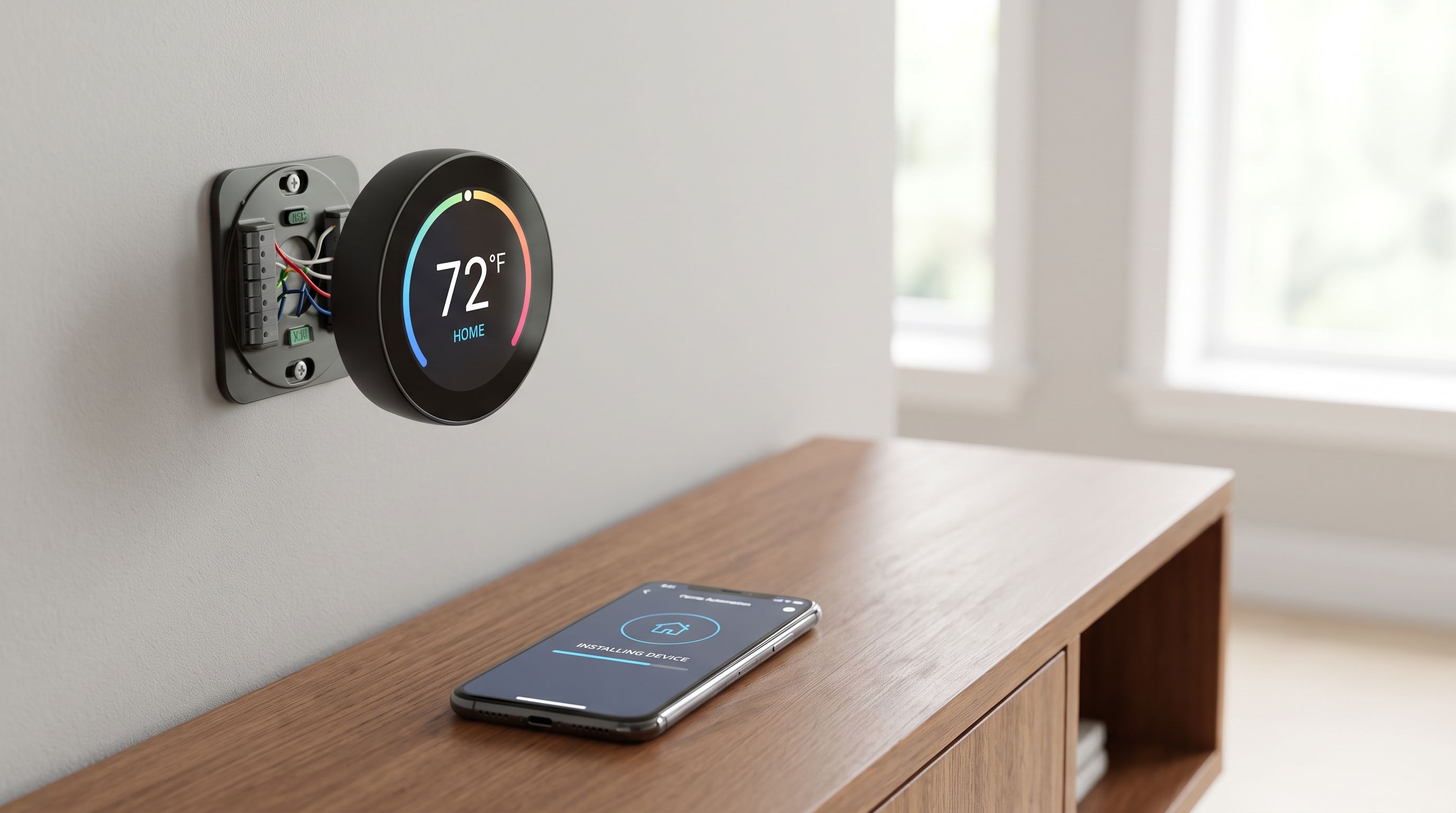
Smart Thermostats in 2026: 4 Picks With the Fastest Payback
The best smart thermostat 2026 picks compared on real energy savings, C-wire needs and Matter/Thread support — plus which one pays for itself fastest.