The State of Home EV Charging in 2026
Bidirectional charging, smart energy management, and V2G are reshaping home EV charging in 2026. Here's what's real, who's shipping, and what matters now.
Reader-supported: we may earn a commission from links on this page, at no extra cost to you. It never affects our picks. Learn more.
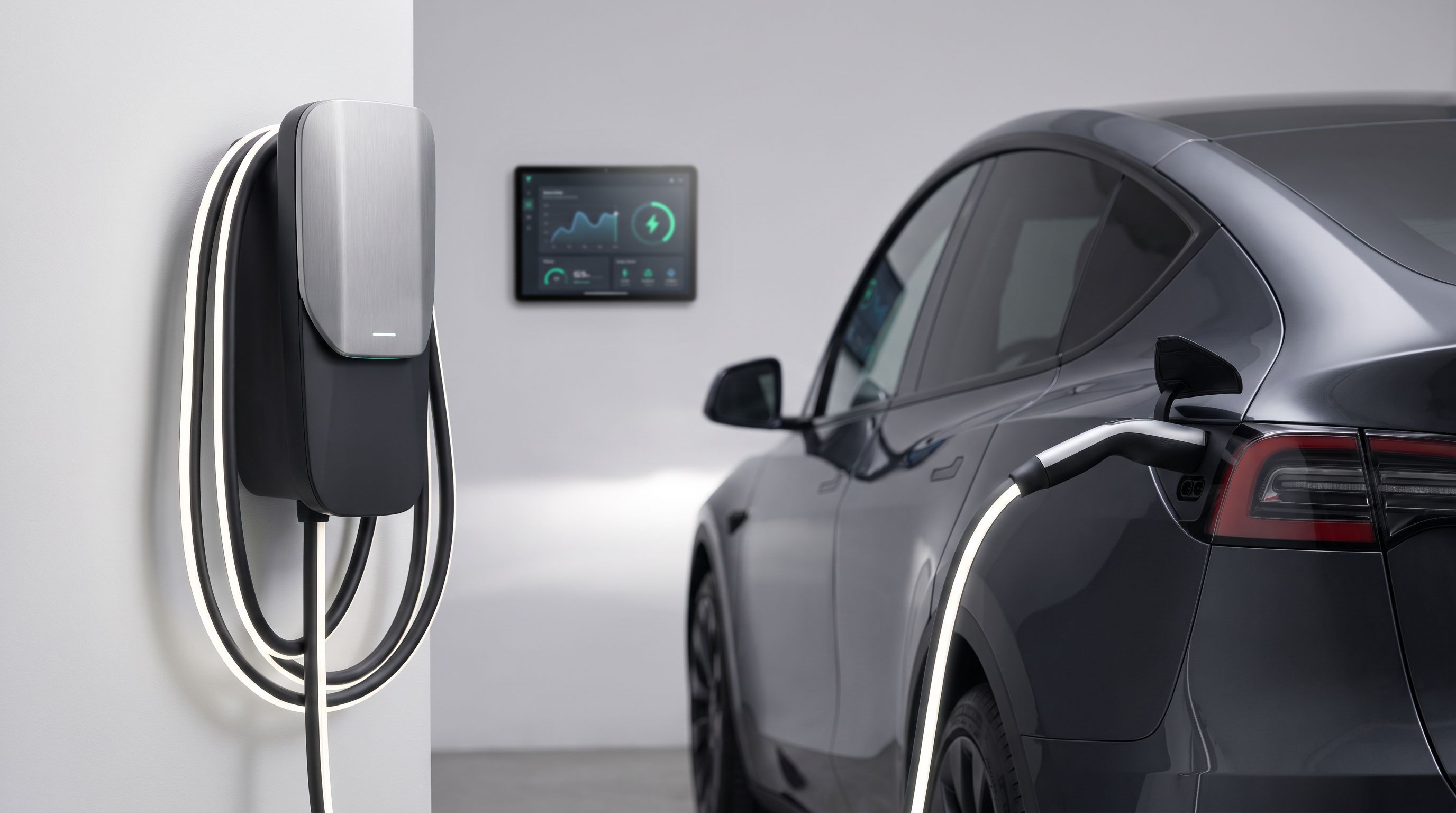
Your next EV charger might not just fill your car's battery — it might power your house during a blackout, sell energy back to the grid during peak hours, and optimize itself around your solar panels without you lifting a finger. That's the promise, anyway. In 2026, home EV charging is undergoing a quiet but meaningful transformation, moving from "dumb box on the wall" to a genuine node in your home energy system. But how much of this is shipping today, and how much is still vaporware? Let's sort signal from noise.
What's Happening Now
Three converging trends are reshaping home EV charging in 2026: bidirectional power flow, smart energy management, and the broader push toward home energy ecosystems that treat an EV battery as a resource rather than a pure load.
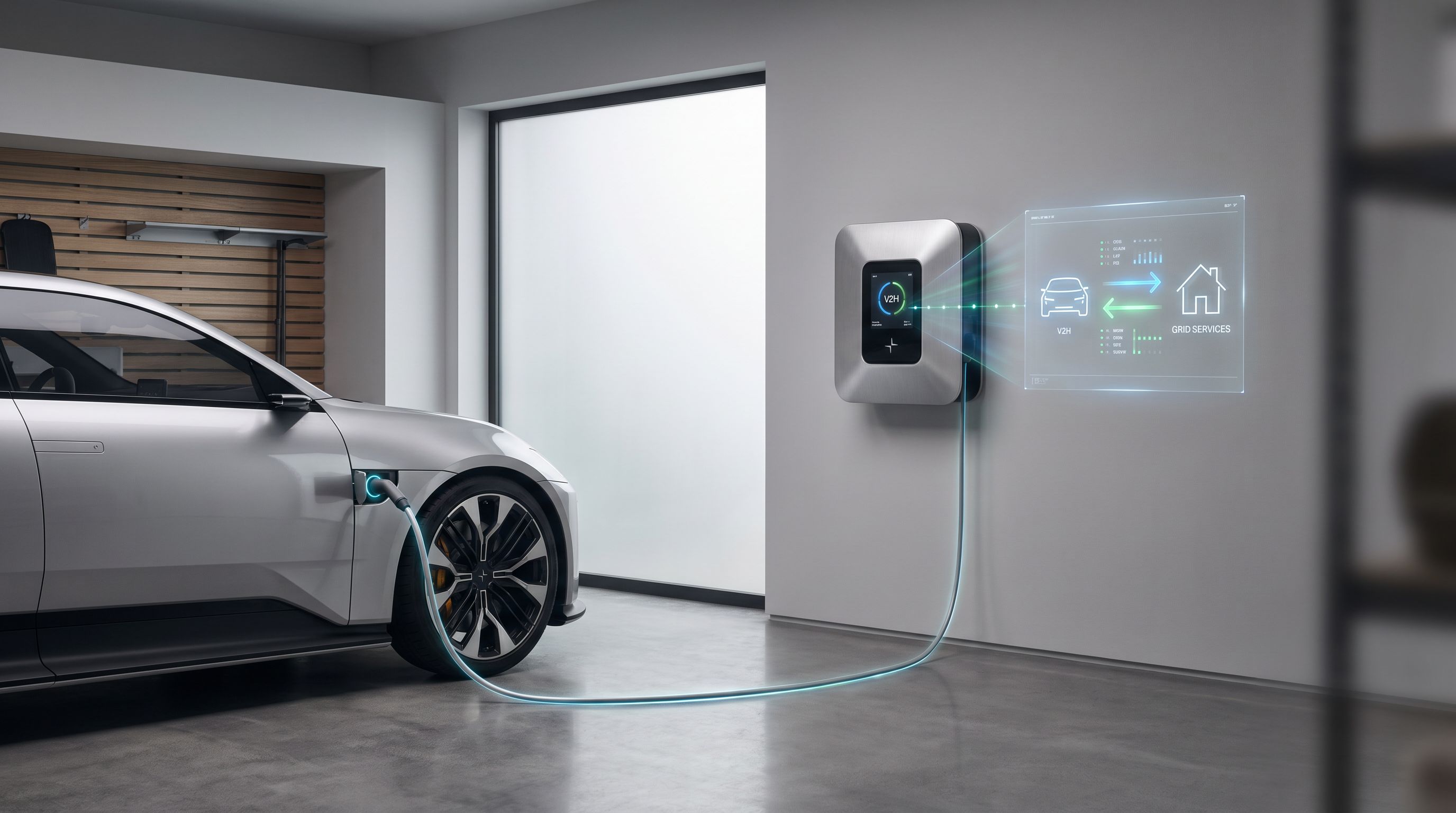
Bidirectional charging — the ability for your car to send power back to your home (vehicle-to-home, or V2H) or the grid (vehicle-to-grid, or V2G) — has moved from concept to early reality. GM is actively pursuing AC-based bidirectional technology, which is significant because EV batteries store direct current while homes and the grid run on alternating current. The AC approach simplifies the charger hardware by letting the vehicle's onboard inverter handle the conversion, potentially making bidirectional-capable chargers cheaper and more compact. Ford already shipped V2H capability in the F-150 Lightning through its Intelligent Backup Power system. The Hyundai Ioniq 5 and Ioniq 6 also support vehicle-to-load (V2L) output natively.
Smart charging has become table stakes for any serious Level 2 home charger. Wi-Fi connectivity, app-based scheduling, utility rate optimization, and solar integration are no longer premium features — they're expected. The 2026 trend reports consistently highlight that the industry is pivoting from charger quantity to real-world usability, with smarter software doing the heavy lifting.
Home energy management is the glue. Companies are increasingly positioning EV chargers not as standalone accessories but as components in a whole-home energy system alongside solar panels, home batteries, and smart panels. The EV battery in your driveway might hold 60–100 kWh — vastly more than a typical home battery — and the industry is finally building the hardware and software to tap into that capacity.
The Real Players and Shipping Products
Let's separate what you can actually buy and plug in today from what's still being promised.
| Feature | ChargePoint Home Flex | Emporia EV Charger | Wallbox Pulsar Plus | Enphase IQ EV Charger |
|---|---|---|---|---|
| Max Output | 50A / 12 kW | 48A / 11.5 kW | 48A / 11.5 kW | 48A / 11.5 kW |
| Smart Features | App, scheduling, energy mgmt | App, solar integration, TOU scheduling | App, scheduling, power sharing | Enphase ecosystem, solar-aware |
| Bidirectional | No | No | Quasar 2 (separate product) | No |
| Notable Strength | Adjustable amperage, wide compatibility | Budget-friendly with energy monitoring | Compact design, power boost mode | Deep solar/battery ecosystem tie-in |
 Best compact smart charger · Wallbox Pulsar Plus Level 2 EV Charger — Check price on Amazon →
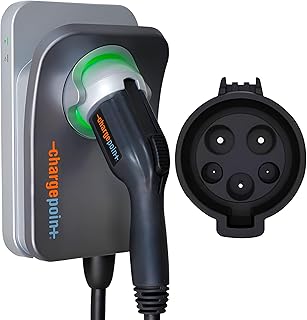 Most versatile smart charger · ChargePoint Home Flex Level 2 EV Charger — Check price on Amazon →
The ChargePoint Home Flex remains one of the most versatile options, with adjustable amperage from 16A to 50A, making it compatible with a wide range of electrical panels. It's a workhorse rather than a bleeding-edge product.
The Emporia EV Charger has carved out a niche by integrating with Emporia's energy monitoring ecosystem. If you already use their Vue energy monitor, the charger can respond to real-time home energy data and optimize around time-of-use rates or solar production — a genuinely useful smart feature at a competitive price point.
The Wallbox Pulsar Plus is widely available and well-reviewed for its compact footprint and app experience. Wallbox is also notable because they ship the Quasar 2, one of the very few bidirectional home chargers actually on the market. The Quasar 2 supports DC bidirectional charging for compatible vehicles (currently limited to certain Nissan and Hyundai models with CHAdeMO or CCS support), though availability and vehicle compatibility remain narrow.
Enphase has entered the EV charging space with the IQ EV Charger, designed to slot directly into its solar and battery ecosystem. If you're already running Enphase microinverters and IQ Batteries, the EV charger becomes solar-aware out of the box — a compelling proposition for homes that are building a complete energy system.
On the automaker side, Ford's Intelligent Backup Power for the F-150 Lightning — using the 80A Ford Charge Station Pro — remains the most mature V2H implementation in production vehicles in North America. GM's bidirectional efforts are progressing but still largely in pilot and development phases as of mid-2026.
What It Means If You're Shopping Today
If you're buying a home EV charger right now, here's the honest calculus:
Don't overpay for bidirectional capability you can't use yet. True V2G/V2H requires both a compatible charger and a compatible vehicle, and the overlap is still very small. Unless you drive an F-150 Lightning or one of the handful of Nissan/Hyundai models that work with the Wallbox Quasar 2, bidirectional is a future upgrade, not a today feature.
 Closest to bidirectional today · Wallbox Quasar 2 Bidirectional EV Charger — Check price on Amazon →
Do buy smart. A charger with Wi-Fi, app control, and scheduling support is worth the modest premium. Time-of-use rate optimization alone can save meaningful money over the life of the charger, and solar-aware charging is increasingly practical.
Think about your panel. A 48A charger draws significant power. Products like the ChargePoint Home Flex that let you dial amperage down to match your panel's available capacity prevent expensive electrical upgrades. Load management and power sharing — features Wallbox and Emporia offer — are similarly practical.
Consider the ecosystem. If you have or plan to install solar panels and a home battery, choosing a charger that integrates with your inverter ecosystem (Enphase, SolarEdge, Tesla) will pay dividends in energy optimization that a standalone charger simply can't match.
What to Watch Next
The next 12–18 months will be pivotal. GM's AC-based bidirectional approach, if it reaches production vehicles and partner chargers, could dramatically lower the cost of V2H hardware by shifting complexity to the car's onboard systems. CES 2026 showcased several intriguing concepts — including robotic chargers and solar-integrated charging stations — though these remain early-stage.
Wireless EV charging is another space generating buzz in 2026, with companies working on inductive pads that charge your car simply by parking over them. The technology works, but power transfer rates, efficiency losses, and cost remain significant barriers for home use. It's worth watching but not worth waiting for.
The real unlock will be standardization. Right now, bidirectional capability is fragmented across different connector types, communication protocols, and utility interconnection rules. As ISO 15118 adoption widens and utilities build out V2G rate structures, the economics and usability will improve rapidly. The hardware is arriving; the software and regulatory layers are catching up.
FAQ
Can my EV already power my house? Only a few vehicles support this today. The Ford F-150 Lightning with the Ford Charge Station Pro is the most established V2H setup in North America. Some Hyundai and Kia EVs support V2L (powering appliances via an adapter) but not whole-home backup.
Is it worth waiting for a bidirectional charger? For most buyers, no. The vehicle compatibility list is too short, and a good smart Level 2 charger bought today will serve you well for years. When bidirectional becomes mainstream, you can add or upgrade.
Do I need a panel upgrade to install a Level 2 charger? Not necessarily. Many modern smart chargers offer adjustable amperage or load management to work within your existing panel's capacity. An electrician can assess whether your panel has room for a 40–60A circuit.
How much can smart charging actually save? It varies by utility, but shifting charging to off-peak hours can reduce per-kWh costs by 30–60% in areas with time-of-use rates. Solar-aware charging can further reduce costs by using self-generated power during the day.
Our picks
ChargePoint HomeFlex Level 2 EV Fast Charger, J1772, Smart, Hardwired, 50A
Adjustable 16-50A output fits almost any home panel; solid app and scheduling features.

EMPORIA Level 2 EV Charger w/ J1772 Connector — 48 Amp, 240V WiFi Enabled Electric Vehicle Charging Station, 25ft Cable, Hardwired with Whip, White
Budget-friendly smart charger with solar-aware scheduling and Emporia energy monitor integration.
Wallbox Pulsar Plus Level 2 Ev Charger 40A, Electric Car Charger EVSE J1772
Slim design with strong app experience and power-sharing capability for multi-EV homes.
Wallbox Pulsar Plus Level 2 Ev Charger 40A, NACS Electric Car Charger EVSE
One of the only shipping home bidirectional chargers; vehicle compatibility still limited.
Get the best tech deals in your inbox
Join the BytePlaza newsletter for hand-picked gadget deals and new buying guides. No spam, unsubscribe anytime.
Related reads
Why Home EV Charging Is Getting Smarter in 2026
Bidirectional charging, smart energy management, and V2G tech are reshaping home EV charging in 2026. Here's what's real, who's shipping, and what matters now.
Why Home EV Charging Is Getting Smarter in 2026
Bidirectional charging, V2G tech, and smart Level 2 chargers are reshaping home EV charging in 2026. Here's what's real and what to buy today.
Why Home EV Charging Is Getting Smarter in 2026
Bidirectional charging, smart scheduling, and V2G are reshaping home EV charging in 2026. Here's what's real, who's shipping, and what it means.