Foldables, Rollables, Tri-Folds: Where Phones Go in 2026
Tri-folds are shipping, rollables are rumored, and book-style foldables finally got good. Here's the real state of the phone form-factor race in 2026.
Reader-supported: we may earn a commission from links on this page, at no extra cost to you. It never affects our picks. Learn more.
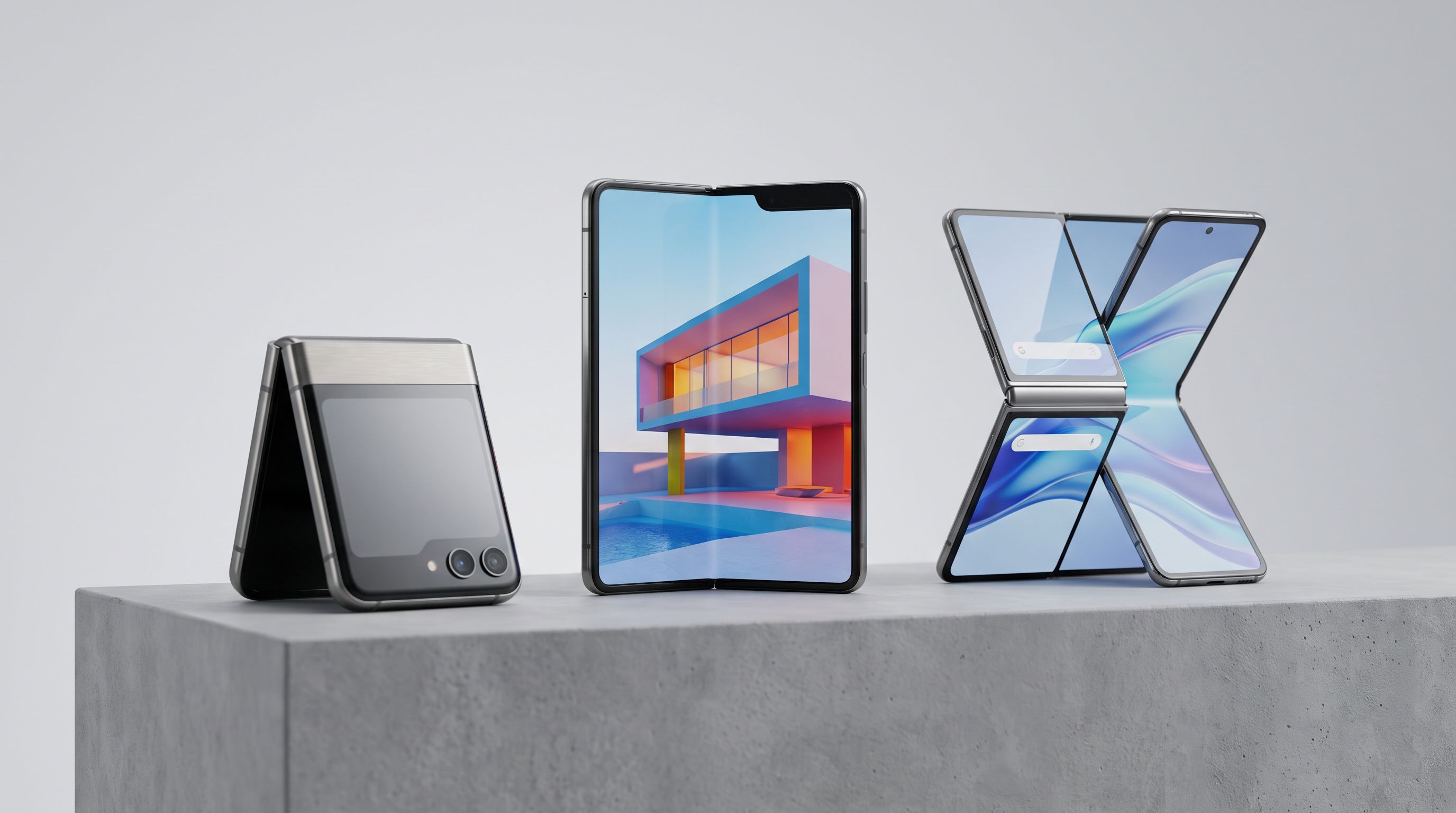
For about six years, "the future of phones" meant one thing: a rectangle that folds in half. That future arrived, sold modestly, and got refined into something genuinely good. Now the goalposts have moved again. In 2026 the interesting conversation isn't whether screens should bend — it's how many times, and whether bending is even the right idea compared to screens that slide and grow.
Tri-folds are no longer a concept-video fantasy; Samsung has actually launched one. Rollables are back in the rumor mill with real reporting behind them. And underneath all of that, the boring book-style and clamshell foldables you can buy today have quietly become the most sensible they've ever been. Here's what's actually happening, and what it means if you're the one holding the credit card.
What's actually happening now
Three things converged at once.
First, the tri-fold stopped being a prototype. Samsung unveiled the Galaxy Z TriFold — a device with two hinges that folds twice — launching first in South Korea and expanding to additional markets through early 2026. That's significant not because millions of people will buy it, but because the largest foldable manufacturer in the world decided the double-hinge design was manufacturable at retail scale. Huawei had already pushed this category in China; Samsung entering it turns a regional curiosity into a global product line.
Second, CES 2026 confirmed the split. Coverage out of Las Vegas described smartphones "splitting into bold new directions" — massive folding screens on one end of the spectrum, deliberately minimal and offline-leaning phones on the other. That's a useful signal: the industry no longer believes in one dominant shape. It believes in segmentation.
Third, rollables re-entered the conversation with more credibility than usual. Reports around Samsung's roadmap suggest a "slideable" or rollable device could be bumped forward — earlier reporting pointed to an early 2028 launch, while newer reporting suggests as soon as 2027, potentially reshuffling where a second-generation tri-fold lands. Treat those dates as reporting, not promises. Samsung Display has shown rollable panel concepts publicly for years; the gap between a trade-show panel and a shipping phone with a battery, thermals, and a warranty is where most of these ideas die.
The honest summary: foldables are shipping and mature, tri-folds are shipping and expensive, rollables are rumored.
The real players and what's actually shipping
Samsung remains the volume leader. The Galaxy Z Fold 7 is the book-style device most other foldables are benchmarked against, and the Galaxy Z Flip 7 continues the clamshell line that has done more than anything to make folding screens feel normal rather than experimental. The Galaxy Z TriFold sits above both as a halo product — a demonstration of what two hinges buy you, with availability that started narrow and widened over time.
Google is the most interesting number two. The Pixel 10 Pro Fold continues Google's book-style line, and its argument is software: Android's large-screen multitasking, split-view behavior, and Pixel-style computational photography all matter more on a device whose main selling point is screen real estate. Roundups of the category in 2026 consistently group Samsung, Google, and Motorola as the names worth considering.
Motorola owns the style lane. Its Razr line — including the Razr Ultra as the flagship clamshell — is the main alternative to Samsung in flip phones, and reviewers have singled out Motorola's book-style and phablet-format efforts for being thin and light without gutting battery life. Wirecutter's 2026 picks, for example, call out a Motorola foldable as a strong choice for people who want a big folding screen that stays manageable in the hand.
Chinese manufacturers — Huawei, Honor, Oppo, Vivo — have pushed thinness and tri-fold engineering hardest, but availability and software support outside their home markets remain the catch. That's a genuine buying consideration, not a footnote.
| Form factor | Hinges | Status in 2026 | What it's actually for |
|---|---|---|---|
| Clamshell / flip | 1 | Mature, widely available | Pocketability, style, cheapest entry into foldables |
| Book-style | 1 | Mature, flagship-priced | Tablet-ish multitasking in a phone-sized package |
| Tri-fold | 2 | Shipping, limited markets, halo pricing | Maximum interior screen; laptop-replacement ambitions |
| Rollable / slideable | 0 (sliding panel) | Rumored, reported for 2027 or later | Screen that grows without a crease-heavy fold stack |
What it means if you're shopping today
Three practical conclusions.
Don't wait for rollables. The reporting points to 2027 at the earliest, and roadmap dates for experimental form factors slip routinely. If your phone is dying now, a rumored device two years out is not a purchase option.
Tri-folds are a first-generation product, and they behave like one. Two hinges mean more moving parts, more thickness when closed, more weight, and a higher price. Analysts have openly debated whether Samsung's tri-fold is real innovation or a way to keep the category feeling fresh. Both can be true. If you buy one, you're buying the biggest screen available in a phone — and paying an early-adopter tax in durability unknowns and limited market availability.
The sweet spot is the boring middle. Book-style foldables like the Galaxy Z Fold 7 and the Pixel 10 Pro Fold have had six generations of hinge, crease, and dust-ingress engineering poured into them. Clamshells like the Galaxy Z Flip 7 and the Motorola Razr Ultra are, on paper, the lowest-risk way to own a folding screen — they're closest to normal-phone pricing and normal-phone thickness.
 The style-first flip alternative · Motorola Razr Ultra — Check price on Amazon →
One more thing worth saying plainly: the crease has gotten better, not gone. Reviews across generations describe it as less noticeable rather than invisible. If a visible seam bothers you, a flat slab phone is still a completely reasonable 2026 choice.
What to watch next
Watch durability ratings, not screen sizes. Water and dust resistance on hinged devices has improved generation over generation, and that — more than a bigger panel — is what turns a foldable into a normal phone you don't baby.
Watch software. A tri-fold's interior display only matters if apps use it well. Android's large-screen work and manufacturer multitasking layers are the real differentiator; hardware alone doesn't create a productivity device.
Watch whether rollables ship at all. If a slideable Samsung device genuinely lands in 2027, it will reframe the whole category, because a sliding panel avoids the sharp fold radius that causes creases. If it slips again to 2028 or quietly disappears, tri-folds become the ceiling for a while.
And watch the counter-trend. CES 2026 also surfaced phones designed to disconnect — kill switches, offline modes, deliberate minimalism. The most telling fact about the form-factor race may be that a meaningful slice of buyers wants less screen, not more.
FAQ
Are tri-fold phones actually buyable right now? Samsung's Galaxy Z TriFold launched in South Korea first and expanded to additional markets through early 2026, so availability depends heavily on where you live. Huawei has also shipped tri-folds, primarily in China.
When are rollable phones coming? Reporting suggests a Samsung slideable could arrive as soon as 2027, moved up from earlier expectations of early 2028. Nothing is confirmed, and roadmap dates for new form factors frequently move.
Is a foldable worth it over a regular flagship? If you genuinely use a bigger screen — multitasking, reading, media — a book-style foldable earns its keep. If you mostly want a phone that's easy to pocket, a clamshell makes more sense than a book-style, and a conventional slab is still cheaper and thinner than both.
Do creases still show? Yes, though reviewers consistently report they're less visible than on earlier generations. It varies by lighting angle and by model.
Will tri-folds replace laptops? Not yet. The interior display is large, but desktop-class software, keyboards, and thermals are still the gap. Treat it as a bigger tablet-phone, not a laptop replacement.
Our picks
Samsung Galaxy Z Fold 7
The most widely available big-screen foldable, and the design most tri-folds are measured against.
Google Pixel 10 Pro Fold
Google's book-style foldable leans on Android's tablet-style multitasking and Pixel camera processing.

Samsung Galaxy Zflip7 FE Cell Phone (2025), 256GB AI Smartphone, JetBlack
Clamshell foldable with a large cover display — the low-risk entry point to the category.
Motorola Razr Ultra 2025 | Unlocked | Made for US 16/512GB | 50MP Camera | Pantone Rio Red
Motorola's flagship clamshell, the main competition to Samsung in the flip form factor.
Get the best tech deals in your inbox
Join the BytePlaza newsletter for hand-picked gadget deals and new buying guides. No spam, unsubscribe anytime.
Related reads
Spatial Computing, Explained: Life After Headset Hype
Mixed-reality headsets didn't replace your laptop. Here's what spatial computing is actually good for in 2026 — and which devices are genuinely worth it.
The Robot Vacuum Arms Race, Explained
Mopping, self-emptying docks, stair-climbing legs and literal robot arms: how home-cleaning robots got so capable, and what's actually worth buying now.
Home Robots in 2026: Are They Finally Actually Useful?
CES 2026 was packed with humanoid home robots. Here's what's actually shipping, what's still a concept, and which robots are genuinely worth buying right now.