UST vs Standard Throw: Which Laser Projector Wins in 2026?
UST or standard throw? We compare the best laser projectors of 2026 across picture quality, placement flexibility, and value to help you choose the right one.
Reader-supported: we may earn a commission from links on this page, at no extra cost to you. It never affects our picks. Learn more.
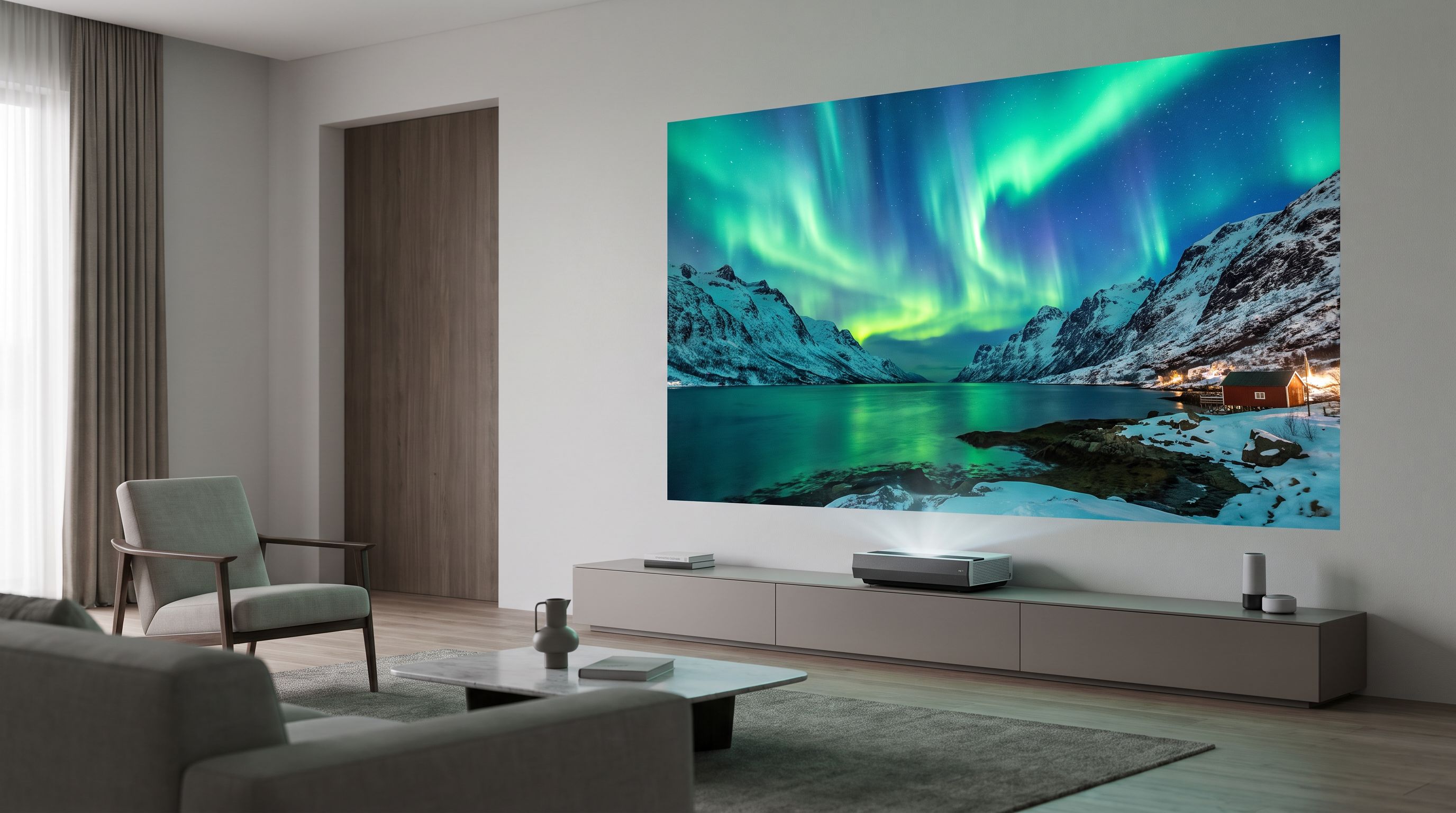
Laser projectors have officially moved from niche luxury to mainstream home-theater staple in 2026. The real decision now isn't whether to go laser—it's which form factor fits your room. Ultra-short-throw (UST) models sit inches from the wall and project 100-inch-plus images without ceiling mounts. Standard-throw lasers install on a shelf or ceiling several feet back but often deliver superior optics and contrast. Below, we break down the trade-offs and recommend the best laser projector for every setup.
UST Laser Projectors: The Case For and Against
How They Work
UST projectors use specialized wide-angle optics to bounce light upward onto a screen (or wall) from just a few inches away. Place the unit on your TV console, push it against the wall, and you're done—no wiring across the ceiling, no drilling, no mounting bracket.
Strengths
- Zero ceiling work. Ideal for renters, finished living rooms, or anyone who dislikes cable management.
- Ambient-light resistance. Many UST models ship with (or are paired with) ambient-light-rejecting (ALR) screens that dramatically improve contrast in bright rooms.
- All-in-one smart features. Most 2026 USTs include built-in streaming OS, Dolby Atmos decoding, and HDMI eARC, reducing the number of external boxes you need.
Weaknesses
- Optical compromises. The extreme throw angle can introduce subtle color uniformity issues near screen edges, and focus is harder to keep perfectly even corner-to-corner.
- Screen surface sensitivity. UST projectors look best on a dedicated ALR screen. A flat white wall won't do them justice—and good ALR screens add significant cost.
- Limited size flexibility. Moving a UST a few inches changes image size noticeably, so placement has to be precise.
Standard-Throw Laser Projectors: The Case For and Against
How They Work
Standard-throw (sometimes called "long-throw") laser projectors sit roughly 1.5× to 2.5× the screen width away. A model projecting a 120-inch image might need 10–15 feet of clearance. Most are ceiling-mounted in a dedicated media room.
Strengths
- Superior optics and contrast. Conventional lens assemblies produce sharper, more uniform images with less chromatic aberration.
- Better black levels. Premium standard-throw models—particularly those using SXRD or D-ILA panels—deliver significantly deeper blacks than any UST on the market.
- Flexible zoom and lens shift. Powered zoom and lens memory let you adjust image size without physically moving the projector, making setup more forgiving.
Weaknesses
- Installation complexity. Ceiling mounts, long HDMI runs, and power drops add cost and effort.
- Shadow risk. Anyone walking between projector and screen blocks the image—a non-issue with USTs.
- Less spouse-friendly. A projector hanging from the ceiling and visible cable runs can clash with living-room decor.
Head-to-Head Comparison
| Feature | UST Laser | Standard-Throw Laser |
|---|---|---|
| Throw distance (100" image) | 6–18 inches | 10–15 feet |
| Installation | Console placement, minimal wiring | Ceiling mount + long HDMI run |
| Best room type | Living room, multipurpose room | Dedicated home theater |
| Contrast / black levels | Good (with ALR screen) | Excellent (especially SXRD/D-ILA) |
| Ambient light handling | Strong with ALR screen | Weaker unless room is dark |
| Image uniformity | Slight edge softness possible | Generally superior |
| Built-in smart OS | Common | Less common |
| Shadow interference | None | Possible |
| ALR screen required? | Highly recommended | Optional (gray screens help) |
Our Top Picks for 2026
Best UST Overall: Hisense PX3 PRO
 Best UST overall · Hisense PX3 PRO — Check price on Amazon →
The Hisense PX3 PRO earned an Editor's Choice and Highly Recommended designation from Projector Reviews in 2026. It delivers true 4K DLP resolution (3840 × 2160) with roughly 2,500 lumens of brightness—enough to look punchy in a moderately lit living room when paired with an ALR screen. Dolby Vision support and a built-in smart platform round out a feature set that's hard to beat in the UST category.
Best UST for Bright Rooms: XGIMI AURA 3 Max
 Best UST for bright rooms · XGIMI AURA 3 Max — Check price on Amazon →
If your living room gets a lot of sunlight, the XGIMI AURA 3 Max is the UST to consider. Reviewers highlight its impressive peak brightness and well-tuned smart OS. XGIMI's automatic alignment and obstacle-avoidance features make setup nearly hands-free, and the built-in Harman Kardon speakers are a meaningful step above typical projector audio.
Best Living Room Projector: Hisense C2 Ultra
Wirecutter named the Hisense C2 Ultra its top living room projector pick in 2026, praising its compact footprint, ease of use, and bright, color-accurate image. It bridges the gap between UST convenience and standard-throw quality, making it a strong choice if you want a projector that doubles as a TV replacement without a complex setup.
Best Standard Throw for Cinephiles: Sony VPL-XW5000ES
 Best standard throw for cinephiles · Sony VPL-XW5000ES — Check price on Amazon →
For a blacked-out theater room, the Sony VPL-XW5000ES remains a benchmark. Its native 4K SXRD panels and laser light engine produce contrast ratios that no UST can match. HDR tone mapping is excellent, motion handling is smooth, and powered lens controls with lens memory let you switch between aspect ratios effortlessly. It demands a proper ceiling mount and a dark environment, but the payoff is a genuinely cinematic experience.
Best for Gaming: BenQ X3000i
The BenQ X3000i targets gamers with 4K HDR support, low input lag, and vibrant colors from its 4LED light engine. Based on reviews, it strikes a strong balance between gaming responsiveness and movie-watching quality. At a competitive price point for a 4K laser-class projector, it's a smart pick if your media room doubles as a gaming den.
Which Type Should You Choose?
Choose UST if your projector lives in a shared living space, you can't (or don't want to) ceiling-mount, or you deal with ambient light throughout the day. Budget for an ALR screen to get the most out of it.
Choose standard throw if you have a dedicated media room that can be darkened, you prioritize the absolute best contrast and image uniformity, or you plan to use a large acoustically transparent screen with speakers behind it.
On a gaming-focused budget? A standard-throw model like the BenQ X3000i often delivers lower input lag at a lower price than comparable USTs.
FAQ
Are UST projectors as sharp as standard-throw models?
Center sharpness is comparable, but UST optics can show slight softness or color fringing near the edges of the screen. Premium USTs like the Hisense PX3 PRO minimize this, but a standard-throw model with a quality glass lens will generally be more uniform corner to corner.
Do I really need an ALR screen for a UST projector?
Technically no—a flat white wall works—but you'll sacrifice a huge amount of contrast and color saturation, especially in any ambient light. An ALR screen is effectively a requirement to see what a good UST can actually do.
How long do laser projectors last?
Most laser light engines are rated for 20,000–30,000 hours, which translates to roughly 10–15 years of daily use. Unlike traditional lamp projectors, there's no bulb to replace.
Can a standard-throw laser projector work in a living room?
Yes, but it typically requires a ceiling mount and a darker environment. If your living room has blackout curtains and you're comfortable with installation, a standard-throw model can deliver a superior image. If not, a UST is the more practical choice.
Is 2026 a good year to buy a laser projector?
Absolutely. Prices have dropped considerably across both UST and standard-throw categories, 4K resolution is standard even at mid-range price points, and smart-OS integration means fewer external devices. The technology is mature enough that any of our picks above should serve you well for years.
Our picks
Hisense PX3-PRO Ultra Short Throw Triple Laser Projector, 4K UHD, 80” – 150”, 3,000 Lumens, 3000:1 Contrast, Dolby Vision & Atmos, IMAX Enhanced, 240 High Refresh Rate, Google TV, Designed for Xbox
Editor's Choice UST with 4K DLP, 2500 lumens, and excellent color accuracy for living rooms.
XGIMI AURA Ultra Short Throw 4K Laser Projector, 2300 ISO lumens, Google TV
Top-performing UST with impressive brightness and built-in smart features for daytime viewing.
Hisense C2 Ultra
Wirecutter's top living room projector—compact, bright, and easy to set up.
Sony VPL-XW5000ES 4K HDR Laser Home Theater Projector with Native 4K SXRD Panel, Black
Native 4K SXRD laser with class-leading contrast and HDR tone mapping for dedicated theaters.
BenQ X3000i
4K HDR gaming projector with low input lag and vibrant 4LED light engine at a competitive price.
Get the best tech deals in your inbox
Join the BytePlaza newsletter for hand-picked gadget deals and new buying guides. No spam, unsubscribe anytime.
Related reads
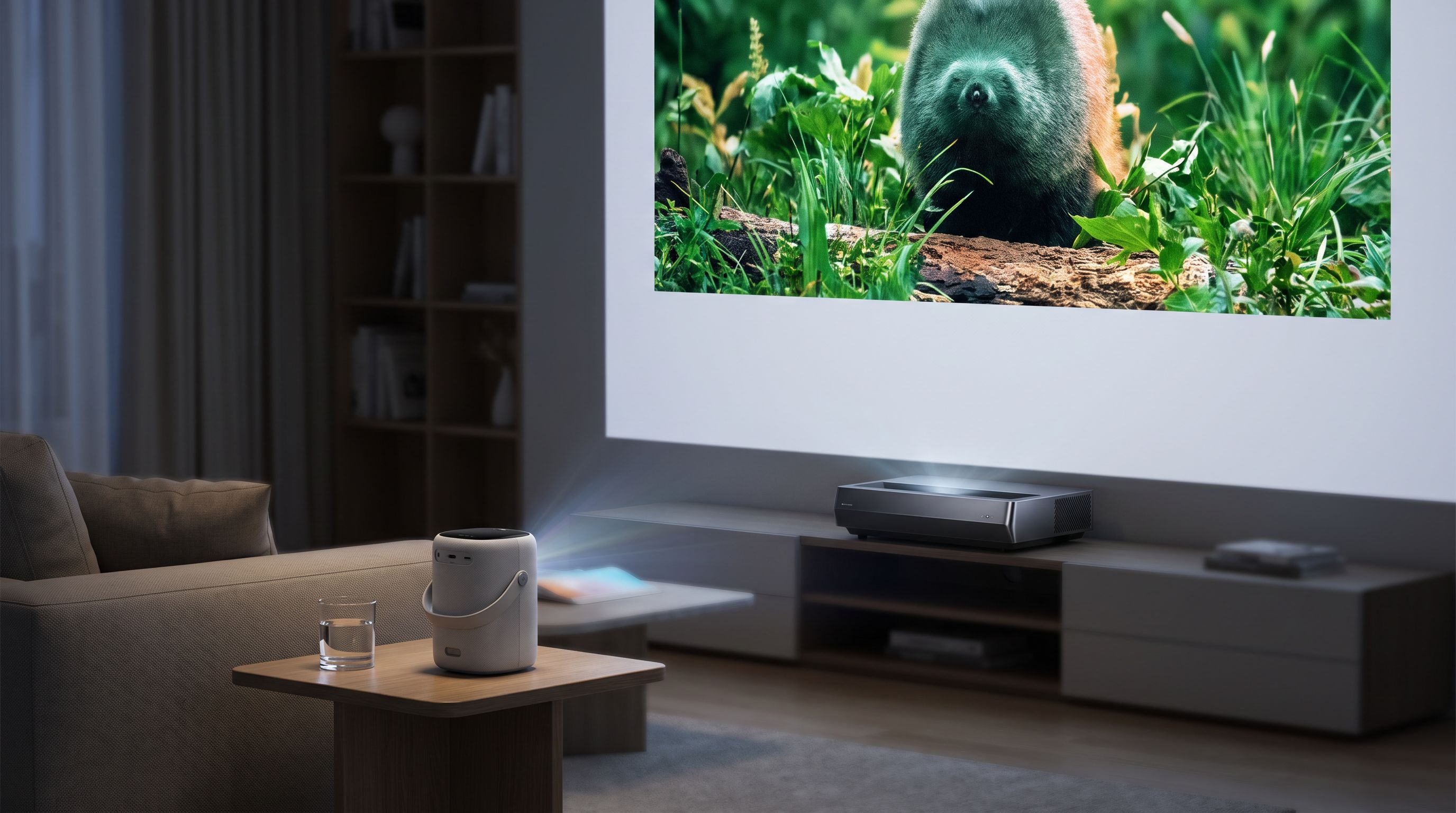
Best 4K Projector 2026: Home Theater vs Portable
The best 4K projector 2026 picks compared: laser TVs, long-throw home theater beamers and portable smart projectors ranked on brightness, throw and room fit.
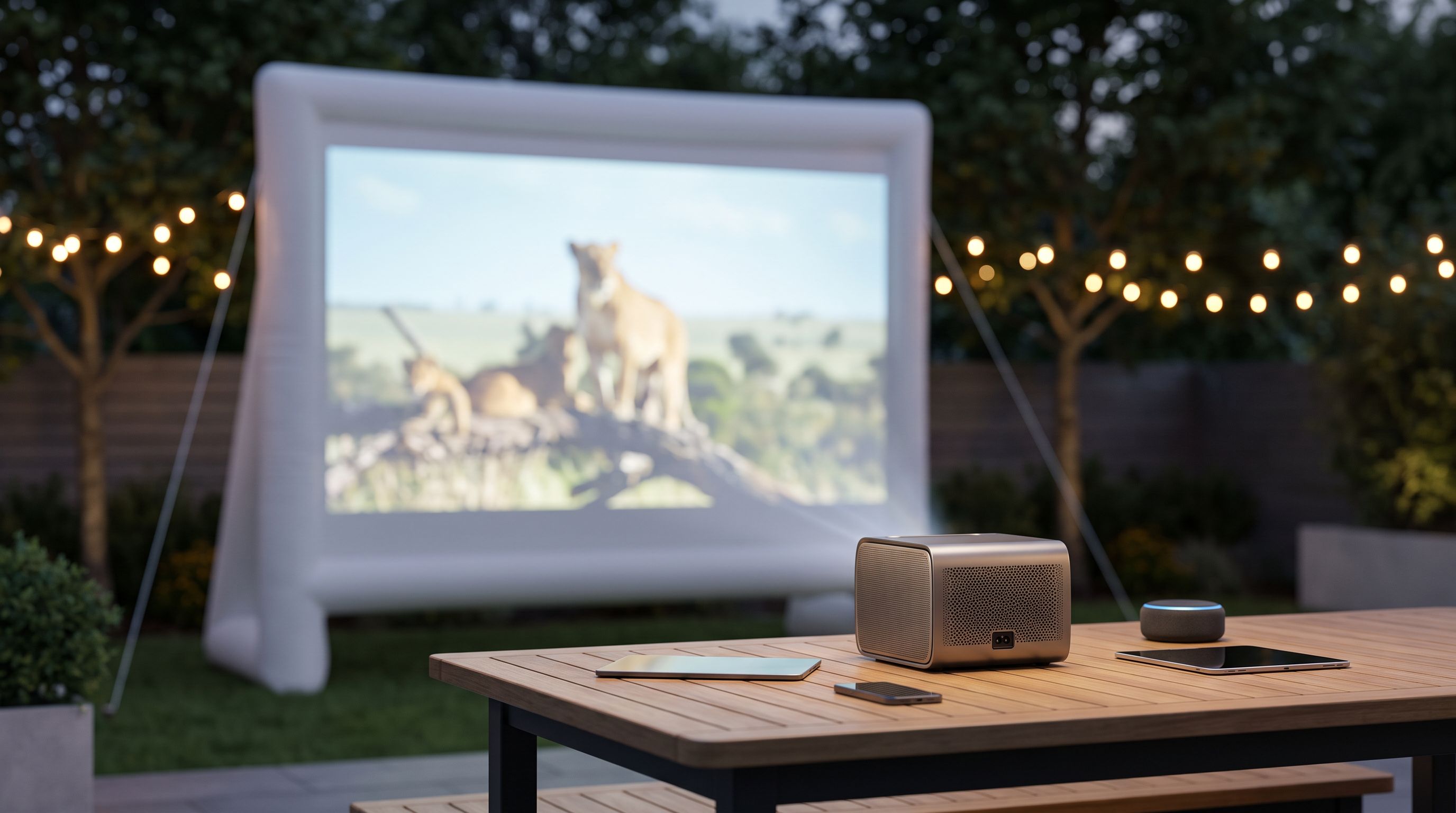
Outdoor Projector 2026: Which One Survives Your Backyard?
Backyard movie nights need brightness, battery and weather sense. We compared the best outdoor projectors of 2026 on specs, IP ratings and owner feedback.
Mini Projector Under $200 in 2026: What the Specs Hide
The best mini projector under $200 in 2026, plus how to decode fake lumens, "1080p supported" resolution claims, and throw-distance math before you buy.