Smart Window Sensors in 2026: 4 Picks That Actually Hold Up
Which smart window sensor should you buy in 2026? We compare Matter, Thread and Zigbee contact sensors on battery life, hub needs and owner-reported reliability.
Reader-supported: we may earn a commission from links on this page, at no extra cost to you. It never affects our picks. Learn more.
A window sensor is the cheapest piece of smart home hardware that genuinely changes how your house behaves. Two magnets, a reed switch, a coin cell — and suddenly your thermostat stops heating the street, your lights flick on when the patio door slides open, and your phone buzzes if a basement window moves at 3am.
The catch in 2026 is that "smart" now means at least four incompatible radios, and Matter hasn't erased the differences the way the marketing suggested it would. Below is how we'd choose, based on manufacturer specs, independent reviews including Wirecutter's smart sensor testing, and a large body of owner feedback from Home Assistant and smart home communities.
How we ranked them
We weighted four things, in this order:
- Reported reliability. A sensor that misses one open in fifty is worse than useless for security. Owner reports and long-term reviews matter more than spec sheets here.
- Battery life and battery type. CR2032 vs CR2450 vs AA makes a real difference when you've got twelve windows. So does whether the radio is Thread (chatty, mesh-joining) or Zigbee (famously frugal).
- Hub requirements. Matter is a language, not a radio. Almost every sensor here still needs something — a Thread border router, a Zigbee coordinator, or a vendor hub.
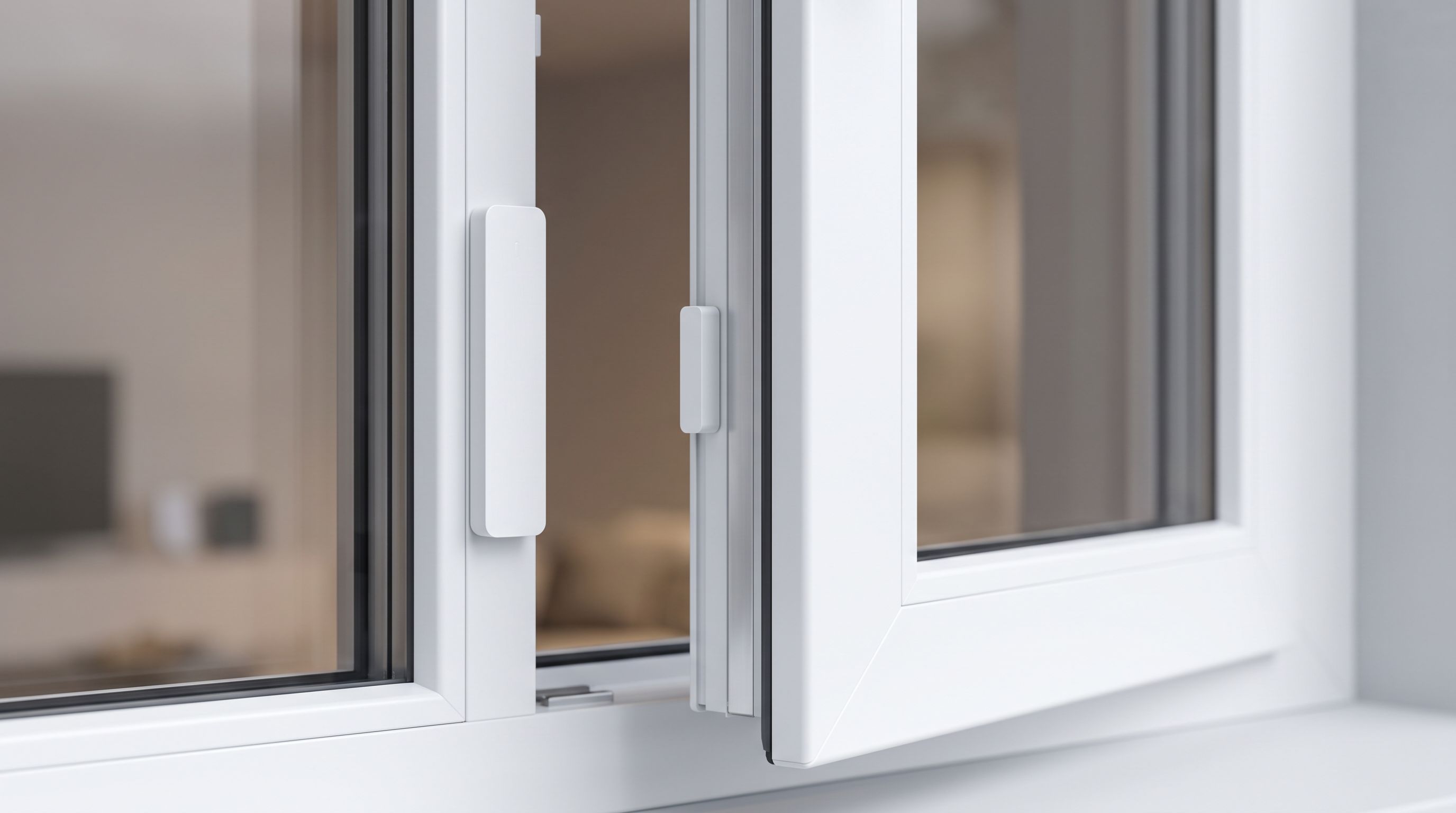
- Mounting practicality. Window sashes have awkward gaps and narrow frames. Sensor size and magnet gap tolerance decide whether it fits at all.
The radio question, settled
This is the part most guides skim, and it's the part that determines whether you're happy a year from now.
Thread is what "Matter-native" sensors use. A Thread sensor pairs directly into Apple Home, Google Home, SmartThings or Home Assistant via a border router you probably already own (a HomePod mini, Apple TV, Nest Hub, Echo, or a dongle). No vendor hub, no cloud dependency, local control. The trade-off: Thread networks are still fussier than they should be, and multi-vendor border router setups can be flaky.
Zigbee is the old reliable. It needs a coordinator — an Aqara hub, a SkyConnect/Sonoff dongle for Home Assistant, or a SmartThings hub — but battery life is exceptional and the mesh is mature. Zigbee sensors don't speak Matter directly; the hub bridges them.
Z-Wave remains the choice for established security-style systems, with long range and good in-wall penetration.
LoRa, used by YoLink, is the outlier: sub-GHz, very long range, excellent through masonry. It's proprietary and hub-bound, but it solves a problem nothing else does.
The picks
Aqara Door and Window Sensor P2 — best overall
 Best overall · Aqara Door and Window Sensor P2 — Check price on Amazon →
The P2 is the version to buy if you want Matter without an Aqara hub. It joins a Thread network directly and shows up in Apple Home, Google Home, Alexa, SmartThings or Home Assistant as a standard Matter contact sensor. It's small enough for most window frames, the magnet gap tolerance is generous enough for sashes that don't sit flush, and reporting is near-instant.
It's the natural upgrade for anyone who liked the original Aqara sensor — repeatedly the top pick in independent testing, including Wirecutter's — but didn't want to run a vendor hub. Note that Thread sensors are typically thirstier than Zigbee ones; expect good battery life, not legendary battery life.
Eve Door & Window — best for Apple Home
 Best for Apple Home · Eve Door & Window (Matter, Thread) — Check price on Amazon →
Eve was Thread-first before Thread was cool, and it shows. The current Matter/Thread Door & Window is the most predictable sensor in an Apple-centric house: pair with a HomePod mini or Apple TV as the border router, and it just sits there working. The chunkier body is the main downside — on a narrow uPVC window bead it can be a tight fit — but build quality and the Eve app's history graphs are a step above the budget field.
It also works in Google Home, Alexa and Home Assistant via Matter, so you're not locked in if you switch camps later.
Aqara Door and Window Sensor (Zigbee) — budget pick
 Budget pick · Aqara Door and Window Sensor (Zigbee) — Check price on Amazon →
The original. It's the sensor people buy eight of. Via an Aqara hub (or a Zigbee coordinator in Home Assistant), it delivers the kind of battery life that makes you forget it exists, and it's physically tiny — the easiest sensor here to hide on a window frame.
You need the hub, and it isn't a Matter device on its own. But modern Aqara hubs can export connected devices into Matter ecosystems, which gets you most of the way there for a fraction of the per-sensor cost.
YoLink Door Sensor with YoLink Hub — best long range
If the window you care about is in a detached garage, a shed, a boat house or a basement behind three brick walls, Thread and Zigbee will let you down and LoRa won't. YoLink's starter kits are regularly named best-in-class for exactly this reason, and the system is self-sufficient enough to run its own local alarm logic.
The trade-offs are honest ones: proprietary radio, mandatory hub, and more cloud reliance than the Matter crowd. Buy it for range, not for purity.
Aeotec Door/Window Sensor 7 Series — best for Z-Wave
 Best for Z-Wave systems · Aeotec Door/Window Sensor 7 Series — Check price on Amazon →
If your home already runs Z-Wave through a hub like Hubitat, Home Assistant with a Z-Wave stick, or a SmartThings hub, Aeotec's Sensor 7 line is the sensible pick. There's a surface-mount version and a recessed version that disappears into the frame bore — by far the tidiest install if you're willing to drill — plus tamper and tilt reporting that most budget sensors skip.
Comparison
| Sensor | Radio / protocol | Hub needed | Matter support | Best for |
|---|---|---|---|---|
| Aqara Door and Window Sensor P2 | Thread | Thread border router only | Native | Most people, any ecosystem |
| Eve Door & Window | Thread | Thread border router only | Native | Apple Home households |
| Aqara Door and Window Sensor (Zigbee) | Zigbee | Aqara hub or Zigbee coordinator | Via hub bridge | Covering many windows cheaply |
| YoLink Door Sensor | LoRa | YoLink hub | No (vendor app/ecosystem) | Outbuildings, thick walls, long range |
| Aeotec Door/Window Sensor 7 | Z-Wave | Z-Wave hub | Via hub bridge | Existing Z-Wave systems |
Buying and installation notes
- Measure the gap. Most contact sensors tolerate roughly a centimetre or so between body and magnet, but tilt-and-turn windows and old timber sashes can exceed that when closed. Check the manufacturer's stated gap before you buy twelve.
- Mount the body on the frame, magnet on the sash. The sensor is the heavier, battery-carrying half; keep it off the moving part.
- Clean before taping. Isopropyl wipe on uPVC and painted timber. Failed adhesive is the single most common complaint in owner reviews, and it's almost always a prep problem.
- Buy a spare battery type you already stock. Twelve sensors on CR2450s is a different shopping trip from twelve on CR2032s.
- Don't treat contact sensors as a full alarm. They detect opening, not breaking. Pair them with a glass-break or vibration sensor on ground-floor windows if security is the real goal.
FAQ
Does Matter mean I don't need a hub?
No. Matter is the common language; Thread is the radio. A Matter-over-Thread sensor needs a Thread border router — typically an Apple TV, HomePod mini, newer Echo, Nest Hub or a USB dongle on Home Assistant. You skip the vendor hub, not all hardware.
How long do window sensor batteries actually last?
Zigbee contact sensors are the champions here, often running a year or more on a coin cell in a low-traffic window. Thread sensors typically need replacing more often because the radio is more active. Door sensors on heavily-used doors drain faster than window sensors that open twice a summer.
Can I mix brands?
Within Matter, yes — Aqara P2 and Eve sensors can coexist in the same Apple Home or Home Assistant setup. Mixing radios is also fine; many homes run Zigbee sensors for volume and Thread for the few devices that need direct ecosystem pairing.
Will a window sensor work on a tilt-and-turn window?
It will detect the full open, but tilt positions often keep the magnet close enough to read as "closed". If you need tilt detection specifically, look for a sensor with an accelerometer or tilt reporting, such as the Aeotec Sensor 7 recessed option, rather than a plain reed switch.
Are these secure enough to replace an alarm?
They're a useful layer, not a replacement. A monitored alarm adds sirens, tamper detection, backup power and professional response. Contact sensors are best used for awareness, automation and HVAC savings — with security as a bonus.
Our picks
Aqara Door and Window Sensor P2, Contact Sensor with Remote Alarm
Native Matter over Thread, tiny footprint, and the most consistently praised reliability of any contact sensor.
Eve Door & Window (Matter) 3 Pack – Smart Contact Sensor for Doors & Windows, Open/Closed State, Automatic Control of Accessories, Matter Over Thread, Apple Home, Alexa, Google Home, SmartThings
Thread-native, no proprietary hub required, and a long-running favourite for set-and-forget window monitoring.
Aqara Zigbee Door and Window Sensor 3 Pack, Wireless Mini Contact Sensor
Cheap enough to cover every window in the house, with multi-year battery life via an Aqara hub.
YoLink Door Sensor (with YoLink Hub)
LoRa radio reaches sheds, garages and basement windows that Thread and Zigbee simply can't.
AEOTEC Door Window Sensor 7, Z-Wave Plus Enabled Zwave Hub Required, Gen7, White (Door/Window Sensor 7)
Recessed and surface options for Z-Wave hubs, with magnet-free tilt and tamper reporting.
Get the best tech deals in your inbox
Join the BytePlaza newsletter for hand-picked gadget deals and new buying guides. No spam, unsubscribe anytime.
Related reads
Which Smart Lock Should You Buy in 2026? Keypad vs Matter
Our 2026 smart lock guide compares Yale, August, Schlage, Aqara and Level on Matter/Thread, keypad vs fingerprint entry, battery life and renter-friendly retrofits.
Matter and Thread, Explained: Is the Standard War Over?
Matter promised one smart-home language and Thread promised one mesh. Here's what actually works together now, what still breaks, and how to buy around the gaps.
Smart Blinds in 2026: Retrofit Picks That Beat Replacing
Comparing the best smart blinds 2026 options: retrofit motors like SwitchBot Blind Tilt vs made-to-measure shades, on Matter/Thread, solar charging and noise.