Matter and Thread, Explained: Is the Standard War Over?
Matter promised one smart-home language and Thread promised one mesh. Here's what actually works together now, what still breaks, and how to buy around the gaps.
Reader-supported: we may earn a commission from links on this page, at no extra cost to you. It never affects our picks. Learn more.
The war didn't end. It got quieter.
When Matter launched in late 2022, the pitch was almost utopian: one application standard, backed by Apple, Google, Amazon and Samsung, that would let any certified device talk to any certified controller. Thread was the low-power mesh underneath it — the Zigbee replacement that spoke IP natively and, unlike Zigbee, wouldn't need a proprietary hub from every brand.
Several years and several spec revisions later, the honest read is this: the protocol war is effectively decided. Matter won the label, and Thread won the low-power radio argument on paper. What replaced the protocol war is a messier, less headline-friendly platform war — where the same certified device behaves differently depending on whether you added it through Apple Home, Google Home, Alexa or Home Assistant. That's the part that actually affects what you buy this weekend.
What's happening now
Three things define the current state of play.
Matter is now a broad standard, not a light-switch standard. The early releases were criticised for covering little more than bulbs, plugs, locks and thermostats. Subsequent spec updates — the 1.4 and 1.5-era releases — expanded the device-type list into areas people actually care about: cameras, robot vacuums, appliances, energy management and EV charging concepts. That's the good news. The caveat is structural: the Connectivity Standards Alliance publishing support for a device type does not mean Apple, Google or Amazon have shipped support for it in their apps. There is always a lag, and it is often long.
Thread stabilised, but it's still a network you have to think about. Thread's real-world weak point was never bandwidth; it was border routers. Every ecosystem shipped its own — Apple's HomePod and Apple TV, Amazon's Echo, Google's Nest devices, plus third parties like Aqara and SmartThings — and for a while they formed separate, non-communicating Thread networks in the same house. Interoperable credential-sharing has improved that considerably, but it isn't uniformly implemented, and it remains one of the most common causes of "my Thread sensor keeps dropping."
Zigbee is fading, slowly, and not everywhere. Community commentary through 2025 and 2026 has been fairly consistent: Zigbee still has the deepest catalogue of cheap sensors, but new device launches increasingly favour Matter over Thread or Matter over Wi-Fi. The technical wrinkle raised repeatedly by users is that Zigbee and Thread both live in the crowded 2.4 GHz band alongside Wi-Fi. Running two dense meshes in one home is workable, but it's not a clean long-term design, and it makes RF troubleshooting harder.
The real players and what's actually shipping
The distinction that matters most is between three roles, which people constantly conflate.
| Role | What it does | Examples you can buy |
|---|---|---|
| Matter controller | The app/platform that commissions and controls devices | Apple Home, Google Home, Amazon Alexa, SmartThings, Home Assistant |
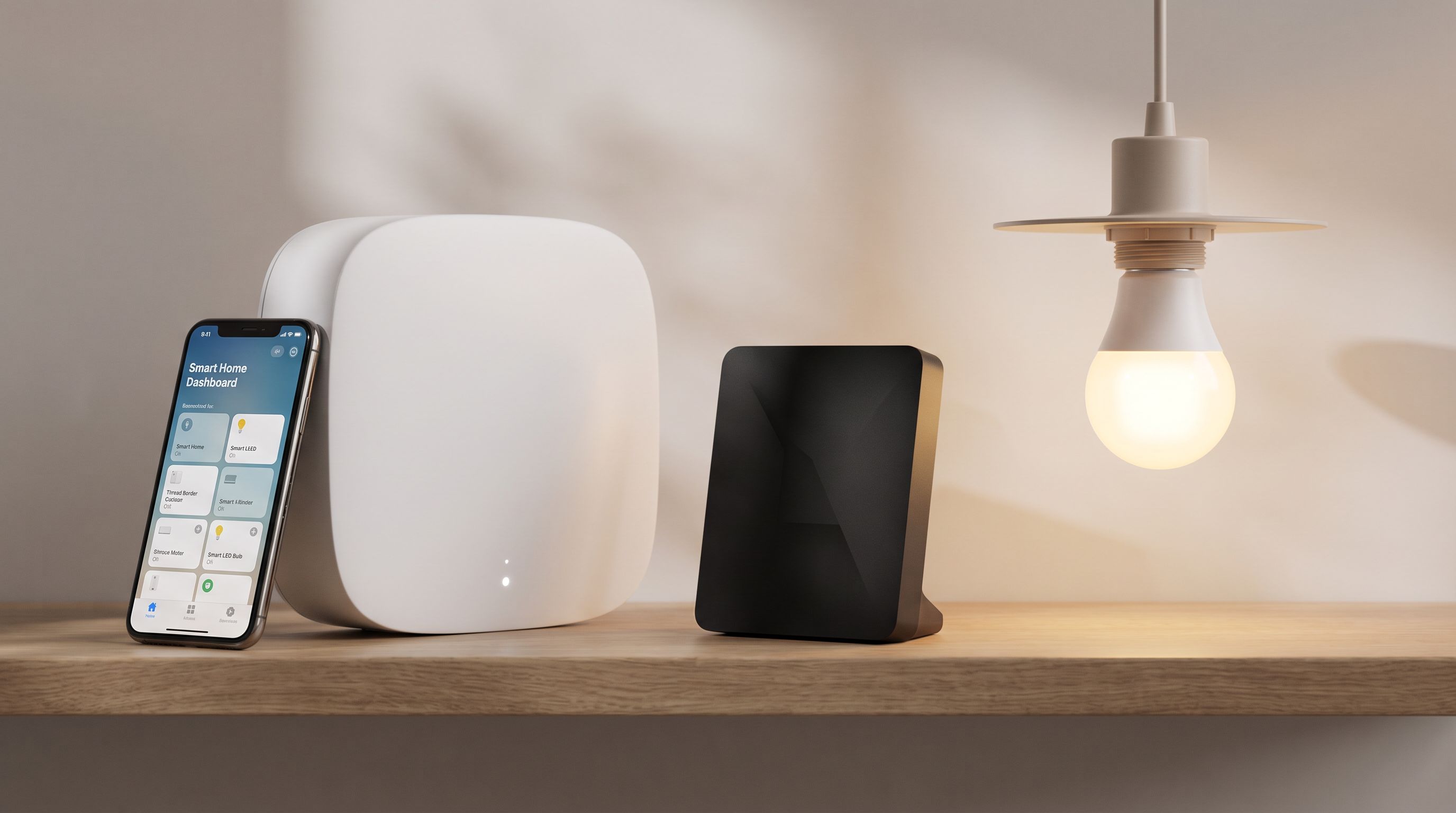
| Thread border router | Bridges Thread devices onto your IP network | Apple TV 4K, HomePod mini, Echo (4th Gen), Nest Hub (2nd gen), Aqara Hub M3, SmartThings Hub |
| Matter device | The accessory itself | Eve Energy, Aqara sensors, Nanoleaf bulbs, Yale/Aqara locks |
 Best all-rounder bridge today · Aqara Hub M3 — Check price on Amazon →
On the controller side, Apple Home has been the most consistently praised for Thread reliability, largely because Apple ships border routers with wired Ethernet in the Apple TV 4K — a genuinely underrated stability factor, since a border router on Wi-Fi inherits Wi-Fi's problems. Google Home has iterated hard on Matter but has a longer history of reported pairing flakiness. Alexa is the widest-reach controller thanks to sheer Echo install base; the fourth-generation Echo was one of the first mainstream speakers to include both Matter and a Thread radio. SmartThings remains the multi-protocol pragmatist, and Home Assistant has become the de facto power-user answer, because it supports Matter, Thread, Zigbee and Z-Wave side by side and doesn't hide the plumbing.
On the device side, the clearest signal of Matter working as intended is a Thread accessory that pairs to any platform without a vendor hub. Eve is the reference case here — the company moved its whole line to Thread and Matter, and products like Eve Energy commission directly into Apple, Google or Alexa. Aqara took the opposite, equally sensible route: its Hub M3 is simultaneously a Thread border router, a Matter controller and a Zigbee bridge, meaning a pile of cheap Aqara Zigbee sensors can be exposed to Matter platforms as Matter devices. That bridging pattern — proprietary radio in, Matter out — is quietly how most large existing smart homes will migrate, rather than by replacing everything.
What it means if you're shopping today
A few grounded conclusions.
Pick your controller first, then buy to it. Matter reduces lock-in but doesn't eliminate it. Advanced features — energy history, multi-button scenes, camera streams, vacuum maps — usually still live in the manufacturer's own app. Buy the accessory that your chosen platform actually lists as supported, not the one whose box says "Matter."
Make sure you own at least one Thread border router before you buy Thread devices. This is the single most common beginner mistake. A Thread sensor with no border router is inert. If you're in Apple's world, an Apple TV 4K with Ethernet is the sturdiest option. In Amazon's, a fourth-generation Echo covers it. If you want a border router that isn't tied to a voice assistant and also bridges Zigbee, the Aqara Hub M3 is the pragmatic pick.
Don't rip out Zigbee yet. If you already run a working Zigbee network, the sensible path is coexistence via a bridge, not replacement. The technical argument against long-term Zigbee-plus-Thread coexistence is real, but "long-term" is doing a lot of work in that sentence — for most homes it's a two-to-four-year drift, not a weekend project.
Expect old devices to be left behind. Reports of pre-Matter bulbs from budget brands failing to pair with current apps are common. Matter certification is forward-looking; it does not retroactively rescue 2021 hardware.
What to watch next
Watch three specific things rather than the marketing. First, whether platforms ship support for the newer Matter device types — cameras and appliances are the real test, because they're where proprietary apps still hold all the value. Second, whether Thread credential sharing becomes reliably automatic across brands, which would remove the last genuinely user-hostile part of the setup. Third, the quiet consolidation of bridges: if Zigbee's future is "behind a Matter bridge," then hub hardware becomes the strategic product, not the sensors.
The standard war is over in the sense that nobody is proposing a rival to Matter. It is not over in the sense that "Matter certified" guarantees a good experience. Buy the hub first, check the platform's own compatibility list second, and treat the logo as a floor rather than a promise.
FAQ
Is Thread better than Wi-Fi for smart home devices? For battery-powered sensors, yes on paper — Thread is low-power, mesh-based and self-healing, so devices extend each other's range. For high-bandwidth devices like cameras, Wi-Fi remains the right transport, and Matter supports both.
Do I need a hub if all my devices are Matter? Matter-over-Wi-Fi devices work without a dedicated hub, but you still need a Matter controller (a phone app plus a resident hub for remote access and automations). Matter-over-Thread devices additionally require a Thread border router.
Can one device be shared between Apple Home and Alexa? Yes — Matter supports multi-admin, letting a single accessory be commissioned into several platforms at once. Implementation quality varies by platform, and it's usually easier to set up from the ecosystem you added the device to first.
Should I buy Zigbee in 2026? Only if you already run a Zigbee coordinator and want cheap, plentiful sensors. For a new build-out, Matter over Thread is the more future-proof default.
Our picks
Aqara Smart Home Hub M3 for Advanced Automation, Matter Controller, IR | Thread Border Router, Features Zigbee, Bluetooth, Wi-Fi, PoE, Supports Apple HomeKit, Alexa, SmartThings, Home Assistant
Thread border router, Matter controller and bridge that exposes Zigbee sensors to Apple, Google and Alexa.

Amazon Echo Dot Max (newest model), Alexa speaker with room-filling sound and nearly 3x bass, Great for living rooms and medium-sized spaces, Designed for Alexa+, Graphite
Doubles as an Alexa hub with Matter and Thread built in, so Thread accessories have somewhere to join.
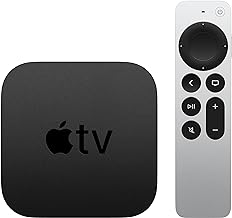
Apple 2021 Apple TV 4K 32GB - Black (2nd generation) (Renewed)
Acts as a Home hub and Thread border router with wired Ethernet, which matters for stability.

Eve Energy (Matter) - Smart Plug, App and Voice Control, 100% Privacy, Matter Over Thread, Works with Apple Home, Alexa, Google Home, SmartThings | app/voice control, automate lights/appliances, for Alexa/Apple/Google/SmartThings/Home Assistant, Thread Border Router requ.
A Thread-native smart plug with energy monitoring that pairs to any Matter platform, no vendor hub required.
Get the best tech deals in your inbox
Join the BytePlaza newsletter for hand-picked gadget deals and new buying guides. No spam, unsubscribe anytime.
Related reads
AI Agents in the Smart Home, Explained (2026)
Alexa+, Gemini for Home and Home Assistant are turning rigid routines into AI agents. Here's what actually ships in 2026 — and what to buy now.
Smart Blinds in 2026: Retrofit Picks That Beat Replacing
Comparing the best smart blinds 2026 options: retrofit motors like SwitchBot Blind Tilt vs made-to-measure shades, on Matter/Thread, solar charging and noise.
Smart Thermostats in 2026: 4 Picks With the Fastest Payback
The best smart thermostat 2026 picks compared on real energy savings, C-wire needs and Matter/Thread support — plus which one pays for itself fastest.