Smart Air Conditioners in 2026: 4 Picks Sized by Room
The best smart air conditioner depends on your window and your square footage. We compared Wi-Fi window and portable ACs on BTUs, noise, app control and Matter.
Reader-supported: we may earn a commission from links on this page, at no extra cost to you. It never affects our picks. Learn more.
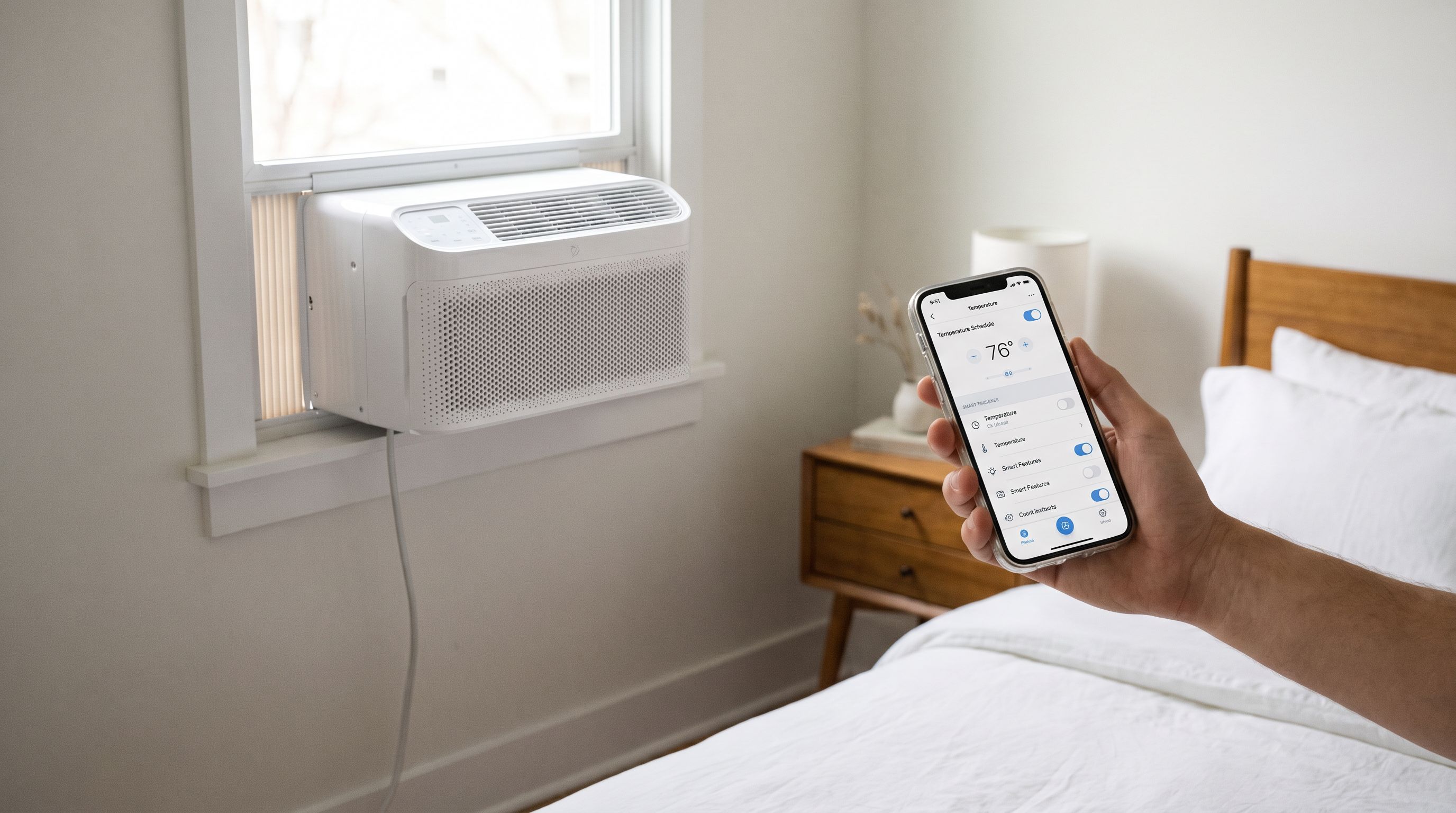
Most "smart" air conditioners are just regular air conditioners with a Wi-Fi chip bolted on. That's not automatically a bad thing — being able to cool the bedroom from the train home is genuinely useful — but it means the app is the last thing you should shop on. Cooling capacity, noise, and whether the thing physically fits your window matter far more.
We compared the current crop of Wi-Fi window and portable units against manufacturer specs, independent lab results from outlets like Wirecutter and Consumer Reports, and verified owner feedback, then sorted them by the rooms they actually suit. Here's how to pick the best smart air conditioner for your space in 2026.
Start with BTUs, not brands
BTU (British Thermal Units per hour) is the cooling capacity rating. Undersize it and the unit runs flat out and never catches up; oversize it and a non-inverter model short-cycles, leaving the room cold and clammy because it never runs long enough to dehumidify.
The U.S. Department of Energy's rough starting point is 20 BTU per square foot, then adjust:
| Room size | Starting BTU | Adjust up if… |
|---|---|---|
| 150–250 sq ft (bedroom, office) | 6,000–8,000 | Sunny south/west exposure, top floor |
| 250–400 sq ft (living room) | 8,000–12,000 | Kitchen adjoins, ceilings over 8 ft |
| 400–550 sq ft (open plan) | 12,000–14,000 | More than two people regularly in the room |
| 550+ sq ft | 14,000+ or two units | Poor insulation, lots of glass |
Add roughly 10% for a very sunny room, subtract 10% for a heavily shaded one, and add about 600 BTU per extra person beyond two. Note that portable ACs are often rated two ways — the older DOE rating and the newer SACC (Seasonally Adjusted Cooling Capacity) figure. SACC is the honest one, and it's usually well below the headline number. A "14,000 BTU" portable may be an 8,000-ish BTU SACC machine in practice.
Window vs. portable: an easy call, mostly
If your window can take one, buy a window unit. Portables have to dump heat through a hose, and single-hose designs create negative pressure that sucks hot outside air back into the room. They're louder, less efficient, and cool less than their ratings suggest.
Portables earn their place in three situations: casement or sliding windows that won't take a sash unit, buildings or leases that ban window installs, and rooms where you need to move cooling around. If that's you, buy a dual-hose model — it's the single biggest quality difference in the category.
The picks
Best overall: Midea U-Shaped 8,000 BTU Smart Inverter
The Midea U-Shaped has been the reference point for years, and 2026 hasn't dislodged it. The U-shaped body straddles the window sash, so the glass closes down through the middle of the unit — that puts the compressor outside and the noisy half of the machine on the far side of a closed window. Independent testing has consistently placed it among the quietest window ACs available, quiet enough that most owners sleep through it on low.
It's also an inverter unit, meaning the compressor modulates rather than slamming on and off. That's better dehumidification, steadier temperatures, and a big efficiency advantage — Midea claims substantial energy savings versus conventional units, and its CEER rating backs up the general claim. The app handles scheduling, geofencing, and remote start, and it works with Alexa and Google Assistant.
Two caveats worth knowing before you order: the U-shape needs a window with enough clearance below the sill and a standard double-hung frame, and installation is a genuine two-person job. Check Midea's window requirement chart first.
Best design and easiest install: Windmill AC 8,000 BTU
The Windmill AC is the one to buy if the Midea's install requirements scare you or you want something that doesn't look like an appliance. Airflow is directed upward and forward rather than straight out at your face, the fascia is clean fabric-and-plastic rather than louvered beige, and the sash-mounted install is about as simple as window ACs get. Owner feedback is consistently positive on setup time.
It's not as quiet as the U-shaped Midea, and it doesn't use a full inverter compressor, so expect more audible cycling. But for a 250–350 sq ft bedroom or home office where the unit is in your eyeline every day, the tradeoff is defensible. The app covers scheduling and modes, with Alexa and Google support.
Best for keeping your view: GE Profile ClearView 10,000 BTU
The GE Profile ClearView takes a different approach to the same problem: instead of wrapping the window, it sits low and wide so the top two-thirds of the sash stays clear glass. PCMag named the ClearView its top overall smart AC for 2026, citing the app and voice control plus genuinely useful energy-usage reporting in the SmartHQ app.
At 10,000 BTU it's the right size for a living room in the 350–450 sq ft range. GE's smart platform supports Alexa, Google Assistant, and SmartThings. If you're in a Matter-first household, treat that as a bonus rather than a guarantee — see the Matter section below.
Best portable: Midea Duo 14,000 BTU (MAP14S1TBL)
The Midea Duo is the portable we'd point most people to. It pairs a dual-hose exhaust design with an inverter compressor, which is a rare combination and addresses the two things that usually make portables disappointing. Forbes Vetted picked it as one of the best portables of 2026 after testing. The Wi-Fi app does scheduling, mode changes, and remote power, and it works with the usual voice assistants.
It is still a portable: it takes up floor space, it needs a drain plan in humid weather, and the hoses are unlovely. But in a room where a window unit isn't an option, it's the closest thing to window-unit performance you can get.
Premium pick for big rooms: Whynter NEX ARC-1230WN
If the room is large, open-concept, or has a cooling load a mid-size portable can't touch, the Whynter NEX ARC-1230WN is the step up. It was named the top portable AC in recent testing for its ability to handle large open spaces, and it includes the dehumidify and fan modes you'd expect. It's a bigger, heavier, pricier machine — worth it only if the square footage genuinely demands it.
Where Matter actually stands
Matter 1.2 and later added an Air Conditioner device type, and Matter over Wi-Fi is well suited to a plugged-in appliance. In practice, though, native Matter support on window and portable ACs is still thin on the ground in 2026. Most units here connect over the manufacturer's own Wi-Fi cloud and expose control through Alexa, Google Home, and sometimes SmartThings.
What that means for you:
- Don't buy on a Matter promise. If a listing says "Matter-ready" or "coming via firmware update," treat it as a maybe.
- A smart plug is not a solution. Cutting power to an AC doesn't set a temperature, and many units don't resume their previous state after a power cut. Check for an "auto-restart" feature if you go this route.
- Check the ecosystem you already use. If everything else in your house is HomeKit, a unit with only Alexa and Google support will be a daily annoyance.
- A smart thermostat bridge like a SmartThings or Sensibo controller can add app and schedule control to a dumb unit with an IR remote — often cheaper than replacing a working AC.
What else to check before you buy
Noise. Manufacturer dB figures are measured in ideal conditions and aren't comparable across brands. Inverter models and U-shaped designs are the reliable path to quiet.
Drainage. Modern window units mostly evaporate condensate out the back. Portables usually do too, but in very humid climates you'll be emptying a tank or running a drain hose.
Energy labels. Look for CEER on window units and the ENERGY STAR badge. Inverter models dominate the top of the efficiency charts.
Window compatibility. Measure your sash width, the height of the opening, and — for U-shaped units — the clearance below the sill. This is the number-one cause of returns.
FAQ
How many BTUs do I need for a 300 sq ft room? Around 8,000 BTU as a baseline, going toward 10,000 if the room is sunny, on a top floor, or opens into a kitchen.
Are portable ACs worth it? Only when a window unit isn't possible. If you do go portable, choose a dual-hose model like the Midea Duo — single-hose units fight themselves by pulling hot air back into the room.
Do smart ACs actually save money? The Wi-Fi part saves a little through scheduling and geofencing so you're not cooling an empty room. The bigger savings come from the inverter compressor, not the app.
Can I control an air conditioner with HomeKit? Native HomeKit support is rare on window and portable ACs. An IR bridge controller is usually the most practical route, or check for SmartThings/Matter support case by case.
Window or U-shaped — is the U-shape worth the hassle? If your window fits one, yes. Putting the compressor outside the closed sash is the most effective noise reduction in the category, and you keep the window's ability to close and lock.
Our picks
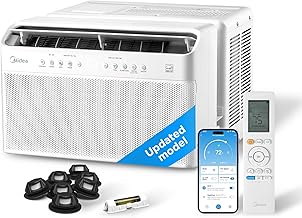
Midea 8,000 BTU U-Shaped Smart Inverter Window AC, Cools 350 Sq Ft, Ultra Quiet, Alexa/Google Compatible, 37% Energy Savings
Inverter-quiet, wildly efficient, and the U-shape lets the window still close and lock.

Windmill 8,000 BTU Quiet Window Air Conditioner, Cools up to 250-350 sq ft
Front-facing airflow, simple sash install, and a clean app — great for a bedroom or home office.

GE Profile ClearView Inverter Window Air Conditioner 10,300 BTU, Ultra Quiet, Full Window View, Cools Up to 450 Sq Ft, Energy Star, WiFi Smart, Remote
Sits low in the sash so you keep the window view, with app control and energy reports.

Midea Duo 14,000 BTU Portable Air Conditioner, Inverter Ultra Quiet
Dual-hose inverter design cools far better than single-hose portables, with Wi-Fi scheduling.

Whynter Portable Air Conditioner 13000 BTU Dual Hose Smart Wi-Fi ARC-1280WX
Serious cooling power for open-concept spaces where a window unit won't reach.
Get the best tech deals in your inbox
Join the BytePlaza newsletter for hand-picked gadget deals and new buying guides. No spam, unsubscribe anytime.
Related reads
Smart Humidifiers in 2026: 4 Picks for a Bone-Dry Desk
Looking for the best smart humidifier in 2026? We compared hygrometer automation, tank size, cleaning hassle and app/Matter control for bedrooms and desks.
Smart Blinds in 2026: Retrofit Picks That Beat Replacing
Comparing the best smart blinds 2026 options: retrofit motors like SwitchBot Blind Tilt vs made-to-measure shades, on Matter/Thread, solar charging and noise.
Smart Under-Cabinet Lighting in 2026: 4 Picks That Deliver
The best smart under cabinet lighting for 2026, compared: Matter-ready LED strips vs puck lights, plug-in vs hardwired install, and which options nail color accuracy.