Robot Lawn Mowers, Explained: Why 2026 Is Different
Boundary wires are out, LiDAR and cameras are in. Here's what's actually shipping in robot lawn mowers, who the real players are, and whether to buy now.
Reader-supported: we may earn a commission from links on this page, at no extra cost to you. It never affects our picks. Learn more.
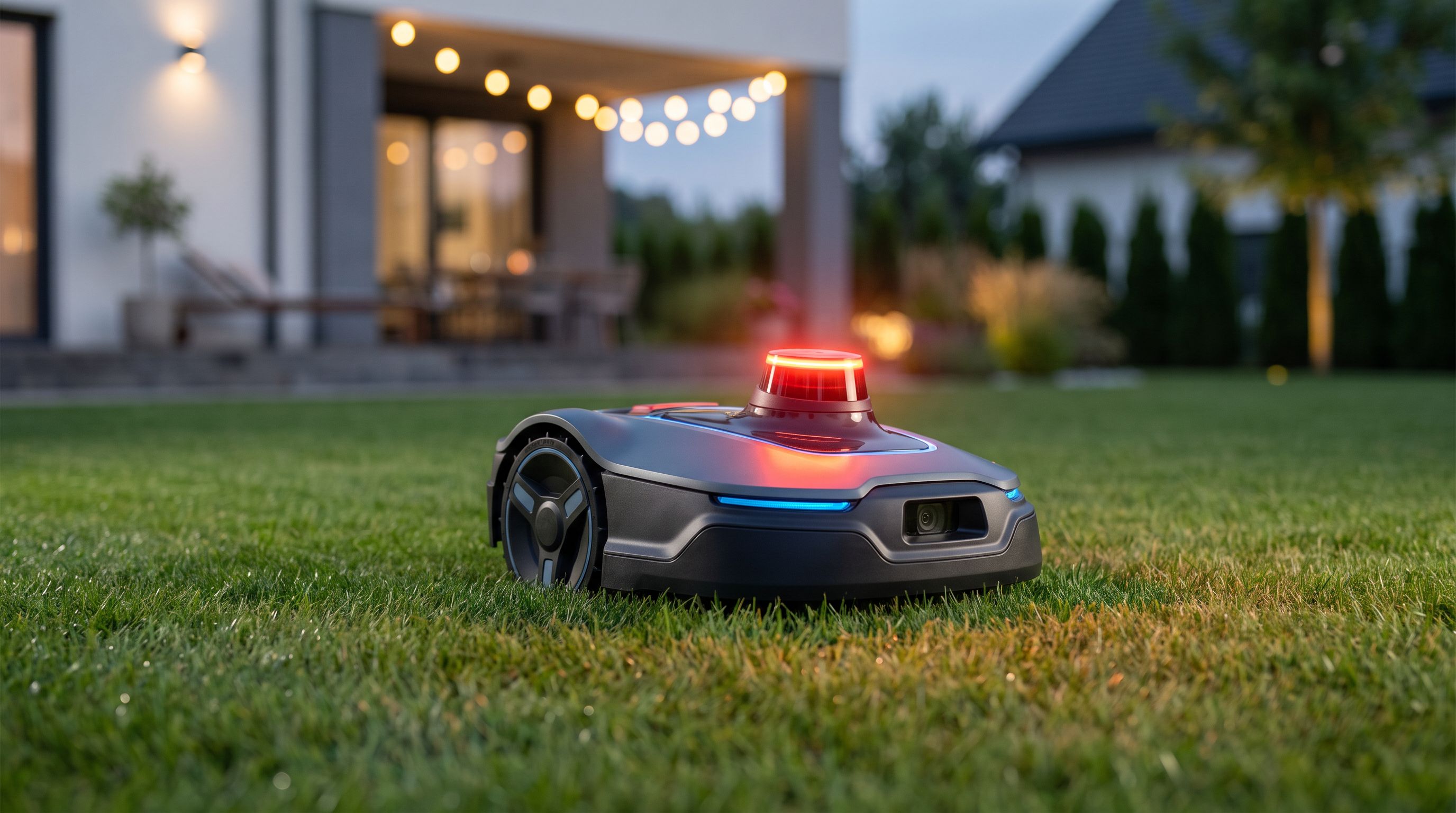
Robot vacuums took roughly fifteen years to go from novelty to normal. Robot lawn mowers have been on sale in Europe for even longer — Husqvarna shipped its first Automower in the mid-1990s — and yet most American driveways still have a gas mower in the garage. Something changed in the last two product cycles, though. Walk the floor at CES, scan the 2026 review roundups, and you'll see the same pattern: the buried boundary wire is dying, and satellite, camera, and LiDAR navigation are taking over.
That's not a marginal spec bump. The wire was the single biggest reason normal people didn't buy these things. Removing it changes who the product is for.
What's Actually Happening Now
For most of the category's history, a robot mower required you to trench a perimeter wire around your entire lawn, plus around every flower bed, tree ring, and koi pond. It worked, and it still works — but it's a Saturday of labor before the robot does a minute of mowing, and any wire break sends you hunting with a signal tracer.
The current generation mostly replaces that with some combination of three things:
- RTK GNSS — a satellite receiver plus a fixed reference antenna in your yard, giving centimetre-class positioning. You define the lawn by walking the robot around it once, or drawing it in an app.
- Vision — cameras and onboard AI that classify "grass" versus "not grass," so the machine can find its own edges.
- LiDAR — spinning or solid-state laser scanners for 3D obstacle detection and, increasingly, primary navigation under tree cover where satellite signal drops out.
Coverage of CES 2026 framed this as the industry's real direction of travel: less about cutting quality, which was largely solved years ago, and more about autonomy — can the thing map, route, and avoid without you babysitting it? Enthusiast analysis like The Smart Home Hookup's 2026 update describes the ideal spec sheet as a big battery, 3D LiDAR, four-wheel drive with independent front steering, and camera-based obstacle recognition. Almost nothing ships with all of that at once yet, which tells you how young this phase still is.
The other quiet shift is price structure. Early wire-free models were firmly luxury items. Today the category spans from entry-level units aimed at a quarter-acre up to multi-acre machines, and the mid-range is where most of the new launches are landing.
The Real Players and What's Actually Shipping
Husqvarna remains the incumbent and the benchmark. The Automower line — the Automower 430X being the familiar workhorse — has a track record no startup can match, and Husqvarna has since layered in wire-free EPOS satellite tech on its higher-end and commercial models. If you care more about a machine that still runs in year seven than about the newest sensor, this is the conservative pick.
Segway has been the most aggressive challenger. Its Navimow line, including the Navimow i105N, uses RTK satellite navigation with no perimeter wire, and Segway's newer LiDAR-equipped models — the i-series units like the i215 that keep appearing in 2026 buyer roundups — are pitched squarely at people with quarter-acre-ish suburban lots and trees that block the sky. The LiDAR here isn't a gimmick; it's the fix for RTK's biggest weakness.
Worx took the opposite route. The Landroid Vision skips satellites entirely and uses a camera with onboard AI to identify grass, which means no reference antenna to mount and no dead zones under a canopy. Reviewers generally treat it as the easiest setup in the category, with the tradeoff that vision systems can get confused by unusual lawn conditions in ways a mapped robot won't.
EcoFlow, better known for power stations, entered with the BLADE, combining RTK with LiDAR-assisted obstacle avoidance and an optional attachment that sweeps debris while it mows — one of the few genuinely novel ideas in the space.
Beyond those, Mammotion (LUBA and YUKA lines) pushes four-wheel drive and slope capability for irregular or hilly properties, and Ecovacs has extended its robot-vacuum expertise outdoors with the GOAT series, which leans heavily on vision.
| Approach | Typical example | Strength | Main tradeoff |
|---|---|---|---|
| Boundary wire | Husqvarna Automower 430X | Proven, predictable, works anywhere | Install labour; wire breaks |
| RTK satellite | Segway Navimow i105N | No wire, accurate mapped zones | Needs sky view; antenna placement |
| Camera / vision | Worx Landroid Vision | Simplest setup, no antenna | Can misread odd lawn conditions |
| RTK + LiDAR | EcoFlow BLADE, Segway i-series | Handles tree cover and obstacles | Higher cost, newer software |
 The long-running benchmark · Husqvarna Automower 430X Robotic Lawn Mower — Check price on Amazon →
 Closest you can buy today · Segway Navimow i105N Robot Lawn Mower — Check price on Amazon →
What It Means If You're Shopping Today
Be honest about the job. These are maintenance machines, not rescue machines. Multiple 2026 expert roundups make the same point: battery robots are built to shave a little off a lawn every day or two, not to reclaim tall grass or weedy patches. If you let your yard go for three weeks, you still need a conventional mower.
The payoff is real, though. A horticulturist's 2026 write-up describes customers going from three to four hours of weekly mowing to essentially none. That's the actual product: time, not a better-looking lawn. And cost-benefit guides frame the math the same way — worth it if the hours saved justify the purchase plus ongoing blade replacements, winter storage, and the occasional software or sensor headache.
Where these robots still struggle, according to owner discussions, is edges and corners. Most leave a strip you'll need to trim. Slopes, narrow passages between zones, and gardens with lots of decorative obstacles all raise the difficulty. And there's a demographic wrinkle that came up in enthusiast forums: the people with the most to gain — busy households already paying a lawn service — are also the ones least motivated to trade a fully hands-off service for a machine they have to manage.
Practically: if your lawn is open, mostly flat, under half an acre, and gets decent sky view, a wire-free RTK model like the Navimow i105N is the lowest-friction entry. Heavy tree cover pushes you toward vision (Landroid Vision) or LiDAR-equipped models. Complex, sloped, or multi-zone properties are where Husqvarna's decades of edge-case engineering — or Mammotion's four-wheel-drive hardware — earn their keep.
What to Watch Next
Three things. First, LiDAR moving down-market — it's currently the differentiator on flagship models, and if it follows the robot-vacuum pattern it becomes standard equipment fast. Second, multi-function yard robots: EcoFlow's sweeper attachment hints at machines that do more than cut, and CES 2026 coverage suggested manufacturers are thinking about the yard as a platform rather than a single chore. Third, software support. These are internet-connected robots with app dependencies, and the category is new enough that nobody knows which 2026 brands will still be pushing firmware in 2031. That's a genuine argument for buying from established names.
The honest summary: robot mowers are now good enough that the remaining objections are about price, edge trimming, and trust — not capability. That's a much healthier place for a category to be than it was three years ago.
FAQ
Do I still need a regular mower? Probably, yes — for tall grass, overgrown areas, and edge trimming. Robot mowers are designed for frequent light cutting, not catch-up work.
Does wire-free actually mean no installation? Less installation, not none. RTK systems still require mounting a reference antenna with clear sky view, plus a charging base. Vision-based models like the Landroid Vision skip the antenna entirely.
What happens under trees? RTK satellite accuracy degrades under dense canopy. That's exactly the gap LiDAR and camera navigation are meant to fill, which is why newer models increasingly combine them.
Are they loud? Far quieter than gas mowers — they're battery-powered and cut small amounts frequently. Many owners run them at night, though obstacle detection is generally better in daylight on camera-based models.
Is the lawn service math worth it? It depends entirely on what you currently pay. Cost guides suggest the case is strongest for people who mow themselves and value the recovered hours, and weakest for those already happy with a full-service crew.
Our picks
Segway Navimow i105N Robot Lawn Mower Perimeter Wire Free 1/8 Acre RTK+Vision Robotic Lawnmower, AI-Assisted Mapping, Virtual Boundary, APP Control, 58dB(A) Quiet, Multi-Zone Management
Wire-free RTK satellite navigation from one of the category's biggest names, sized for smaller yards.

WORX Robot Lawn Mower 4WD for 1/2 Acre, No Perimeter Wire, WR342
Uses a camera and AI to see grass vs. non-grass instead of relying on buried boundary wire.
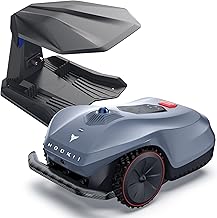
Neomow X SE 360° 3D LiDAR Navigation Robot Lawn Mower for 0.75 Acre
RTK plus LiDAR-assisted obstacle avoidance, with an optional sweeper attachment for debris.
Amazon Renewed 970839403 AM430XH 3200 m² Area Capacity Robotic Lawn Automower (Like New) (Renewed)
Boundary-wire veteran with a two-decade track record of reliability on complex lawns.
Get the best tech deals in your inbox
Join the BytePlaza newsletter for hand-picked gadget deals and new buying guides. No spam, unsubscribe anytime.
Related reads
Home Robots in 2026: Are They Finally Actually Useful?
CES 2026 was packed with humanoid home robots. Here's what's actually shipping, what's still a concept, and which robots are genuinely worth buying right now.
The Robot Vacuum Arms Race, Explained
Mopping, self-emptying docks, stair-climbing legs and literal robot arms: how home-cleaning robots got so capable, and what's actually worth buying now.

Wearable Health Tech in 2026: The Sensors Coming Next
Smart rings and watches are gaining AI, not new sensors. Here's what's actually shipping in 2026, what's still unproven, and what's worth buying now.