Home Robots in 2026: Are They Finally Actually Useful?
CES 2026 was packed with humanoid home robots. Here's what's actually shipping, what's still a concept, and which robots are genuinely worth buying right now.
Reader-supported: we may earn a commission from links on this page, at no extra cost to you. It never affects our picks. Learn more.
Every January, the robots come out. And every January, the headlines say this is the year. CES 2026 was no different — walk the halls (or read the coverage) and you'd think laundry-folding humanoids are already queued up on your doorstep.
The reality is more interesting than either the hype or the eye-rolling. Something genuinely did change over the last two years: AI models got good enough at perception and language that robots stopped being remote-controlled novelties and started being machines that can figure out a messy room on their own. What hasn't changed is manufacturing, cost, reliability and the brutal economics of hardware. So 2026 is a strange in-between year — the demos got real, the shipping products stayed modest, and the gap between the two is where most of the confusion lives.
Here's an honest read on what's happening, what's actually buyable, and what any of it means if you're spending money this year.
What's actually happening now
The headline shift reported out of CES 2026 is that humanoid and semi-humanoid robots moved from stage choreography to task demos. Coverage from the show floor repeatedly described machines handling recognisable household work — tidying, loading things, folding laundry, moving around a kitchen — rather than just walking, waving and dancing. Several outlets framed it the same way: AI has finally given these bots enough "brains" to string together multi-step chores instead of running a single scripted routine.
Three technical forces are behind that:
Vision-language-action models. Robots increasingly run on the same kind of large multimodal models powering chatbots, adapted to output motor commands. That means you can say "put the mug in the sink" and the robot reasons about which object is the mug. This is the single biggest change and it's why demos suddenly look less canned.
Cheaper, better hardware. Actuators, depth cameras, LiDAR and on-device compute have all fallen in price, largely on the back of the smartphone and EV supply chains. A robot arm that cost a fortune a decade ago is now a component.
The vacuum industry as a Trojan horse. The most quietly important robots in your home are the ones already there. Robot vacuums have become extraordinarily sophisticated navigation platforms — and the leading brands are openly using them as a beachhead for general-purpose home robotics.
What has not changed: safety certification, price, repairability and the messy unpredictability of real homes. A demo runs for four minutes in a controlled booth. Your kitchen floor has a dog, a charging cable and a toddler.
The real players and what's actually shipping
Split the field into three tiers, because the marketing deliberately blurs them.
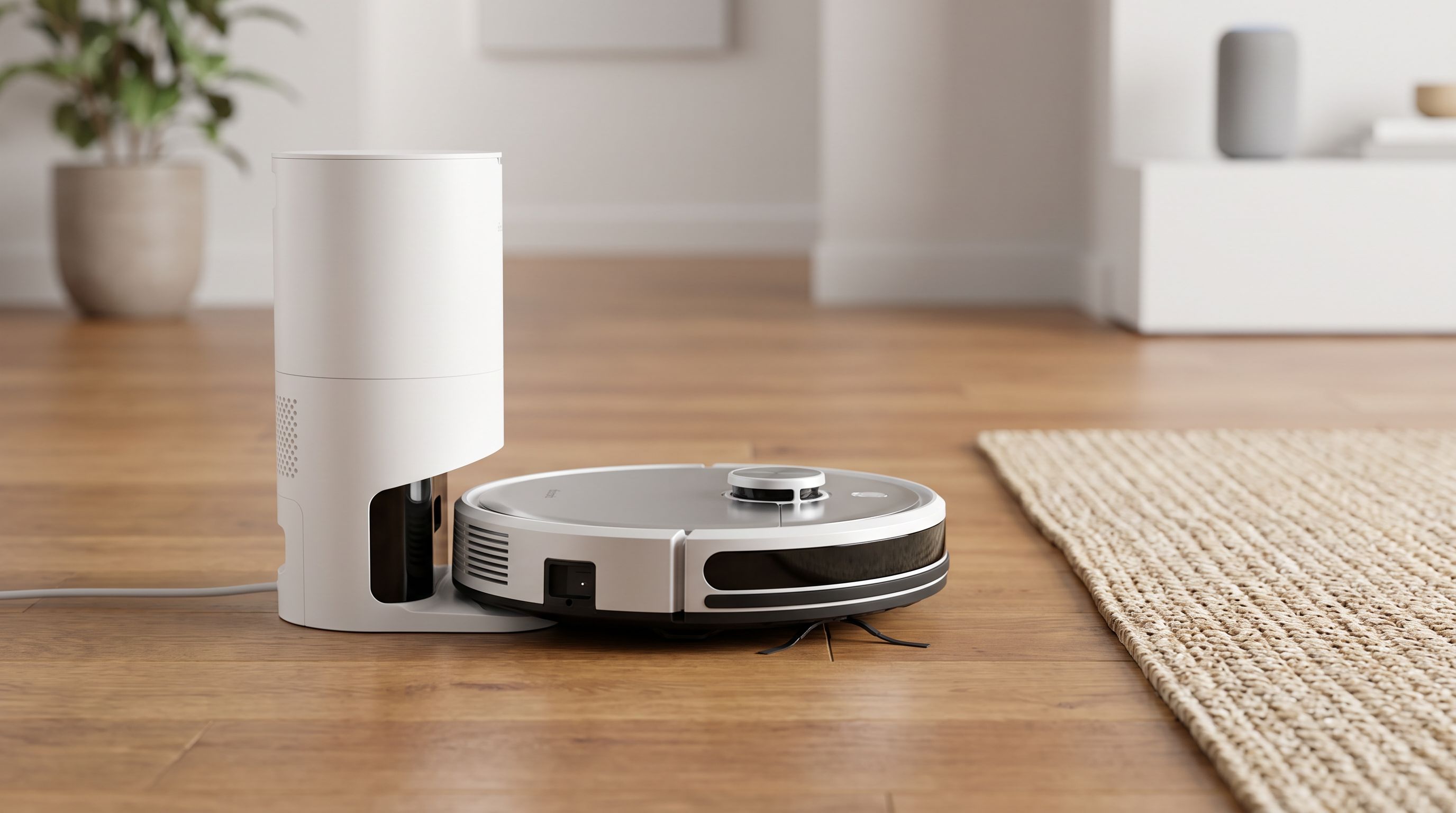
Tier 1: shipping and mainstream. This is robot vacuums and mops, and it is where consumer home robotics genuinely lives. Roborock's Saros Z70 is the emblematic product: a flagship vacuum with a small folding mechanical arm (the company calls it OmniGrip) designed to pick up socks and light obstacles rather than just steer around them. It's a limited capability — it isn't tidying your house — but it's the first mainstream consumer robot sold with manipulation as a feature, and that's a real milestone. Dreame's X50 Ultra took a different route, using retractable legs to lift itself over thresholds, which is a genuinely clever answer to the boring problem that kills most robots: door sills. iRobot, the company that created the category, has been through financial turbulence but still sells dependable self-emptying, self-washing hardware like the Roomba Combo 10 Max.
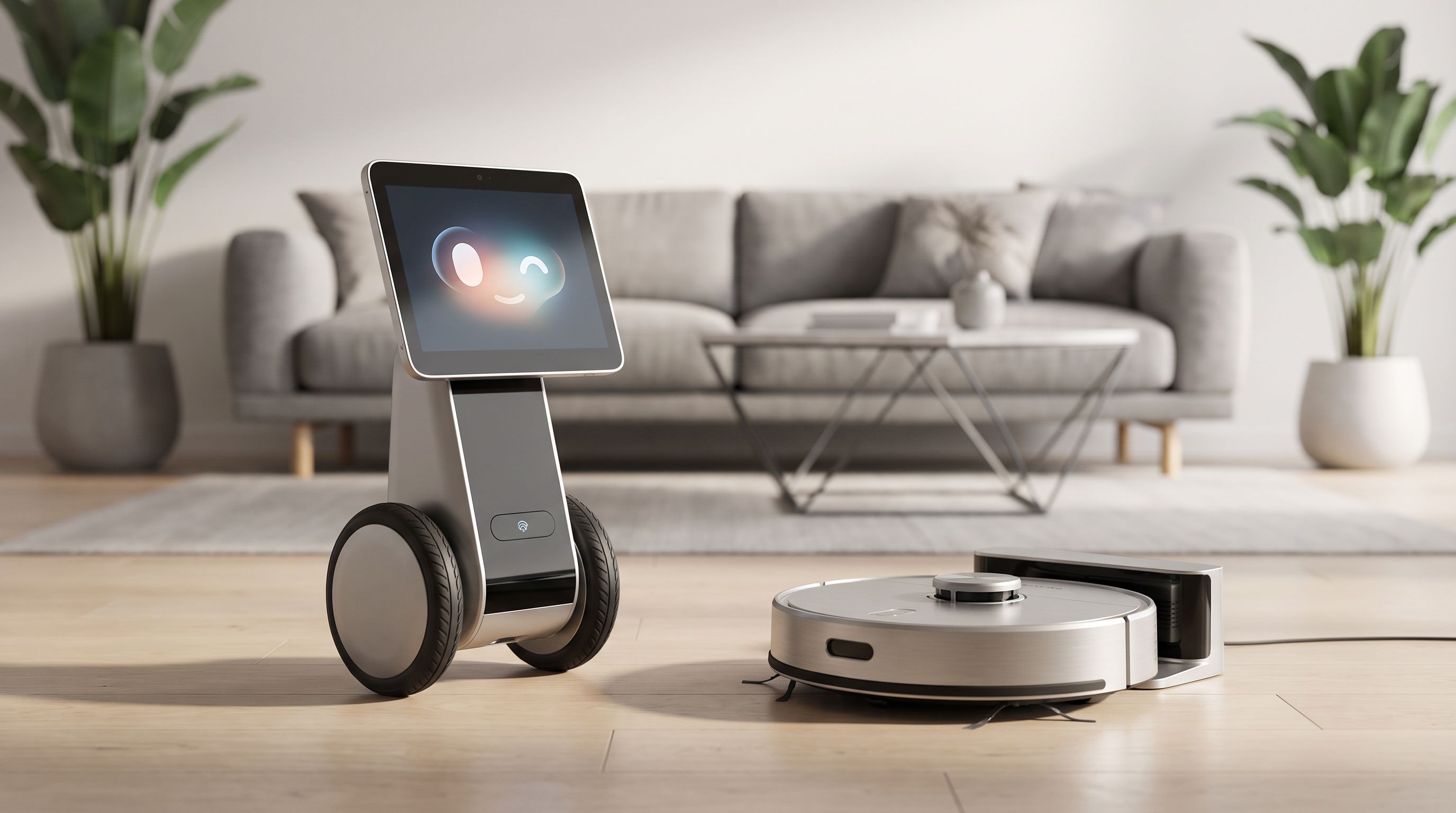
Tier 2: shipping but niche. Amazon Astro is the odd one out — an actual wheeled household robot with a screen face, sold to consumers (on an invite/limited basis in the US) for home monitoring, video calls and Alexa tasks. It's the closest thing to a "companion robot" you can legitimately own, and reviews have generally landed on the same verdict: charming, capable of a few genuinely useful patrol and check-in tasks, not a labour-saving device. Samsung's Ballie, the rolling projector-bot, has been shown repeatedly at CES with a promised consumer launch; treat launch timing as unconfirmed until it's on a shelf.
 The shipping 'home robot' that actually exists · Amazon Astro — Check price on Amazon →
Tier 3: announced, demoed, not consumer-buyable. This is where CES 2026's humanoids sit. LG showed CLOiD as a home assistant concept coordinating household tasks. Chinese firms including Unitree have real, impressive bipedal and quadruped hardware — and Unitree does sell units, but at developer/industrial pricing and with a skill set aimed at research, not chores. Figure, 1X and Tesla's Optimus are all pursuing home deployment, and all of them are currently at the pilot, waitlist or internal-testing stage. Nothing in this tier is a product you order and use next week.
| Tier | Examples | Can you buy it? | What it actually does |
|---|---|---|---|
| Mainstream floor robots | Roborock Saros Z70, Dreame X50 Ultra, Roomba Combo 10 Max | Yes, widely | Vacuum, mop, self-empty; Z70 lifts small clutter |
| Niche household robots | Amazon Astro | Limited availability | Patrol, video calls, voice assistant on wheels |
| Humanoids / concepts | LG CLOiD, Samsung Ballie, Figure, 1X, Optimus, Unitree | No (or dev-only) | Task demos, pilots, research units |
 Best mobility engineering you can buy now · Dreame X50 Ultra — Check price on Amazon →
 Closest thing to a home robot with arms · Roborock Saros Z70 — Check price on Amazon →
What it means if you're shopping today
Be blunt with yourself about what problem you're solving.
If you want chores done, buy a floor robot. It is the only category where home robotics reliably pays for itself in time saved. The meaningful 2026 upgrades are arm-based obstacle handling (Saros Z70), threshold climbing (X50 Ultra) and hands-off maintenance docks that empty dust and wash and dry mop pads. Those are incremental, but incremental is exactly what works.
If you want a companion or a presence in the house, that's a different purchase. Astro is the honest option, with honest limits. Don't buy it expecting it to do anything physical.
Ignore "AI" as a spec line. Nearly every 2026 robot claims an AI brain. What matters is whether it translates into behaviour you can verify: does it avoid cables, does it recognise pet accidents, does it map multiple floors, does it work without cloud access. Reviews and spec sheets tell you this; marketing copy doesn't.
Don't pre-order a humanoid. Robotics history is a graveyard of deposits — Anki, Jibo, Kuri and others all shipped or promised charming home robots and then shut down, in some cases bricking the hardware. If a company can't show you a unit in a stranger's living room, treat it as a research project.
What to watch next
Watch for the first consumer robot arm that leaves the floor — a fixed or mobile manipulator that loads a dishwasher in a real home, not a booth. Watch whether Samsung actually ships Ballie and at what price, since a big-brand launch would set the ceiling for the whole companion category. Watch Chinese humanoid pricing, because Unitree and its rivals have repeatedly undercut Western expectations by an order of magnitude, and cost collapse is the precondition for home deployment. And watch for on-device models: robots that reason locally will be faster, more private and less likely to die when a server does.
The most realistic 2026 forecast isn't a humanoid in your hallway. It's your vacuum quietly getting hands.
FAQ
Can I buy a humanoid home robot in 2026? Not as a normal consumer product. Units like Unitree's are sold at developer/industrial pricing, and Figure, 1X and Tesla remain at pilot or waitlist stage. CES demos are not shipping products.
Is the Roborock Saros Z70's arm actually useful? On paper and in reviews it handles light objects like socks and small items, not general tidying. It's a real capability, but a narrow one — judge the machine primarily as a vacuum.
Is Amazon Astro worth it? Only if you specifically want mobile home monitoring, video check-ins and a roaming Alexa. Reviews consistently note it doesn't perform physical chores.
What's the biggest risk buying an early home robot? Company failure and cloud dependency. Several beloved home robots have been discontinued and lost functionality when servers shut down. Prefer products with local processing and an established manufacturer.
Our picks
roborock Saros Z70 Robot Vacuum and Mop, OmniGrip Arm, AI-Powered, 22,000Pa
The first mainstream robot vacuum with a folding mechanical arm that picks up socks and small clutter.
Amazon Astro, Household robot for home monitoring, with Alexa, Includes a Ring Home Trial
A wheeled, screen-faced household robot for patrol, video calls and Alexa errands — limited availability, but real.
dreame X50 Ultra Complete Robot Vacuum with Self-Cleaning & Emptying
Retractable legs let it climb thresholds, a preview of the locomotion tricks humanoids are chasing.

iRobot Roomba Combo 10 Max Robot Vacuum and Mop + AutoWash Dock (x0850) - Multi-Functional Base, Refills Bin, Washes & Dries It's Mop Pad, Self-Emptying, Auto-Retract Mop Pad, Avoids Obstacles
Self-emptying and self-washing chore automation from the brand that made the category mainstream.
Get the best tech deals in your inbox
Join the BytePlaza newsletter for hand-picked gadget deals and new buying guides. No spam, unsubscribe anytime.
Related reads
Consumer Drones in 2026, Explained: Autonomy Meets Cameras
Consumer drones in 2026 are getting smarter cameras, better obstacle avoidance and 360° capture. Here's what's actually shipping — and what it means for buyers.
AI Companion Gadgets, Explained: Where the Market Really Is
AI pins, pendants and desk robots promised a phone-free future. Here's what actually shipped, what reviewers found, and which AI gadgets are worth buying now.
Best Robot Vacuum With Self Emptying Base (2026 Guide)
We compare the best robot vacuums with self-emptying bases in 2026 — from budget auto-empty docks to mop-washing all-in-one stations — and which upgrades are worth it.