Consumer Drones in 2026, Explained: Autonomy Meets Cameras
Consumer drones in 2026 are getting smarter cameras, better obstacle avoidance and 360° capture. Here's what's actually shipping — and what it means for buyers.
Reader-supported: we may earn a commission from links on this page, at no extra cost to you. It never affects our picks. Learn more.
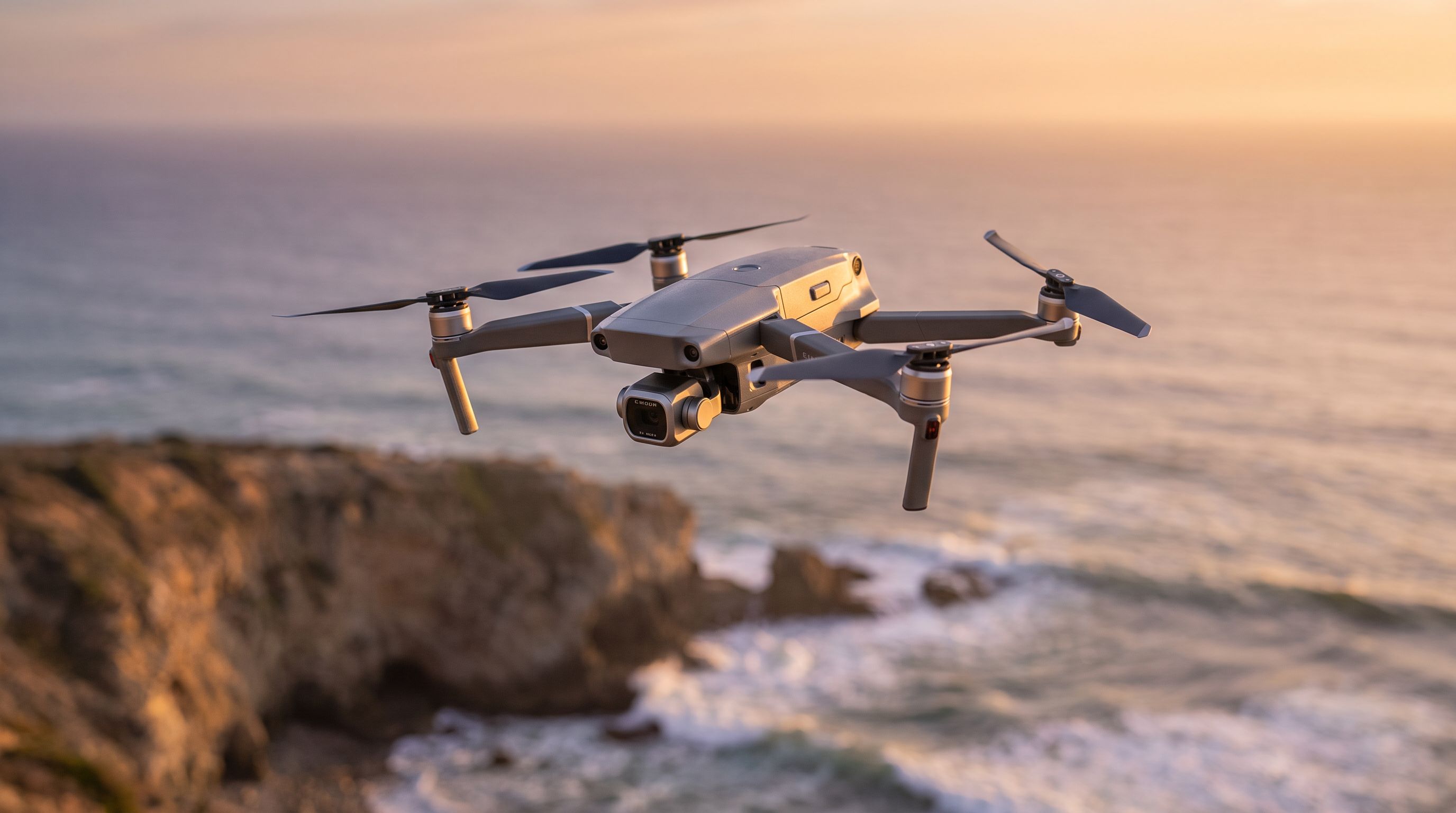
The most interesting thing about consumer drones in 2026 isn't how far they can fly or how many megapixels they capture. It's how little you have to do to get a usable shot. The category has quietly shifted from "remote-controlled aircraft with a camera bolted on" to "flying camera that mostly flies itself" — and that shift changes what's worth buying, and what's worth waiting for.
That's the honest headline. Everything else — the billion-dollar market forecasts, the CES concept reels, the BVLOS regulatory chatter — is context around a fairly simple consumer story: autonomy got good enough that skill stopped being the barrier, and camera hardware got good enough that phone comparisons stopped being flattering.
What's Actually Happening Now
Three currents are running at once, and they're moving at very different speeds.
Autonomy is the real product. Obstacle avoidance used to be a premium feature marketed with sensor counts. Now it's table stakes on mid-range models, and the interesting work has moved up a layer: subject tracking, automated flight paths, return-to-home that actually reroutes around obstacles, and "point at a thing, get a cinematic orbit" modes. Industry previews for 2026 consistently flag AI-driven autonomy as the dominant technology theme, alongside beyond-visual-line-of-sight (BVLOS) operations and the FAA's proposed Part 108 framework. Most of that regulatory work targets commercial operators — delivery, inspection, public safety — but the perception stack developed for those jobs trickles down into consumer firmware.
Cameras stopped being an afterthought. The current flagship pattern is multiple focal lengths on one airframe rather than one sensor and digital crop. Coverage of the DJI Mavic 4 Pro describes it as establishing the 2026 consumer benchmark with a tri-camera Hasselblad system — effectively a wide, a medium tele and a long tele, so you can change framing without changing your flight position. That's a meaningful shift for anyone who shoots real content, because moving the aircraft is the slow, risky, battery-draining part of composing a shot.
 The 2026 benchmark you can buy now · DJI Mavic 4 Pro — Check price on Amazon →
The market money is not in your backyard. IDTechEx forecasts the global drone market — commercial and consumer combined — reaching roughly US$147.8 billion by 2036, driven by commercial expansion, regulatory maturity and sensor proliferation. Other analyses project even larger figures on longer horizons. Read that carefully: the growth story is warehouses, farms, utilities and logistics. Consumer drones benefit as a downstream beneficiary of that R&D, not as the engine of it.
The Real Players and What's Actually Shipping
DJI remains the gravitational center of the consumer category, and pretending otherwise would be dishonest. Its lineup is essentially a ladder, and understanding the rungs tells you most of what you need to know about the market.
At the top sits the DJI Mavic 4 Pro, which reviews and buyer's guides treat as the reference consumer drone of 2026 thanks to that Hasselblad tri-camera setup and its rotating gimbal design. Below it, the DJI Mini 4 Pro occupies the most strategically important slot in the whole category: under 250 grams, which in many jurisdictions (including the US and much of Europe) means lighter registration and operational requirements, but with omnidirectional obstacle sensing and the full suite of tracking modes. The weight class exists because of regulation; the capability inside it exists because miniaturized sensors got cheap.
 Best sub-250g starting point · DJI Mini 4 Pro — Check price on Amazon →
Then there's the DJI Neo, which is the clearest signal of where the category is heading. It launches from your palm, tracks a subject, and can fly preset shot patterns without a controller at all. It is not a replacement for a proper camera drone — the imaging hardware is modest and it's built around convenience and prop-guarded safety — but it reframes what a drone is for. Not piloting. Capture.
 Closest thing to a self-flying camera · DJI Neo — Check price on Amazon →
On the competitive side, Autel Robotics remains the most credible non-DJI option for camera drones, with models like the EVO Lite+ built around a 1-inch sensor. It matters less for spec-sheet supremacy than for supply resilience: ongoing US regulatory and customs pressure on Chinese drone makers has made "is there an alternative?" a real purchase question rather than a hypothetical one. Skydio, once the autonomy darling of the consumer space, has exited consumer products entirely to focus on enterprise and defense — a useful reminder that consumer autonomy is hard to monetize on its own.
CES 2026 previews point to newer entrants worth watching rather than buying yet — including the Antigravity A1, a 360-degree-capture drone concept, and niche categories like water-surface drones for light shows. Interesting, unproven, and not yet the thing to plan a purchase around.
What It Means If You're Shopping Today
Here's the practical translation.
| Buyer type | What actually matters | Closest option shipping now |
|---|---|---|
| First drone, travel-focused | Sub-250g weight class, obstacle sensing, folding size | DJI Mini 4 Pro |
| Content/creative work | Multiple focal lengths, large sensor, gimbal range | DJI Mavic 4 Pro |
| Action/vlog capture, no piloting interest | Palm launch, tracking, prop guards | DJI Neo |
| Wants a non-DJI supply chain | 1-inch sensor imaging, alternative ecosystem | Autel EVO Lite+ |
 Best non-DJI alternative · Autel EVO Lite+ — Check price on Amazon →
A few things to internalize before spending:
Don't buy for autonomy that isn't in the firmware yet. Every generation promises smarter tracking; only what ships today is real. Judge based on published feature lists and independent reviews, not roadmaps.
The 250g line is a regulatory feature, not a marketing one. If you travel or fly casually in populated areas, staying under it removes genuine friction. That's why the Mini class outsells the flagships.
Battery life is still the honest constraint. Manufacturer flight-time figures are measured in ideal, windless, hover-heavy conditions. Real-world sessions are shorter, which is why "Fly More" bundles with extra batteries are the default recommendation across essentially every buyer's guide.
Camera drones age slowly; entry drones age fast. A flagship bought in 2026 will still produce professional-grade footage in 2029. A cheap toy-class drone will feel obsolete the moment you fly something with real obstacle sensing.
What to Watch Next
Four things will define the next 18 months.
- Part 108 and BVLOS. The FAA's proposed framework for routine beyond-visual-line-of-sight operations is aimed at commercial flight, but a maturing rulebook stabilizes the whole industry and pulls investment into perception and reliability.
- 360° capture as a category. The Antigravity A1 previewed for CES 2026 points toward drones that record everything and let you reframe afterward — a genuinely different creative workflow if it delivers.
- Geopolitics and availability. US restrictions on Chinese drone makers are the single biggest wildcard for consumer pricing and stock. If you're eyeing a specific DJI model, availability risk is a real factor.
- On-device AI. As NPUs get cheaper, expect more scene understanding to run on the aircraft itself — better tracking through occlusion, smarter obstacle interpretation, less reliance on the phone.
None of that should make you wait. The autonomy and camera capabilities that felt futuristic three years ago are shipping in boxes today; the next wave is mostly refinement.
FAQ
Do I need to register a drone? In the US, drones over 250g must be registered with the FAA, and recreational pilots need to pass the TRUST test. Sub-250g models like the Mini class have lighter requirements. Rules vary by country — check your local aviation authority before flying.
Is a flagship drone worth it over a Mini? Only if you need multiple focal lengths, larger sensors and better low-light performance for actual output. For travel and casual capture, the sub-250g class covers most needs with far less regulatory friction.
Are drones without controllers, like the DJI Neo, actually usable? Based on reviews and DJI's own feature descriptions, they work well for short tracked shots and hands-free capture, but they're not substitutes for a full camera drone in range, stability or image quality.
Should I wait for CES 2026 products? Announced isn't shipping. Concepts like the Antigravity A1 are worth watching, but if you need a drone this season, the existing lineup is mature and well-reviewed.
What's the single most useful accessory? Extra batteries. Every buyer's guide converges on this because real-world flight time is consistently shorter than rated figures.
Our picks
Mavic 4 Pro Drone With DJI RC 2, Flagship Tri-Camera Drone | 100MP 4/3 CMOS Hasselblad Camera, Drone for Professionals, 30km/18.6mi Video Transmission, 51-Min Max Flight Time
Tri-camera Hasselblad system and 360° gimbal rotation — the reference point every other consumer drone is measured against.
Mini 4 Pro Fly More Combo with DJI RC 2, Drones with Camera for Adults 4K, Under 0.549 lbs/249 g, 3 Batteries for up to 102 Mins Flight Time, Smart Return to Home, Drone for Beginners
Omnidirectional obstacle sensing and ActiveTrack in a under-250g body that skips heavier registration rules in many regions.
DJI Neo, Mini Drone with 4K UHD Camera for Adults, 135g Self Flying Drone that Follows You, Palm Takeoff, Subject Tracking, QuickShots, Stabilized Video, Built-In Propeller Guard (Controller-Free)
Palm launch, subject tracking and prop guards built in — autonomy-first flying without a controller.
2026 Autel Robotics EVO Lite 6K Enterprise Basic Combo, 6K 1’’ CMOS | 16X Digital Zoom, 40 Minute, AI Target Recognition, 866g, 3-Way Obstacle Sensing, 39370ft (12KM) Transmission
1-inch sensor camera drone from the main Western rival to DJI, useful if supply or brand matters to you.
Get the best tech deals in your inbox
Join the BytePlaza newsletter for hand-picked gadget deals and new buying guides. No spam, unsubscribe anytime.
Related reads
Home Robots in 2026: Are They Finally Actually Useful?
CES 2026 was packed with humanoid home robots. Here's what's actually shipping, what's still a concept, and which robots are genuinely worth buying right now.
Beginner Drones in 2026: 5 Sub-250g Picks Under $600
Our 2026 beginner drone guide compares sub-250g 4K models under $600 — DJI Mini 4K, Mini 3, Neo, Potensic Atom 2 — on flight time, sensors and FAA rules.
Smart Pet Tech in 2026, Explained: Robots, Feeders, AI Collars
Robot companions, AI health collars and wet-food feeders dominated CES 2026. Here's what's actually shipping, what's still a concept, and what to buy now.