Best Mesh WiFi System 2026: Wi-Fi 7 Picks Ranked
The best mesh WiFi system 2026 picks, ranked by home size, ISP speed and budget — Wi-Fi 7 options for apartments, multi-story houses and gigabit-plus plans.
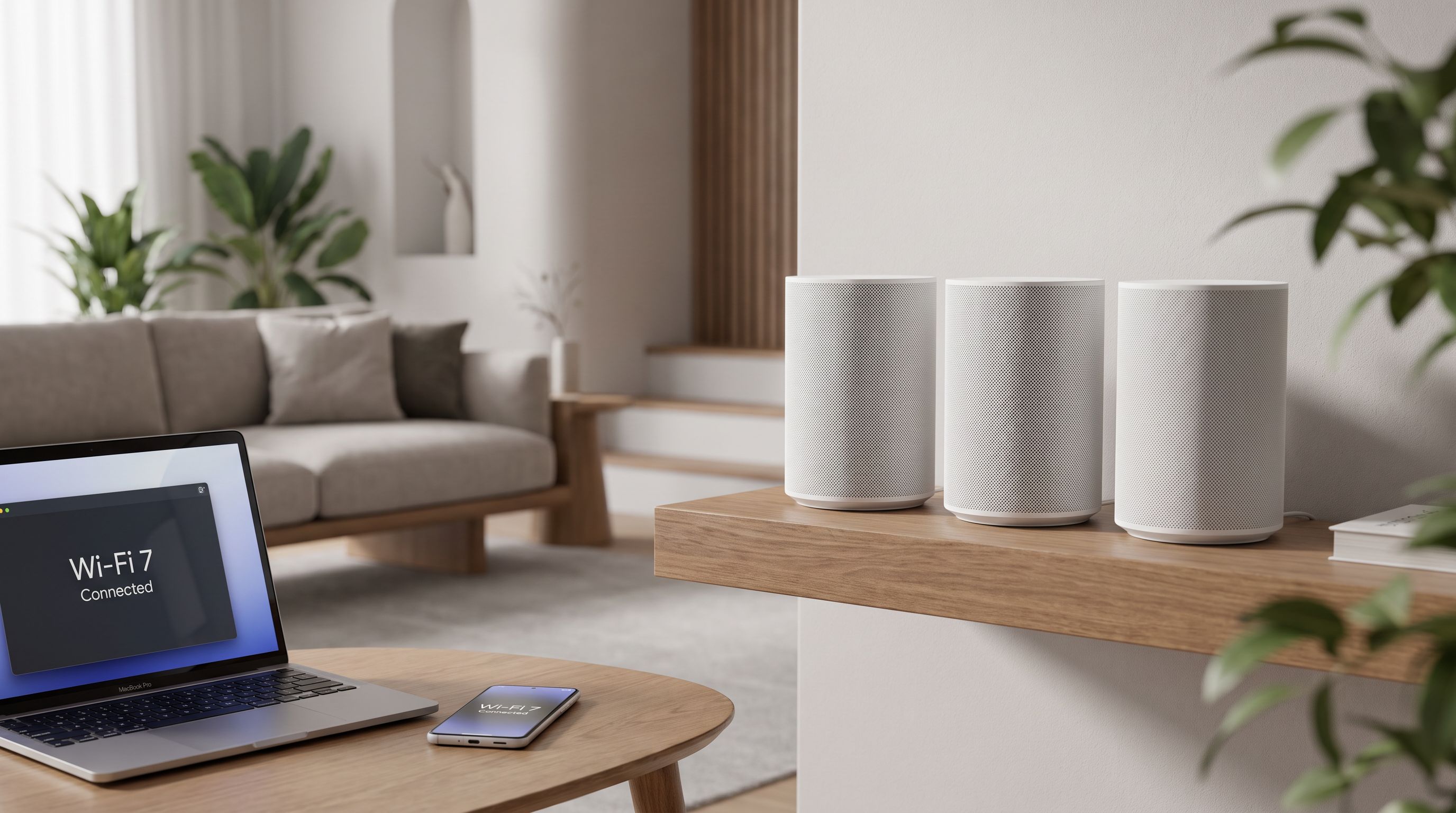
Reader-supported: we may earn a commission from links on this page, at no extra cost to you. It never affects our picks. Learn more.
Wi-Fi 7 mesh has finally hit the sweet spot. Prices have come down, firmware has matured, and most new phones and laptops can actually use the 6GHz band that makes Wi-Fi 7 worth buying. But the market is still full of systems that look identical on a spec sheet and behave nothing alike in a real house.
BytePlaza compared current Wi-Fi 7 mesh systems using manufacturer specs, independent lab results from outlets like RTINGS, CNET and PCMag, and verified owner feedback about long-term stability. Below are the picks we'd recommend, organised the way people actually shop: by home size, ISP speed and price tier.
Quick answer: which mesh should you buy?
- Most homes, best balance of speed and price: TP-Link Deco BE63 (Deco 7 Pro)
- Apartments and small homes under ~1,500 sq ft: Amazon eero 7
- Large multi-story houses with thick walls: NETGEAR Orbi 770 Series
- Enthusiasts who want control and 10G: ASUS ZenWiFi BT10
- Tight budget, still want Wi-Fi 7: TP-Link Deco BE25 / BE3600-class kits
 Budget pick · TP-Link Deco BE25 Wi-Fi 7 Mesh System — Check price on Amazon →
 Premium pick · ASUS ZenWiFi BT10 Tri-Band Wi-Fi 7 Mesh System — Check price on Amazon →
 Best for apartments · Amazon eero 7 Mesh Wi-Fi 7 System — Check price on Amazon →
 Best overall · TP-Link Deco BE63 (Deco 7 Pro) Tri-Band Wi-Fi 7 Mesh System — Check price on Amazon →
First, work out what you actually need
Match the system to your ISP speed
This is where most people overspend. If your plan is 300–500Mbps, almost any tri-band Wi-Fi 7 mesh will saturate it, and the expensive models buy you nothing. The upgrades matter at the extremes:
- Under 1Gbps: a mid-range tri-band kit with 2.5GbE ports is plenty.
- 1–2Gbps: you need at least one 2.5GbE WAN port, ideally 5GbE.
- 2Gbps+ or multi-gig fibre: look for 10G WAN/LAN, which is where the ASUS ZenWiFi BT10 and higher-end Orbi models earn their keep.
Match it to your floor plan, not the box's square-footage claim
Coverage numbers printed on boxes assume open space. In practice, a two-node kit realistically covers a normal open-plan apartment or a compact house. A three-node kit is the safe choice for two or three storeys, especially with brick, lath-and-plaster, or foil-backed insulation between floors.
Vertical coverage is harder than horizontal coverage. If you have a basement office or a converted loft, plan on a node per floor rather than hoping one central unit reaches everything.
Wired backhaul beats everything
If you have Ethernet in the walls — or can run a single cable to the far end of the house — use it. Wired backhaul turns a mid-range mesh into a high-end one, because the satellites no longer spend airtime relaying traffic. Every system here supports it. MoCA (coax) adapters are a good fallback in older homes with cable outlets in each room.
Tri-band vs dual-band, and what MLO changes
Tri-band systems dedicate the 6GHz band (or a large chunk of it) to backhaul between nodes, which is why they hold speed better at range. Dual-band Wi-Fi 7 kits are cheaper and fine for apartments or wired-backhaul setups, but they degrade faster over multiple hops.
Wi-Fi 7's headline feature, Multi-Link Operation (MLO), lets a compatible client use two bands at once for lower latency and better stability. It's genuinely useful for VR headsets, video calls and cloud gaming — but you need a Wi-Fi 7 client device to benefit, and support quality varies by firmware. Treat it as a bonus, not the reason to buy.
The picks, ranked
Best overall: TP-Link Deco BE63
The Deco BE63 (sold in some regions as the Deco 7 Pro) is the system that keeps topping independent testing, including RTINGS' mesh rankings. It's a tri-band Wi-Fi 7 kit with 2.5GbE ports on every unit, which means you can use any node as the router and still get multi-gig wired backhaul.
What makes it the default recommendation is that nothing about it is compromised for the price: strong 6GHz throughput, sensible app, no subscription required for basic parental controls or QoS. TP-Link's HomeShield does gate some advanced security features behind a subscription, which is the main gripe in owner feedback.
Best for: 1,500–3,000 sq ft homes on gigabit or slightly faster plans.
Best for apartments and small homes: Amazon eero 7
The eero 7 is the easiest mesh to live with. Setup takes minutes, the app is the most approachable in the category, and eero's automatic firmware updates and self-healing mesh mean it mostly disappears once installed — which is exactly what you want in a rental or a smaller home.
It's also a good Thread border router and Matter controller, so it doubles as smart-home infrastructure. The trade-offs: eero's stack keeps advanced controls (and some security and parental features) behind eero Plus, and the entry-level eero 7 is not the fastest Wi-Fi 7 kit on paper. For an apartment on a sub-gigabit plan, that barely matters. If you're on multi-gig fibre, step up to the eero Pro 7, which adds faster multi-gig ports and stronger radios.
Best for large multi-story houses: NETGEAR Orbi 770 Series
Orbi's advantage has always been raw reach per node, and the 770 Series continues that. It's a tri-band Wi-Fi 7 system with a dedicated 6GHz backhaul, a 2.5GbE WAN port and large internal antenna arrays — the combination that holds usable speed two floors away from the router.
Buy it as a three-pack if you have three levels or a long, narrow layout. The caveats are consistent across reviews and owner reports: the hardware is larger and pricier than the competition, and NETGEAR pushes an Armor security subscription hard. The core routing works fine without it.
Best for enthusiasts: ASUS ZenWiFi BT10
If you want to actually configure your network rather than tap through an app, ASUS is the pick. The ZenWiFi BT10 pairs a tri-band Wi-Fi 7 radio set with 10G ports, giving you real headroom for multi-gig fibre or a NAS-heavy home lab. AiMesh lets you add other ASUS routers as nodes later, which is a genuinely useful upgrade path.
You also get AiProtection powered by Trend Micro with no ongoing fee, plus VPN client and server support, VLANs, and granular QoS. The downside is complexity: the interface assumes you know what a DFS channel is.
Best budget Wi-Fi 7: TP-Link Deco BE25
If you just want off Wi-Fi 5 without spending much, an entry-level Wi-Fi 7 kit like the Deco BE25 gets you MLO-capable hardware, 2.5GbE ports on the router unit and TP-Link's mature mesh software. It's dual-band, so it's best in apartments, smaller homes, or anywhere you can run a cable for backhaul. Xiaomi's BE3600 mesh occupies a similar slot where it's sold.
Comparison table
| System | Bands | Best for | Fastest wired port | Subscription needed? |
|---|---|---|---|---|
| TP-Link Deco BE63 | Tri-band Wi-Fi 7 | Most homes, 1,500–3,000 sq ft | 2.5GbE (all units) | No, optional HomeShield |
| Amazon eero 7 | Dual-band Wi-Fi 7 | Apartments, simple setup, Matter/Thread | 2.5GbE | No, optional eero Plus |
| NETGEAR Orbi 770 | Tri-band Wi-Fi 7 | Multi-story / large homes | 2.5GbE WAN | No, optional Armor |
| ASUS ZenWiFi BT10 | Tri-band Wi-Fi 7 | Multi-gig fibre, power users | 10G | No, AiProtection included |
| TP-Link Deco BE25 | Dual-band Wi-Fi 7 | Budget upgrades, wired backhaul | 2.5GbE | No |
Setup tips that matter more than the model you buy
- Place nodes high and in the open. Inside a media cabinet or behind a TV costs you a floor's worth of coverage.
- Space nodes about two-thirds of the way to the dead zone, not right on top of it — a satellite with a weak link to the router just shares a weak connection.
- Keep one SSID. Band steering in modern mesh firmware works; splitting bands manually usually causes more roaming problems than it solves.
- Enable 6GHz and check your channel width on the router app if speeds seem low on Wi-Fi 7 clients.
- Put the ISP box in bridge mode where possible to avoid double NAT, which breaks port forwarding and some game consoles' connectivity checks.
FAQ
Is Wi-Fi 7 worth it in 2026 if my plan is only 500Mbps? Partly. You won't see faster internet, but you may see better performance in congested apartment buildings thanks to 6GHz and wider channels, plus lower latency on Wi-Fi 7 clients using MLO. If your current mesh is Wi-Fi 6 and working well, there's no urgency.
Two nodes or three? Two for most apartments and compact single-floor homes. Three for two- or three-storey houses, long layouts, or homes with dense walls. Most systems let you add nodes later, so starting with two and expanding is a reasonable strategy.
Do I need matching nodes from the same brand? Generally yes. Mesh systems only interoperate within a brand's ecosystem — ASUS AiMesh and TP-Link Deco each allow mixing models within their own family, but you can't mesh an eero to an Orbi.
Will my old Wi-Fi 5 devices still work? Yes. Wi-Fi 7 is backwards compatible, and every system here runs 2.4GHz and 5GHz alongside 6GHz. Older devices simply connect at their usual speeds.
Should I pay for the security subscription? Only if you want the parental controls or threat-blocking features specifically. Core routing, guest networks and firmware updates work without one on all the picks above — and ASUS includes its security suite at no extra cost.
Our picks
TP-Link Deco 7 Pro BE63 Tri-Band WiFi 7 BE10000 Whole Home Mesh System- 6-Stream 10 Gbps, 4x2.5G Ports Wired Backhaul, 4X Smart Internal Antennas, VPN, HomeShield (2-Pack)
Tri-band Wi-Fi 7 with 2.5GbE on every node — the best balance of speed, coverage and price.
Amazon eero Max 7 mesh wifi system (newest model) - Supports internet plans up to 10 Gbps, Coverage up to 7,500 sq. ft., Connect 750+ devices, 3-pack
Simplest setup in the category, plus Thread and Matter support for smart-home duty.

NETGEAR Orbi 770 Series Tri-Band WiFi 7 Mesh Network System (RBE773) - Router + 2 Satellite Extenders, Security Features, Up to 11Gbps, Covers up to 8,000 sq. ft., 100 Devices, 2.5 Gig Internet Port
Dedicated 6GHz backhaul and long per-node reach for multi-story houses with thick walls.
ASUS ZenWiFi BT10 WiFi 7 Mesh Router - Tri-Band, 6K sq ft, x2 10G (2 Pack)
10G ports, AiMesh expandability and free AiProtection security for multi-gig fibre homes.
Deco 7 Dual-Band BE5000 WiFi 7 Mesh Wi-Fi System 4-Stream 5 Gbps, 240 Mhz | Up to 6,600 Sq.Ft | 2X 2.5G Ports Wired Backhaul | VPN,MLO, AI-Roaming, HomeShield, Deco BE25 3-Pack
Affordable entry into Wi-Fi 7 with 2.5GbE and MLO support — great with wired backhaul.
Get the best tech deals in your inbox
Join the BytePlaza newsletter for hand-picked gadget deals and new buying guides. No spam, unsubscribe anytime.
Related reads
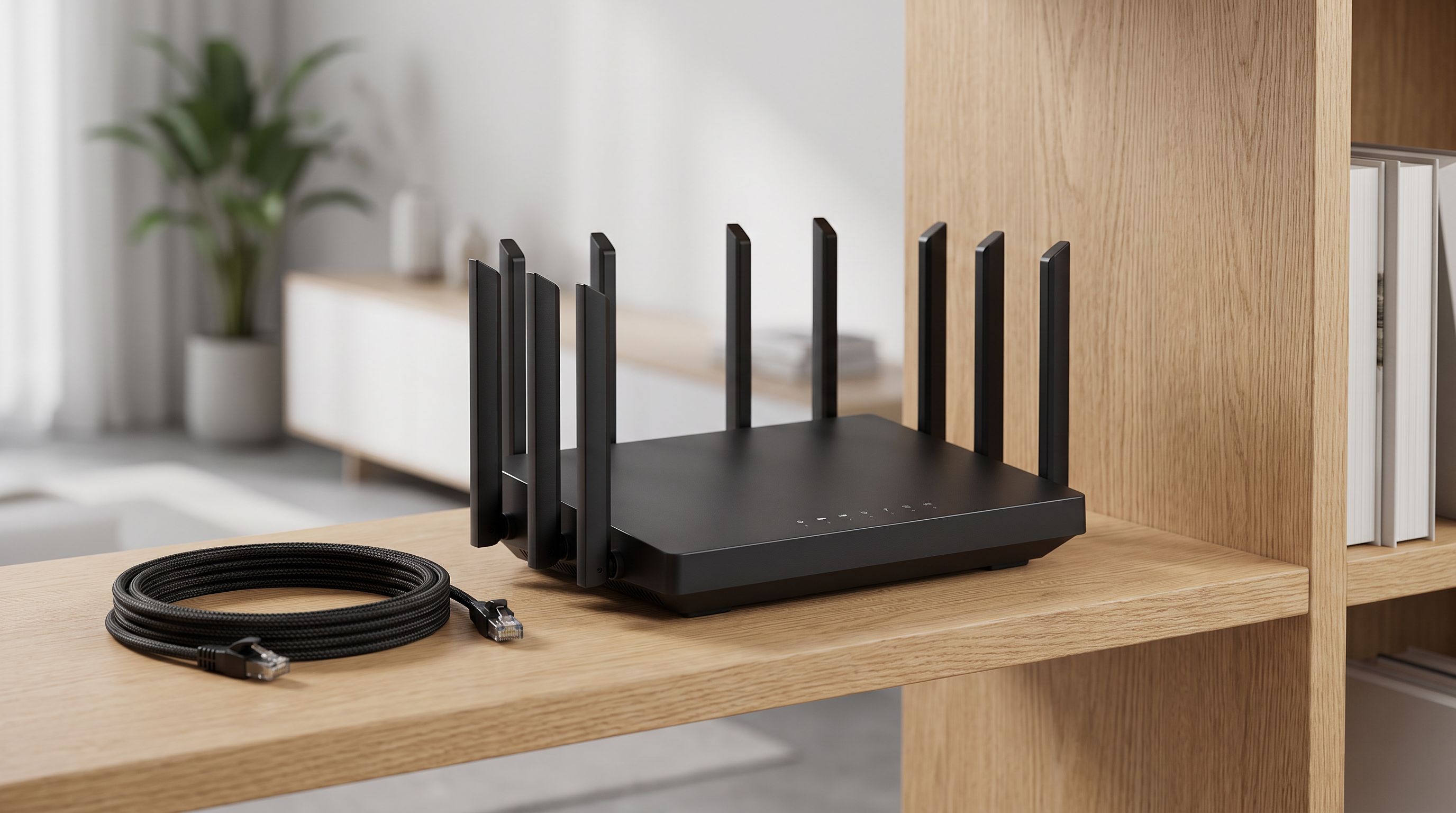
Wi-Fi 7 Routers in 2026: 5 Standalone Picks That Deliver
Skip the mesh. We compared the best Wi-Fi 7 routers of 2026 for small-to-medium homes on throughput, 10G ports, MLO support and real-world value.
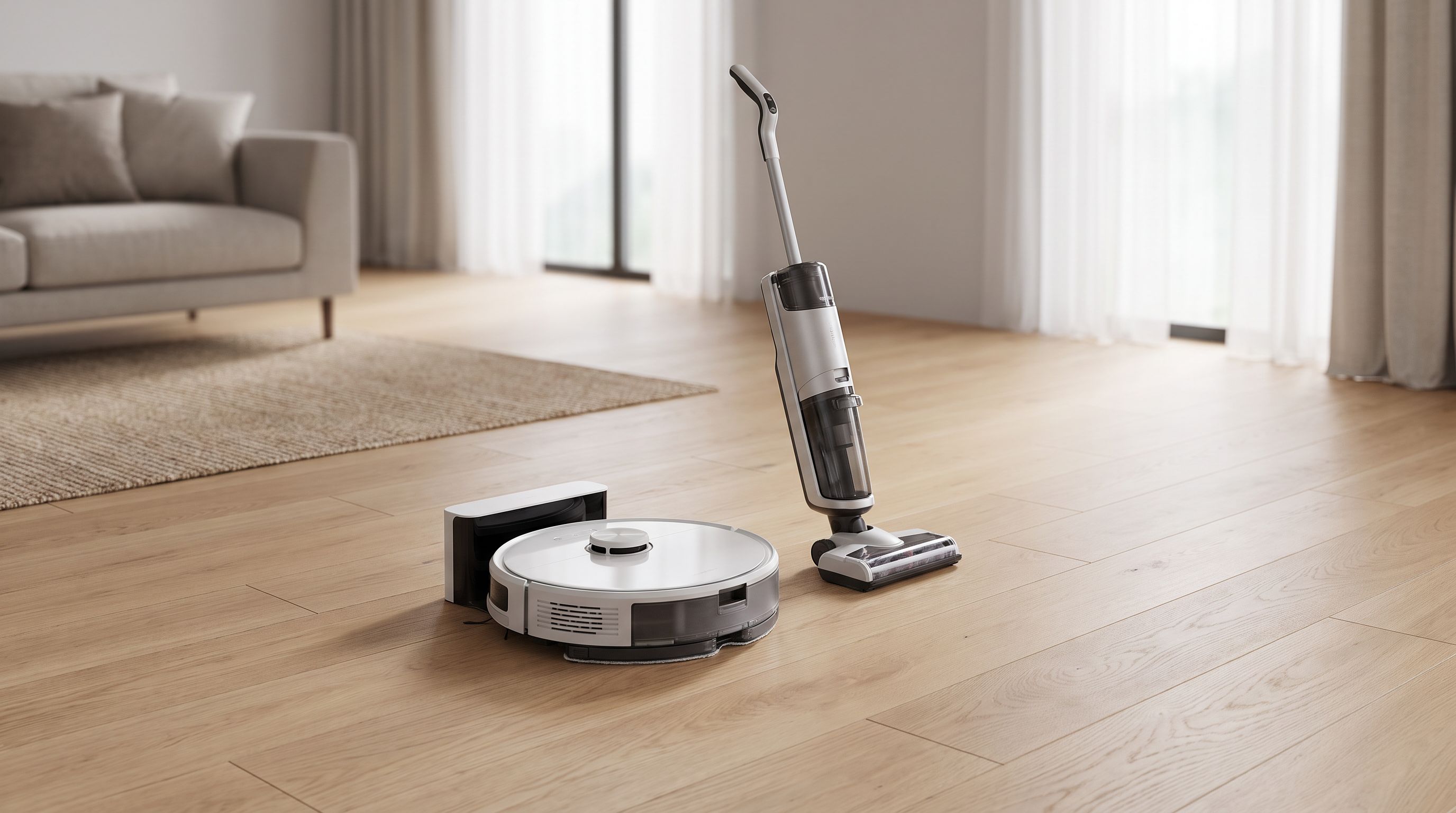
Wet Dry Vacuum vs Robot Mop in 2026: Which Wins Hard Floors?
Wet dry vacuum vs robot mop in 2026: we compare suction, water handling, edge cleaning and upkeep so you know which one actually suits your hard floors.
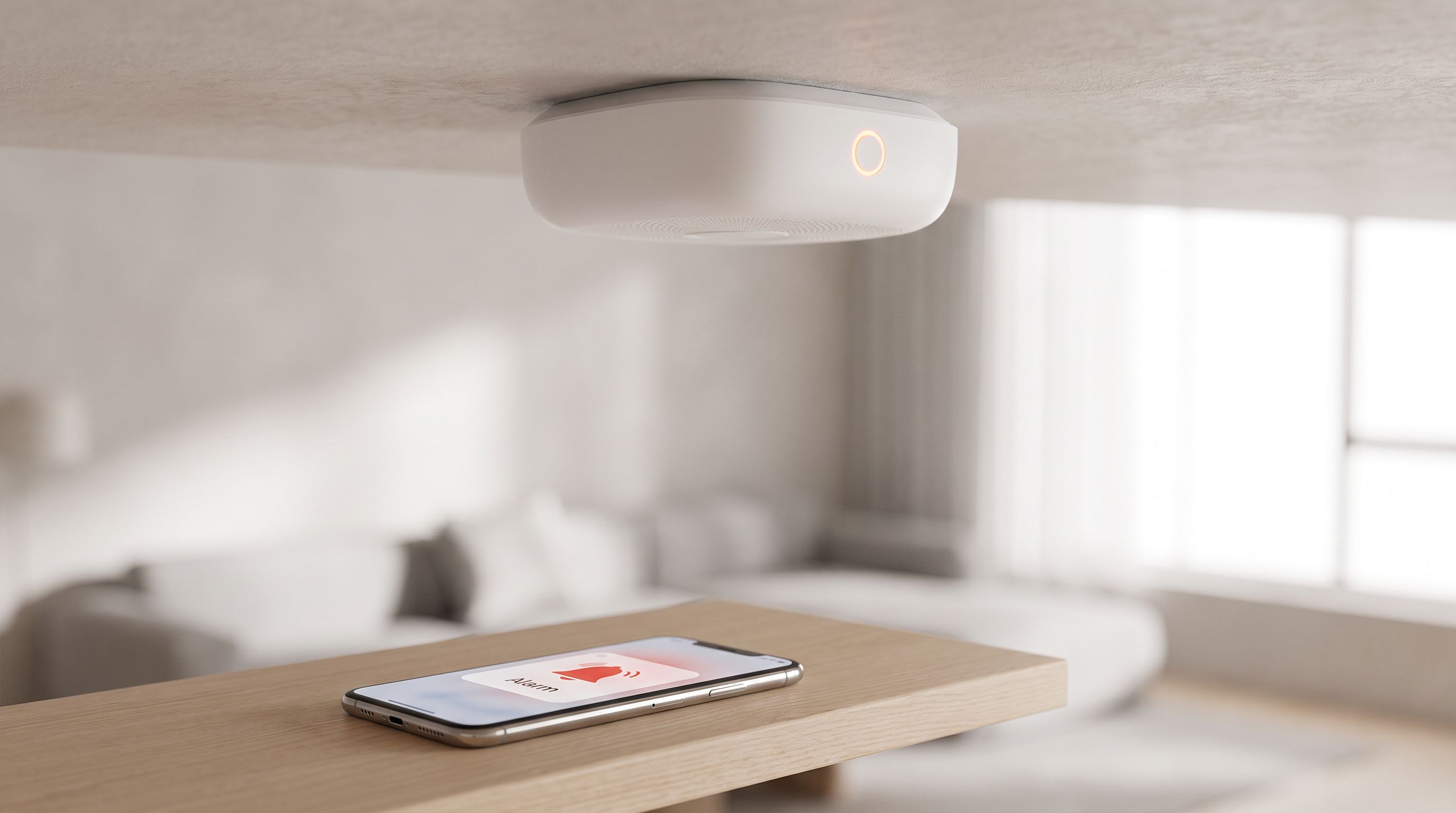
Smart Smoke Detector 2026: 4 Alarms That Warn You Early
Compare the best smart smoke and CO detectors of 2026 on sensor type, app alerts, interconnect, battery vs hardwired install and subscription needs.