8K Streaming Media Player in 2026: Do You Actually Need One?
Is an 8K streaming media player worth it in 2026? We compare AV1-capable boxes like Fire TV Stick 4K Max, Apple TV 4K and Zidoo Z9X on real picture quality gains.
Reader-supported: we may earn a commission from links on this page, at no extra cost to you. It never affects our picks. Learn more.
There is no shortage of boxes and sticks in 2026 marketed with "8K" on the packaging. There is, however, a shortage of 8K content — and that gap is the whole story.
We compared the current generation of streaming media players against last-gen sticks using manufacturer specs, independent lab measurements, and verified owner feedback. The short version: the picture-quality gains from a new player are real, but they almost never come from 8K resolution. They come from codec support (AV1), better HDR handling, faster networking, and cleaner video processing.
Here is how to tell whether an upgrade is worth your money, and which player fits your setup.
What "8K streaming media player" actually means in 2026
When a device is advertised as 8K-capable, it usually means one of three things:
- It can output an 8K signal (7680×4320) over HDMI 2.1 to an 8K TV.
- It can decode 8K video in specific codecs — typically AV1 and VP9, sometimes HEVC.
- Both, which is rarer and mostly confined to enthusiast media players and a handful of Android TV boxes.
Critically, none of that creates 8K content. As of 2026, the meaningful sources of 8K video are YouTube, a smattering of demo reels, and your own camera if you shoot 8K. Netflix, Disney+, Max, Prime Video, and Apple TV+ still top out at 4K. No mainstream subscription service streams 8K movies or series.
So if you're buying a player purely to unlock 8K streaming, you're buying capability that has almost nothing to watch. The honest reason to upgrade is everything else on the spec sheet.
The upgrade that actually matters: AV1
AV1 is the codec that changed the calculus. It's royalty-free, roughly 30% more efficient than HEVC at the same quality, and it's now what YouTube, Netflix, and others increasingly use for their higher-tier streams.
Why that matters for picture quality:
- Fewer artifacts at the same bandwidth. AV1 holds detail in dark gradients and fast motion where older codecs smear or block.
- Higher-quality streams on slower connections. On a 25–40 Mbps line, an AV1-capable device can pull a visibly cleaner 4K stream than an HEVC-only one.
- Hardware decode saves the CPU. Software decoding an AV1 stream on an old stick causes stutter and heat. Hardware AV1 decode is the dividing line between "last-gen" and "current."
If your current stick is a Fire TV Stick 4K from the 2018–2020 era, a Chromecast Ultra, or an early Roku Streaming Stick+, you don't have hardware AV1. That is the single strongest argument for upgrading — stronger than any 8K claim.
The second upgrade that matters: HDR and video processing
Two players fed the same 4K HDR stream will not look identical. Differences come from:
- Dolby Vision and HDR10+ support. Dolby Vision's dynamic metadata genuinely helps on mid-brightness TVs. Some players support one format, some both, some neither.
- Frame-rate and color-space matching. Automatically switching to 24Hz for film content eliminates judder. Apple TV 4K and Roku Ultra both handle this well; cheap sticks often don't.
- Chroma subsampling and banding. Budget players sometimes output 4:2:0 8-bit where a better box sends 4:2:2 or 10-bit, which shows up as banding in skies and shadows.
This is where a premium box earns its keep — not on resolution, but on getting out of the way of the signal.
Comparison: the players worth considering
| Player | Max output | AV1 decode | HDR formats | Best for |
|---|---|---|---|---|
| Apple TV 4K (3rd gen) | 4K | Yes | Dolby Vision, HDR10+ | Overall picture consistency, ecosystem |
| Amazon Fire TV Stick 4K Max | 4K | Yes | Dolby Vision, HDR10+ | Best value AV1 upgrade |
| Roku Ultra (2024) | 4K | Yes | Dolby Vision, HDR10+ | Simplicity, app breadth, Ethernet |
| NVIDIA SHIELD TV Pro | 4K | No (HEVC/VP9) | Dolby Vision | Plex, local media, AI upscaling |
| Zidoo Z9X Pro | 8K | Yes | Dolby Vision, HDR10+ | High-bitrate local rips, lossless audio |
 Best for physical-disc-quality playback · Zidoo Z9X Pro — Check price on Amazon →
 Best for local files and gaming · NVIDIA SHIELD TV Pro — Check price on Amazon →
 Best for simplicity · Roku Ultra (2024) — Check price on Amazon →
 Best value AV1 stick · Amazon Fire TV Stick 4K Max — Check price on Amazon →
Apple TV 4K (3rd generation) — best overall
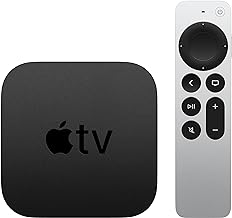 Best overall · Apple TV 4K (3rd generation, 128GB Wi-Fi + Ethernet) — Check price on Amazon →
Across reviews and owner reports, the Apple TV 4K remains the most reliably clean-looking mainstream streamer. Its strengths are boring in the best way: correct frame-rate switching, well-behaved Dolby Vision, an interface with no home-screen ads, and enough silicon headroom that it never chokes on a high-bitrate stream. The 128GB Wi-Fi + Ethernet model is the one to get if your rack is near a router — wired is still the most reliable path to a stable 4K HDR stream.
It maxes out at 4K. That's fine. There's nothing it's missing.
Amazon Fire TV Stick 4K Max — best value AV1 upgrade
If you own an older Fire stick, the Fire TV Stick 4K Max is the cheapest way to get hardware AV1, Wi-Fi 6E, and Dolby Vision into your TV. Independent reviews consistently place it near the top for price-to-performance, and Amazon's newer Fire TV lineup keeps it competitive. The trade-off is a home screen dominated by promoted content. If that irritates you, budget for the annoyance rather than the hardware.
Roku Ultra (2024) — best for people who just want it to work
Roku's platform remains the most neutral and the easiest for non-technical households. The Roku Ultra (2024) adds Ethernet, Dolby Vision, Wi-Fi 6, and the remote finder that quietly saves marriages. It's frequently named best overall in 2026 roundups for exactly this reason: nothing about it is exciting, and nothing about it goes wrong.
NVIDIA SHIELD TV Pro — best for local libraries
The SHIELD is old now, and it lacks AV1 hardware decode — a real limitation for YouTube's highest tiers. But nothing else runs a Plex server, handles obscure file containers, does retro emulation, and applies AI upscaling to 1080p sources as gracefully. If most of what you watch lives on a NAS rather than a subscription, the NVIDIA SHIELD TV Pro is still the sensible Android TV choice.
Zidoo Z9X Pro — the actual 8K enthusiast pick
This is where a genuine 8K media player makes sense. The Zidoo Z9X Pro is built for people playing back full disc rips at bitrates that make streaming boxes stumble, with lossless audio passthrough to an AV receiver and 8K output for those who have an 8K panel and 8K source files. Enthusiast forums consistently rate Zidoo's local playback as the best available. It is not a Netflix machine — most people should pair it with a streaming stick for apps.
So: should you upgrade?
Upgrade if: your player predates hardware AV1 decode, it stutters on YouTube 4K, it can't do Dolby Vision on a TV that supports it, or it takes more than a couple of seconds to open an app.
Don't upgrade if: you already own a current-gen 4K player with AV1 and Dolby Vision. Buying an 8K-badged box to feed an 8K TV will not make Netflix look better, because Netflix isn't sending 8K.
Spend elsewhere if: your bottleneck is a 60Hz TV, a weak Wi-Fi signal, or a compressed cable feed. A better router or a wired Ethernet run will improve picture quality more than a new player in a lot of homes.
FAQ
Is there any 8K content to stream in 2026? Practically, only YouTube. Major subscription services still cap out at 4K, and there is no 8K physical disc format.
Will an 8K player upscale my 4K content to look better on an 8K TV? Your TV's own upscaler is usually doing that job, and on most sets it's better than the player's. The exception is the NVIDIA SHIELD's AI upscaling for lower-resolution sources.
Does AV1 support really change how things look? Yes, at a given bandwidth. You'll notice it most in dark scenes and fast motion on YouTube and Netflix's higher tiers, where AV1 avoids the blocking that HEVC shows.
Stick or box? Boxes generally win: better cooling, Ethernet ports, faster chips, and more storage. Sticks win on price and cable tidiness. If your router is far from the TV, get a box with Ethernet.
Do I need HDMI 2.1? Only for 8K output or 4K120. For 4K60 HDR streaming, HDMI 2.0b is sufficient.
Our picks

Apple 2022 Apple TV 4K Wi‑Fi + Ethernet with 128GB Storage (3rd Generation) 128GB WiFi + Ethernet
The most consistent picture and audio processing of any mainstream box, with AV1 decode and Dolby Vision.
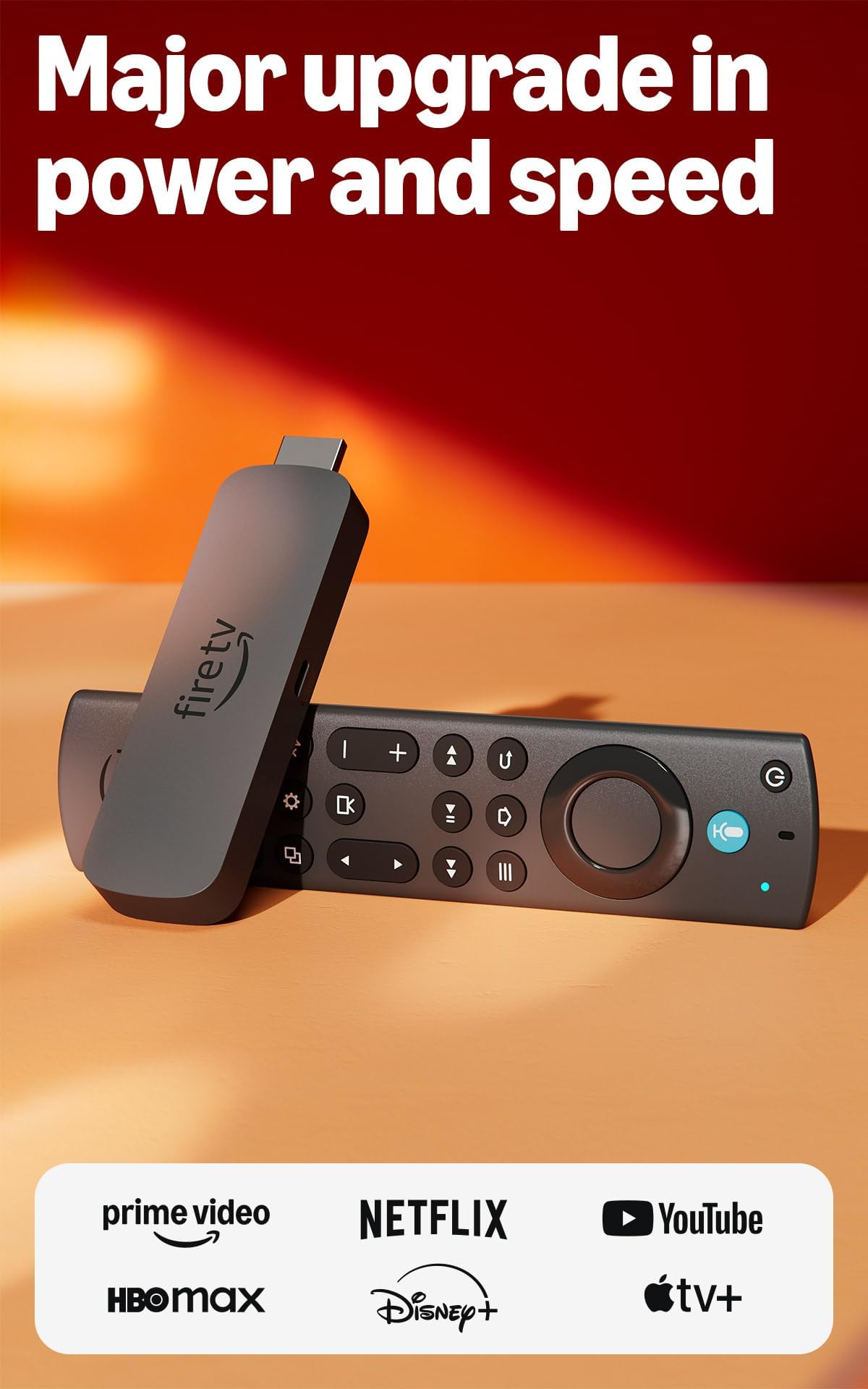
Amazon Fire TV Stick 4K Max (newest model), streaming device, with AI-powered Fire TV Search, supports Wi-Fi 6E, free & live TV without cable or satellite, find shows faster with Alexa+
AV1 decoding, Wi-Fi 6E and Dolby Vision in a stick that costs a fraction of a premium box.
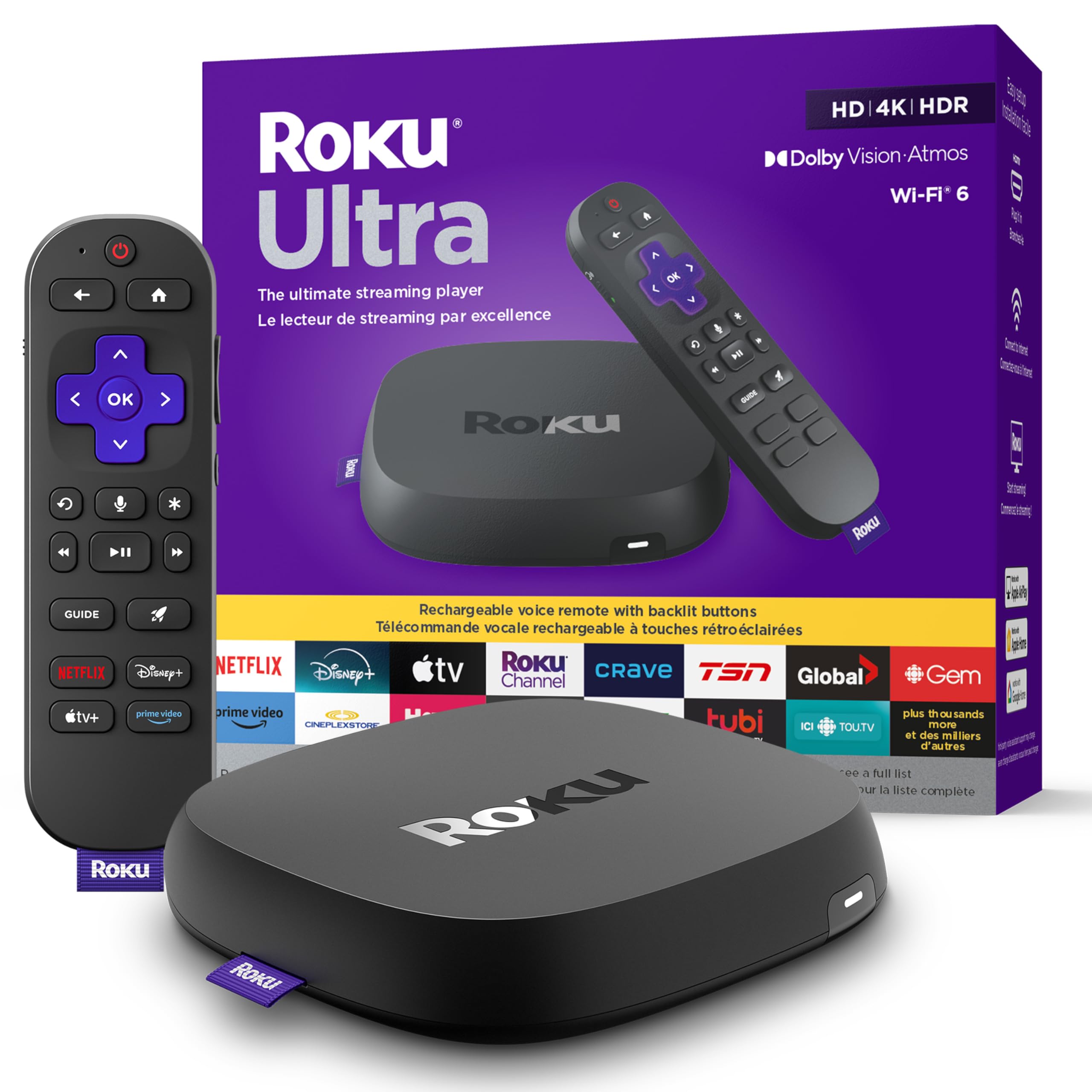
Roku Ultra 2024 | The ultimate streaming player - 4K streaming device with HDR10+, Dolby Vision and Atmos - Bluetooth and Wi-Fi 6 - Rechargeable Voice Remote Pro with Backlit Buttons - New 2024
Fast, ad-light-ish interface, Ethernet, Dolby Vision and the best remote finder in the business.
NVIDIA SHIELD TV Pro
Still the most capable Android TV box for Plex, emulation and AI upscaling of lower-res sources.
Zidoo Z9X Pro
8K-capable media player built for high-bitrate local rips, HDR10+ and lossless audio passthrough.
Get the best tech deals in your inbox
Join the BytePlaza newsletter for hand-picked gadget deals and new buying guides. No spam, unsubscribe anytime.
Related reads
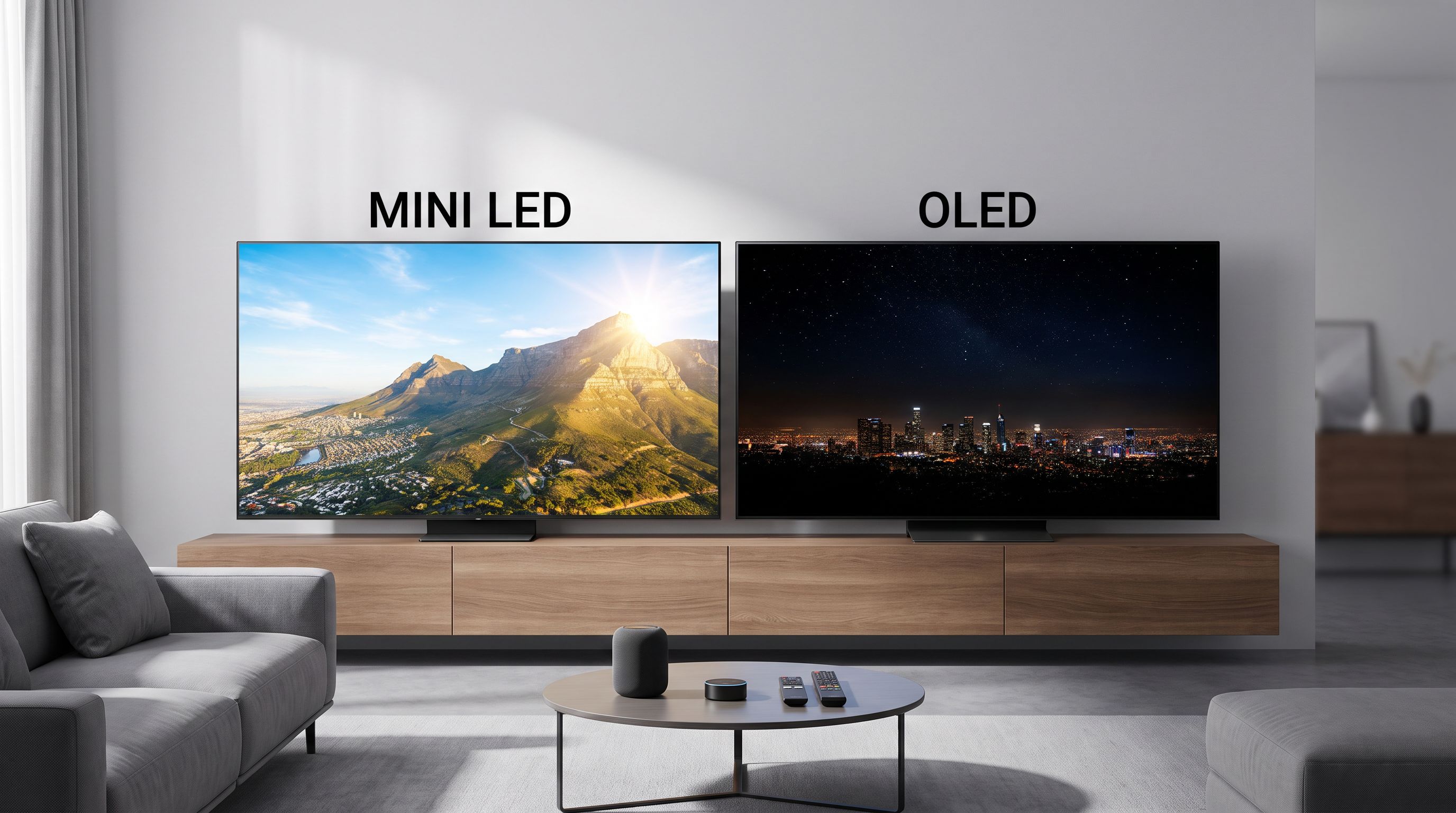
Mini LED vs OLED TV in 2026: Which Wins Your Room?
Mini LED vs OLED TV in 2026: how brightness, burn-in risk, room lighting and price tiers should decide your panel — plus specific picks for bright and dark rooms.
Portable Projectors Under $400 in 2026: 4 That Earn the Wall
The best portable projector under $400 in 2026, compared on real ANSI lumens, throw distance, battery life and built-in streaming for dorms and backyards.
Best 4K Projector 2026: Home Theater vs Portable
The best 4K projector 2026 picks compared: laser TVs, long-throw home theater beamers and portable smart projectors ranked on brightness, throw and room fit.