Wearable Air Purifier 2026: Does Any of It Actually Work?
Do ionizer necklaces clean the air you breathe? We weigh wearable air purifier 2026 claims against published research — plus safer picks for commuters.
Reader-supported: we may earn a commission from links on this page, at no extra cost to you. It never affects our picks. Learn more.
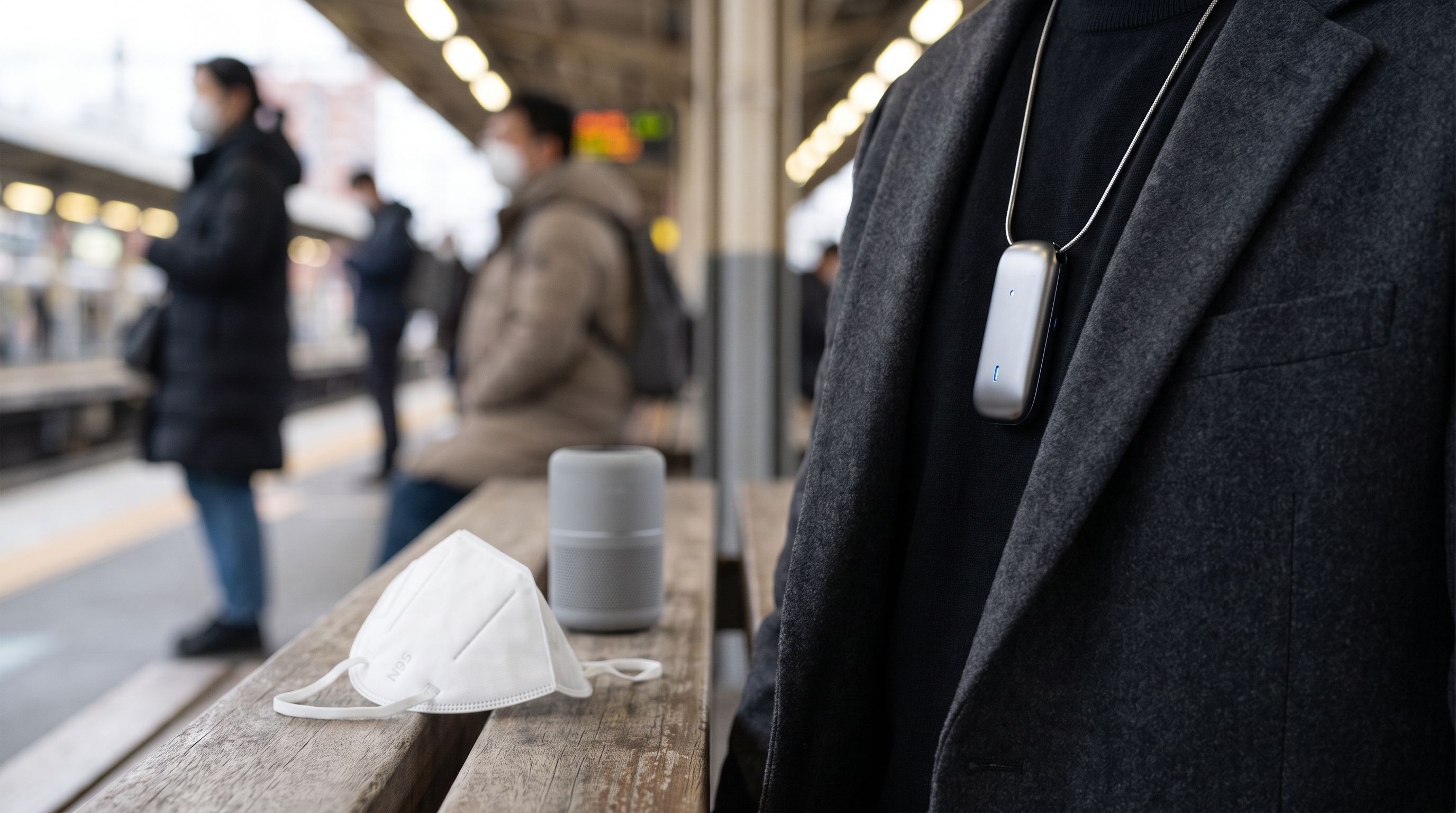
Search for a wearable air purifier in 2026 and you'll find a familiar product: a matte plastic pendant, USB-C rechargeable, marketed with a number like "150 million negative ions per cm³" and a claim that it creates a "personal clean-air bubble" around your head. Listings promise relief from pollen, smoke, dust, viruses and smog on your commute.
The physics behind these devices is real. The marketing around them mostly isn't. Here's what the published research actually supports, where ionizers fall down, and what to buy instead if your goal is breathing cleaner air on a train, a bus or a bike lane.
How an ionizer necklace is supposed to work
A negative ion generator uses a high-voltage needle to strip electrons onto air molecules. Those negative ions attach to airborne particles, giving them a charge. Charged particles then either repel each other and migrate away from your face, or stick to the nearest grounded surface — a wall, a jacket, a seat back, your skin.
Note what is not happening: nothing is being filtered. There is no fan pulling air through media and returning it clean. Particles are being relocated, not removed. In a sealed chamber with a sensor placed right in front of the emitter, that relocation looks like a dramatic drop in particle count. In a moving bus with the doors opening every 90 seconds, it looks like very little.
What the research says
Independent work on personal ionizers is thin but consistent in direction. A frequently-cited chamber study from the UK's Institute of Occupational Medicine, published in the Journal of Occupational and Environmental Hygiene, found that wearable ionizers reduced particle exposure measurably in still air — but the benefit shrank sharply as air movement increased, which is precisely the condition of every real commute. Later reviews of ion-based "air cleaning" technologies, including a 2021 assessment published in Building and Environment and guidance from ASHRAE's epidemic task force, reach a similar conclusion: performance in realistic conditions is modest, inconsistent between products, and poorly characterized by manufacturers.
Two other findings matter:
- Ozone. Corona-discharge ionizers can produce ozone as a byproduct. California's Air Resources Board (CARB) maintains a list of air cleaners certified to emit under 0.050 ppm, and it is genuinely worth checking — but CARB certification is a safety floor, not proof that a device cleans anything.
- Byproducts. Ionization can react with volatile organic compounds already in the air to form secondary products such as formaldehyde and ultrafine particles. This has been documented in peer-reviewed testing of ion-based devices in buildings.
- Deposition isn't disappearance. Charged particles settling onto surfaces near your face is not the same as those particles leaving the room.
So: not snake oil in the strict sense — the mechanism exists — but the gap between the mechanism and the advertised benefit is enormous.
The specs that sound impressive and mean nothing
Shopping guides for wearable purifiers tell you to look for "ion output above 20 million ions/cm³" and "8+ hours of battery life." Those are real numbers you can compare across listings, which is exactly why they're marketed. Neither tells you how much less PM2.5 reaches your airway.
There is no equivalent of CADR (Clean Air Delivery Rate) for wearables, no AHAM standard, and no required disclosure of test conditions. Two necklaces claiming the same ion count can perform completely differently depending on emitter geometry, how far it sits from your nose, and whether you're standing still.
Compare that with filtration, where the standards are mature and the numbers are auditable.
Wearables vs. the alternatives
| Approach | What it actually does | Standard / certification | Works while moving? | Best for |
|---|---|---|---|---|
| Ionizer necklace | Charges particles so they drift or settle away from your face | CARB ozone listing only; no efficacy standard | Poorly — benefit collapses in moving air | Little, honestly |
| N95 / FFP2 respirator | Filters ≥95% of 0.3 µm particles at your airway | NIOSH 42 CFR 84 (US), EN 149 (EU) | Yes — it's sealed to your face | Commutes, wildfire smoke, crowded transit |
| Fan-powered wearable (neck/belt HEPA) | Pushes filtered air toward your face, unsealed | None for the wearable format | Partially; leaks around the edges | People who can't tolerate a sealed mask |
| Portable room purifier | Removes particles from a defined volume of air | AHAM Verifide CADR | N/A — stationary | Bedroom, office, car cabin |
| Air quality monitor | Measures PM2.5/PM10 so you know when to act | Varies; compare to reference monitors | Yes | Deciding whether you need any of this |
The pattern is clear: the further you move from "sealed filtration at the face" or "filtering a known volume of air," the weaker the evidence gets.
What to buy instead if you commute
Start with a respirator that fits
The unglamorous truth is that a NIOSH-approved N95 outperforms every wearable purifier ever marketed, because it removes particles before they enter your airway rather than hoping they drift elsewhere. The 3M Aura 9205+ N95 Particulate Respirator is the default recommendation for a reason: the three-panel flat-fold design works with a wide range of face shapes, it folds into a jacket pocket without crushing, and the embossed nose foam reduces the pressure point that makes cheaper masks intolerable after 20 minutes.
 Best overall for commuters · 3M Aura 9205+ N95 Particulate Respirator — Check price on Amazon →
If your commute runs an hour or more each way, the 3M Aura 9210+ N95 Particulate Respirator is the same platform in a configuration many long-wear users find more comfortable. Both are NIOSH-approved, which means the 95% filtration claim is verifiable rather than marketing copy. Fit matters more than the filter rating — facial hair and a loose nose clip will undo an N95 faster than any spec sheet difference.
Then clean the air where you spend the most time
Most people's cumulative particle exposure is dominated by home and office hours, not the 40 minutes in transit. A true-HEPA unit sized to the room does far more for annual exposure than anything you can wear. The Levoit Core 300S is a sensible desk-side or bedroom choice: real HEPA media, app scheduling, and a footprint that fits beside a monitor.
 Best desk or small-room alternative · Levoit Core 300S — Check price on Amazon →
For a main living space, the Coway Airmega Mighty2 has been a repeat top performer in independent particle-removal testing from outlets including Wirecutter, with strong CADR relative to its size and low noise on its mid settings. It's the upgrade worth making if you only buy one purifier.
 Best home upgrade · Coway Airmega Mighty2 — Check price on Amazon →
Verify before you believe anyone — including us
A pocket particle monitor like the Temtop M10 Air Quality Monitor is the cheapest way to turn this from a debate into data. Walk your commute, sit in your bedroom, run the purifier, note the PM2.5 numbers. Consumer monitors aren't lab instruments and tend to be optimistic at very low concentrations, but they're perfectly adequate for spotting the difference between 8 µg/m³ and 80 µg/m³ — and for demonstrating, in about ten minutes, that a necklace ionizer doesn't move the reading.
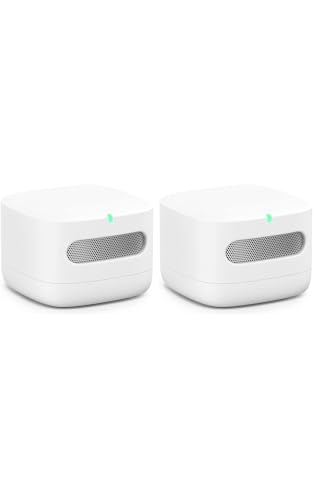 Best reality check · Temtop M10 Air Quality Monitor — Check price on Amazon →
When a wearable ionizer might still make sense
There's a narrow case. If you sit still for long stretches in low-airflow environments — a cubicle, a long-haul flight seat, a waiting room — and you buy a CARB-certified model, a wearable ionizer may produce a small local reduction in airborne particles. That's the best-supported claim available, and it's a long way from "personal clean-air bubble."
What it will not do: protect you in moving air, replace a respirator during wildfire smoke events, inactivate viruses in any way demonstrated outside manufacturer-funded chamber tests, or help with gases and odors, which ions don't filter.
The bottom line
Wearable air purifiers aren't fraud, but they're sold on a claim the evidence doesn't support. The mechanism is real and the real-world effect is small, unstandardized and easily erased by a breeze. If the goal is genuinely cleaner air on your commute in 2026, spend on a well-fitting N95, put a properly sized HEPA purifier where you sleep and work, and buy a monitor so you can tell the difference yourself.
FAQ
Are wearable air purifiers dangerous? Most aren't, but ozone and secondary byproducts are legitimate concerns with corona-discharge ionizers. If you buy one, check that it appears on California's CARB certified air cleaner list, and don't wear it directly against your skin for long periods.
Does a higher ion count mean better performance? No. Ion output is an unregulated marketing figure with no standardized measurement method and no demonstrated relationship to how much less particulate reaches your airway.
What about neck-worn fan purifiers with HEPA filters? They at least filter air, which puts them ahead of pure ionizers. But because nothing seals to your face, the filtered air mixes with ambient air before you inhale it. Protection is unquantified and far below an N95.
Will any of this help with wildfire smoke? A properly fitted N95 or P100 respirator will. A wearable ionizer will not. Indoors, run a HEPA purifier sized above your room's square footage and keep windows closed.
Is an expensive room purifier worth it over a cheap one? Often yes — independent testing repeatedly finds that very small, low-airflow purifiers underperform badly. Match CADR to room size rather than buying on price alone.
Our picks
3M 8511 N95 Cool Flow Valved Respirator, 10-Pack | NIOSH-Approved, Relief From Dusts And Certain Particles During Sanding, Pollen, Mold Spores, Dust Particles
NIOSH-approved N95 filtration that actually covers your breathing zone — the thing necklaces can't do.
3M 8511 N95 Cool Flow Valved Respirator, 10-Pack | NIOSH-Approved, Relief From Dusts And Certain Particles During Sanding, Pollen, Mold Spores, Dust Particles
Three-panel flat-fold design with a foam nose cushion that stays comfortable over multi-hour commutes.
Amazon Basics Air Purifier for Home and Office, 3 Speeds, Timer, Sleep Mode (32db), Covers Up to 1067 Sq ft, White
True-HEPA purifier sized for a bedroom, home office or cubicle — real CADR instead of ion claims.
Coway Airmega Mighty2 Air Purifier, Next Gen of AP-1512HH, for Large Room & Home Cleans up to 1,800 ft², HEPA and Active Carbon for Allergies, Smoke, Dust, Pets & Mold, AP-1512N(W)
Repeatedly a top performer in independent particle-removal testing, and quiet enough to run around the clock.
Amazon Smart Air Quality Monitor, Detects temperature, humidity, carbon monoxide, PM2.5 and VOCs, Get notifications when air quality drops, Works with Alexa (2-pack)
A pocket PM2.5 monitor so you can see whether anything you buy is changing the air you breathe.
Get the best tech deals in your inbox
Join the BytePlaza newsletter for hand-picked gadget deals and new buying guides. No spam, unsubscribe anytime.
Related reads
Laptop Backpack With USB Charging Port 2026: 5 Worth It
We compared commuter laptop backpacks with USB charging ports on padding, capacity and reported durability. Five picks for 2026, plus what the port really does.
Electric Scooters in 2026: 5 Commuter Picks by Real Range
The best electric scooter 2026 picks for commuters, ranked by real-world range, motor power, weight and build quality — plus how to read inflated range claims.
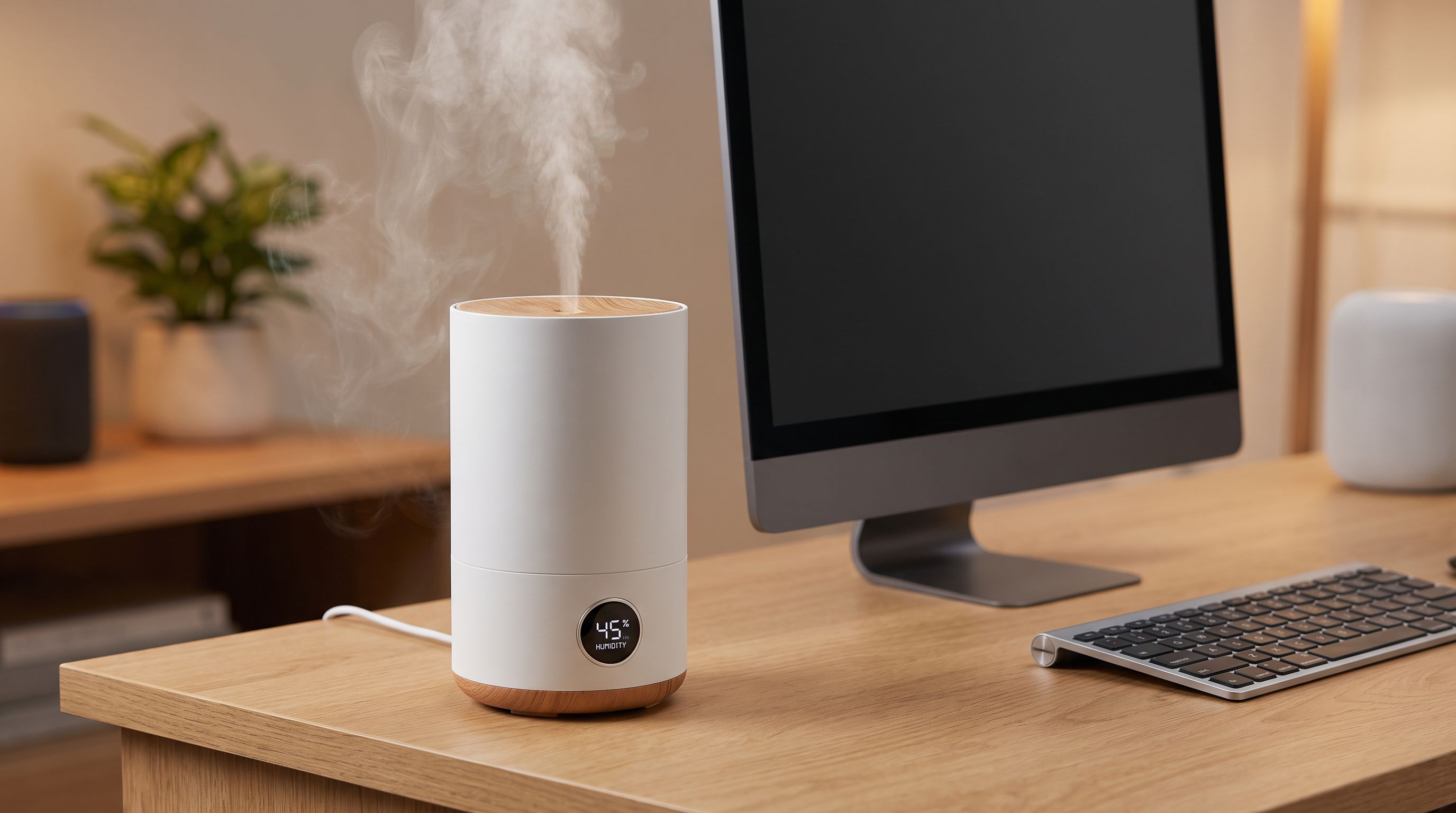
Smart Humidifiers in 2026: 4 Picks for a Bone-Dry Desk
Looking for the best smart humidifier in 2026? We compared hygrometer automation, tank size, cleaning hassle and app/Matter control for bedrooms and desks.