Travel Router 2026: Which One Survives Hotel Wi-Fi?
We compared pocket travel routers for 2026 on bands, ports, VPN throughput and how they handle hotel captive portals — five picks for remote workers on the road.
Reader-supported: we may earn a commission from links on this page, at no extra cost to you. It never affects our picks. Learn more.
Hotel Wi-Fi hasn't gotten better. It's gotten busier. The difference between a frustrating trip and a productive one is usually a device that fits in a laptop sleeve: a travel router that logs into the hotel network once, then hands out your own private, consistently-named Wi-Fi to every device you carry.
We compared the leading options for 2026 on the things that actually matter on the road — band layout, port count, VPN throughput, power requirements, and how owners report they behave against captive portals. No physical testing here: this is a research-driven comparison built on manufacturer specs, independent reviews, and verified owner feedback.
One note on terminology before we start, because it's the single most common mis-search in this category.
"Tri-band" travel routers barely exist — and that's fine
Search "tri-band travel router" and you'll get a pile of dual-band results. That's not a trick. Adding a 6 GHz radio costs power and thermal headroom, and travel routers are often running off a laptop USB-C port or a power bank. Almost every credible pocket router in 2026 is dual-band (2.4 GHz + 5 GHz), with the newest models adding Wi-Fi 7 features like MLO and 320 MHz channels on the 5 GHz band instead of a third radio.
What you lose is negligible for travel use. Hotel uplinks are typically capped well below what even Wi-Fi 5 can saturate; your bottleneck is the property's backhaul, not your router's radio count. What you should actually shop for:
- A real WAN port. Many hotels and nearly all good Airbnbs have a live Ethernet jack. A 2.5 Gbps WAN port future-proofs that.
- Repeater mode quality. When there's no jack, the router joins the hotel Wi-Fi as a client and rebroadcasts it. Implementation quality varies enormously.
- Captive-portal handling. This is the make-or-break feature. More below.
- VPN throughput. WireGuard speeds are published by vendors and vary by an order of magnitude between models.
- USB tethering. Falling back to your phone's hotspot or a USB LTE dongle, shared to the whole room.
The captive portal problem, explained
Hotel networks almost always put you through a splash page: room number, last name, accept terms. The portal identifies you by MAC address. A travel router has to (1) present a portal page to you so you can authenticate on its behalf, and (2) keep that authorization alive afterward.
Three failure modes show up repeatedly in owner reports:
- The portal never loads. Usually DNS-related — the router's DNS-over-HTTPS or ad-blocking is intercepting the redirect. Good firmware lets you disable this per-connection.
- You get kicked every few hours. The property enforces a device or time limit and re-prompts. Routers that can clone a MAC address you've already registered sidestep this.
- Device-count limits. The hotel allows two devices; you have seven. A travel router solves this by presenting as exactly one device.
GL.iNet's OpenWrt-based firmware has the deepest track record here — it detects portals automatically, surfaces them in the admin page, and includes MAC cloning and DNS override toggles without diving into a terminal. TP-Link's newer travel firmware has closed much of that gap, and the Roam 7's setup flow is noticeably friendlier for non-technical travelers. ASUS sits in between: capable, but its portal workflow assumes you're comfortable in a fuller router UI.
Comparison at a glance
| Model | Wi-Fi gen | Bands | Ports | Standout for travel |
|---|---|---|---|---|
| GL.iNet Beryl 7 | Wi-Fi 7 | Dual-band | 2.5 Gbps WAN + LAN, USB-C | Fastest WireGuard of the group; best portal tooling |
| TP-Link Roam 7 | Wi-Fi 7 | Dual-band | 2.5 Gbps WAN, Gigabit LAN, USB | MLO, simplest setup, high client count |
| GL.iNet Slate AX (GL-AXT1800) | Wi-Fi 6 | Dual-band | Gigabit WAN + 2× LAN, USB 3.0 | Most LAN ports; mature firmware |
| ASUS RT-AX57 Go | Wi-Fi 6 | Dual-band | Gigabit WAN/LAN, USB | VPN Fusion split tunneling, AiMesh |
| GL.iNet Beryl AX (GL-MT3000) | Wi-Fi 6 | Dual-band | 2.5 Gbps WAN, Gigabit LAN, USB | Smallest footprint with a 2.5G port |
 Best pocket size · GL.iNet Beryl AX (GL-MT3000) — Check price on Amazon →
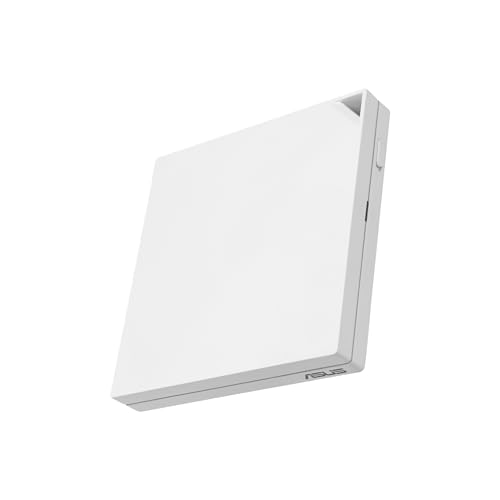 Best for VPN power users · ASUS RT-AX57 Go — Check price on Amazon →
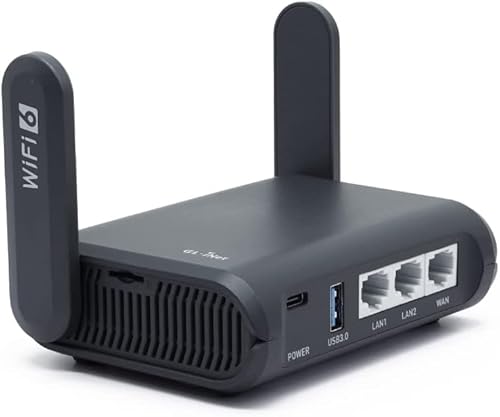 Best value · GL.iNet Slate AX (GL-AXT1800) — Check price on Amazon →
 Best for fast hotel connections · TP-Link Roam 7 Wi-Fi 7 Travel Router — Check price on Amazon →
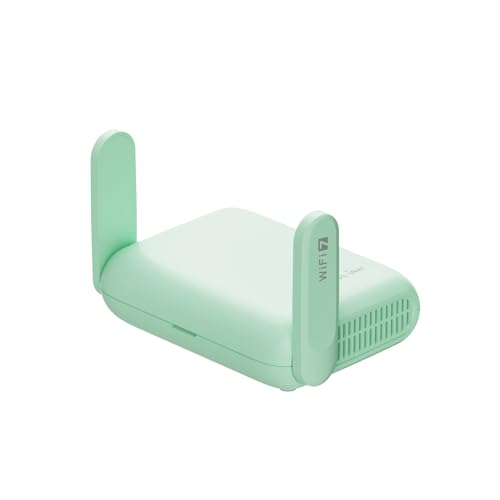 Best overall · GL.iNet Beryl 7 (GL-MT3000 successor, Wi-Fi 7) — Check price on Amazon →
Specs are from manufacturer documentation; port layouts can vary by regional SKU, so confirm before buying.
The picks
GL.iNet Beryl 7 — best overall
If you want one device to handle every scenario, this is it. It's GL.iNet's Wi-Fi 7 flagship for travel, and the headline figure is VPN performance: WireGuard throughput in the four-digit Mbps range, which is dramatically faster than the 100–300 Mbps most travel routers manage. That matters if you route work traffic through a corporate or personal VPN all day — on older hardware, the VPN is the bottleneck.
The rest is the usual GL.iNet strength: OpenWrt underneath, repeater mode that reliably detects captive portals, MAC cloning, AdGuard Home, Tailscale and WireGuard clients built in, and USB tethering from a phone. It's chunkier than the Beryl AX and it wants proper USB-C power, so bring the supplied adapter rather than relying on a laptop port.
Skip it if: you don't use a VPN heavily and don't need Wi-Fi 7 — the Slate AX does the boring parts just as well.
TP-Link Roam 7 — best for fast hotel connections
TP-Link's first Wi-Fi 7 travel router, and the model Wired named its Best Travel Router for 2026. The pitch is MLO plus a 2.5 Gbps WAN port, so if your hotel or short-term rental has a genuinely fast wired jack, nothing gets wasted. TP-Link rates it for a high simultaneous client count — useful for families, film crews, or anyone traveling with a pile of IoT gear.
Setup through the Tether app is the friendliest in this group, and the captive-portal flow is well-signposted. It's less hackable than GL.iNet — no OpenWrt package manager, fewer exotic VPN options — which is a feature if you just want it to work.
Skip it if: you need deep VPN configuration or third-party firmware.
GL.iNet Slate AX (GL-AXT1800) — best value
Still the sensible default in 2026. Wi-Fi 6 rather than 7, Gigabit rather than 2.5 Gbps, but it has something the newer models don't: two LAN ports. If you travel with a work laptop and a desk phone or a console, that's genuinely useful. Years of firmware iteration mean its repeater and portal handling are among the most reliable in the category, and owner reports from cruise ships — the hardest captive-portal environment there is — are consistently positive.
ASUS RT-AX57 Go — best for VPN power users
The RT-AX57 Go's differentiator is VPN Fusion: per-device split tunneling, so your work laptop goes through the corporate VPN while the streaming stick goes direct and doesn't trip geo-blocking. It also supports 160 MHz channels for real 5 GHz speed, and it can join an AiMesh network when you're home, which means it isn't dead weight between trips. The trade-off is size — it's the least pocketable here — and a portal workflow that expects some familiarity with ASUS's interface.
GL.iNet Beryl AX (GL-MT3000) — best pocket size
The one that disappears into a laptop sleeve. Dual-band AX3000, a 2.5 Gbps WAN port in a body smaller than a deck of cards, and respectable WireGuard throughput for the size. Same firmware as its bigger siblings, so portal detection and MAC cloning are all present. If the Beryl 7 feels like overkill, this is the carry-every-trip option.
How to set one up before you leave
Configure it at home, not in the lobby. Set your SSID and password, enable WireGuard or Tailscale and test it, and — critically — note your laptop's MAC address so you can clone it if a property's portal only remembers one device. Pack a short Ethernet cable and a USB-C power bank. In the room, try the wired jack first; fall back to repeater mode only if there isn't one.
FAQ
Do I actually need Wi-Fi 7 in a travel router? Only for VPN throughput and client capacity. Hotel uplinks rarely justify it on raw speed, but newer chipsets do process VPN traffic far faster.
Will a travel router get me past a hotel's device limit? Usually, yes — the hotel sees one device regardless of how many you connect behind it. It won't bypass a paid tier or a bandwidth cap.
Can it handle a hotel portal that requires a room number? Yes. The router surfaces the portal page to your browser; you fill it in once and all your devices inherit the connection.
What if there's no usable Wi-Fi at all? Use USB tethering from your phone, or plug in a USB LTE/5G dongle. Every pick here supports tethering.
Is a travel router useful at home? The ASUS RT-AX57 Go can join an AiMesh network. The GL.iNet models make handy secondary APs or VPN gateways for a guest network.
Our picks
GL.iNet GL-MT3600BE Beryl 7 Dual-Band Wi-Fi 7 Travel Router | Dual-Band Wi-Fi 7 688 plus 2882 Mbps, Dual 2.5G ports, USB 3.0, WireGuard 1100 Mbps, OpenWrt 21.02, WPA3, AdGuard Home, 205g
Wi-Fi 7, fast WireGuard throughput and the most mature captive-portal tooling of any travel router.
Roam 7 BE3600 Wi-Fi 7 Portable Travel Router Dual-Band, 2.5G Port, USB 3.0 | Multi-Modes in One, OpenVPN, WireGuard®, Public WiFi Sharing for Hotel/Cruise/RV/Plane, No 6 GHz Supported (TL-WR3602BE)
MLO plus a 2.5 Gbps WAN port, so a fast in-room Ethernet jack isn't wasted.
GL.iNet GL-AXT1800 Slate AX Pocket-Sized Wi-Fi 6 Travel Router with VPN | Dual-band Wi-Fi 6 speeds up to 1800 Mbps, MU-MIMO and OFDMA, connects up to 120 devices simultaneously
Wi-Fi 6, two Gigabit LAN ports and years of firmware polish for hotel and cruise Wi-Fi.
ASUS RT-AX57 GO -AX3000 Dual Band WiFi 6 Portable Travel Router, 4G/5G tethering, Public WiFi (WISP) Mode, Advance Network Security, VPN, AiMesh, Guest Portal, RV/Cruise/Mobile, USB-C Powered.
VPN Fusion split tunneling and AiMesh tie-in, with 160 MHz channel support for real speed.
GL.iNet GL-MT3000 Beryl AX Wi-Fi 6 Travel Router, 2.5G WAN, VPN, OpenWrt | Wi-Fi 6 dual band 574Mbps 2.4GHz plus 2402Mbps 5GHz, 2.5G WAN, gigabit LAN, USB 3.0
Palm-sized dual-band AX3000 with a 2.5 Gbps port and strong WireGuard speeds for its footprint.
Get the best tech deals in your inbox
Join the BytePlaza newsletter for hand-picked gadget deals and new buying guides. No spam, unsubscribe anytime.
Related reads
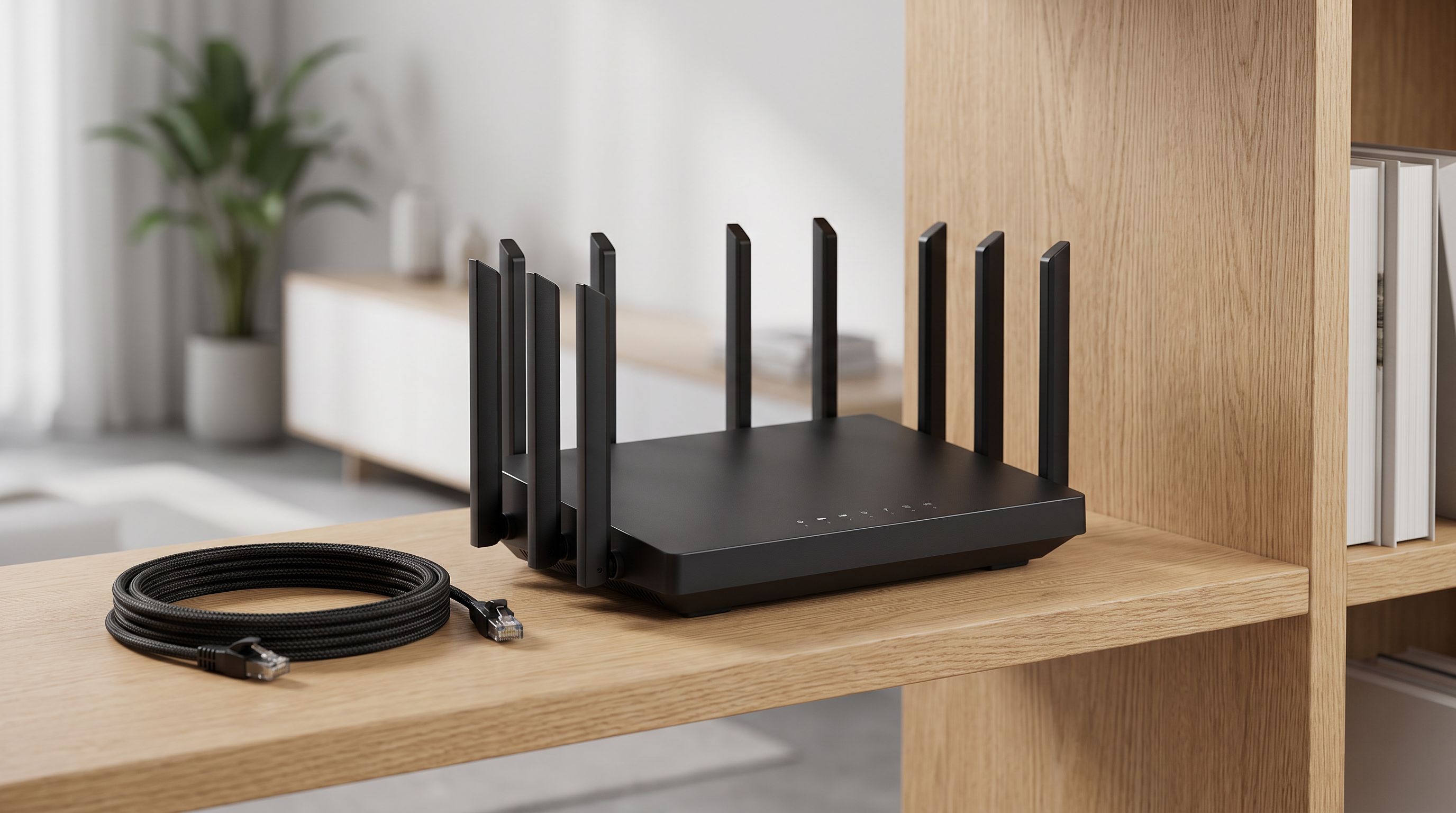
Wi-Fi 7 Routers in 2026: 5 Standalone Picks That Deliver
Skip the mesh. We compared the best Wi-Fi 7 routers of 2026 for small-to-medium homes on throughput, 10G ports, MLO support and real-world value.

Smart Bathroom Mirror Guide 2026: Anti-Fog, Light & Wiring
A practical 2026 smart bathroom mirror guide: anti-fog demisters, tunable LED lighting, Bluetooth audio, widget displays, IP ratings and what wiring you actually need.

Wet Dry Vacuum vs Robot Mop in 2026: Which Wins Hard Floors?
Wet dry vacuum vs robot mop in 2026: we compare suction, water handling, edge cleaning and upkeep so you know which one actually suits your hard floors.