Phone Battery Case 2026: Does It Still Beat Qi2?
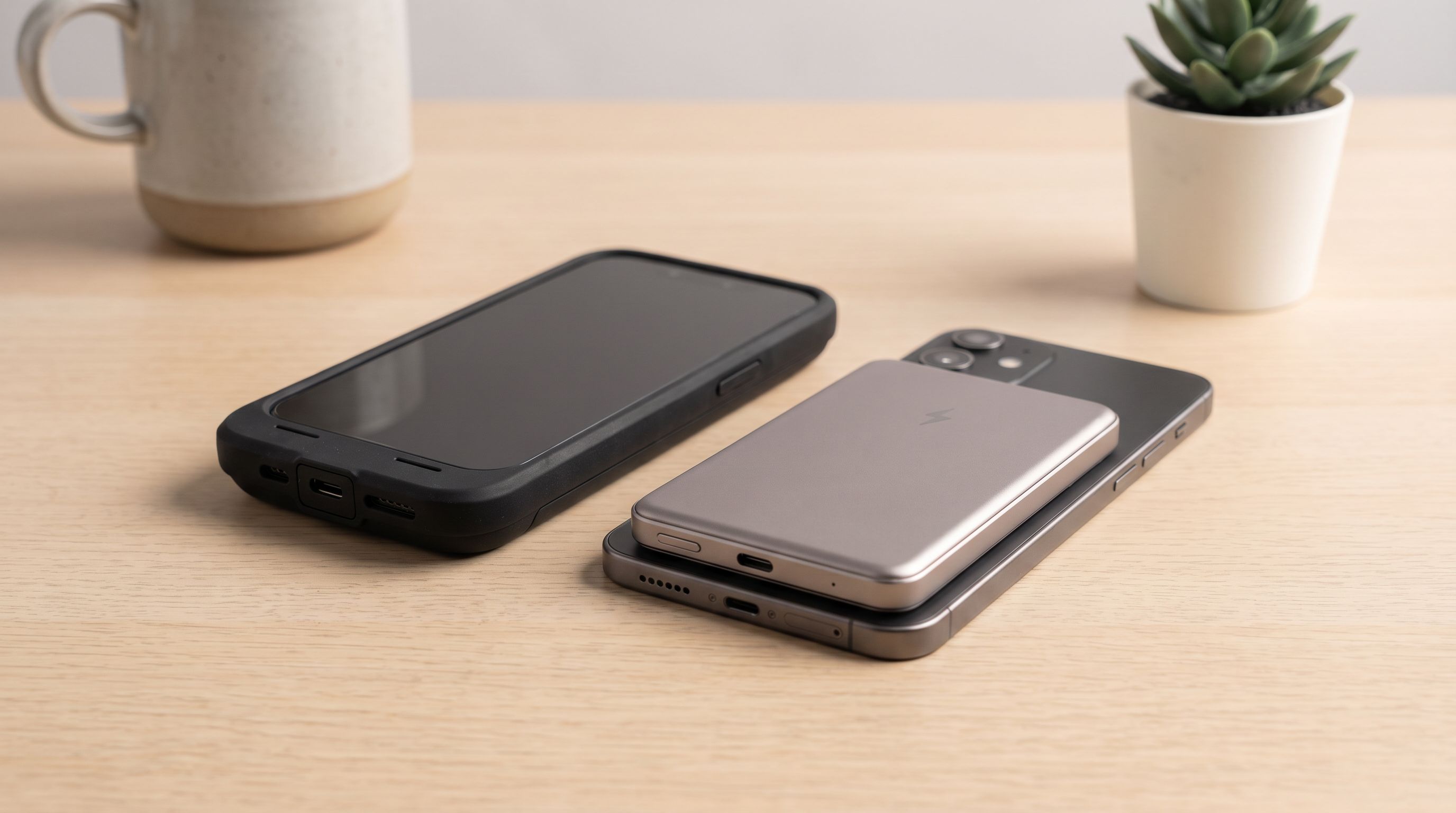
Phone battery case vs Qi2 magnetic power bank in 2026: we compare capacity, bulk, heat and charging speed using listed specs and verified owner feedback.
Reader-supported: we may earn a commission from links on this page, at no extra cost to you. It never affects our picks. Learn more.
Battery cases used to be the obvious answer to a dying phone. In 2026 the question is genuinely harder: phones last longer than they ever have, Qi2 magnetic packs are cheap and plentiful, and the battery case category has quietly shrunk to a handful of third-party models with uneven flagship support.
So is a phone battery case still worth buying in 2026, or has the magnetic power bank won? We compared listed specs, charging standards and verified owner feedback across both categories. Here's the honest answer — including the specific scenarios where a wrap-around case still wins.
What changed: phones got better, cases didn't
The backdrop matters. Endurance testing in 2026 has been dominated by phones that simply don't need help: the Redmi Note 17 Pro Max topped one widely-cited endurance run, the OnePlus 15 and 15R lead several "best battery life" lists, the OPPO Find X9 Pro posted over 14 hours in one standardised screen-on test, and the iPhone 18 Pro Max is rated for up to 45 hours of video playback. For a large slice of buyers, the "all-day battery" problem was solved by the phone itself.
Meanwhile, first-party battery cases are effectively gone. Apple hasn't made one in years, Samsung and Google never sustained the line, and what remains is mostly third-party cases from brands like Newdery — often built for last-generation flagships rather than the newest models. Listings advertising "iPhone 17 Pro Max 12000mAh battery case" exist, but capacity claims in that corner of the market deserve scepticism, and camera-bump cutouts on brand-new phones are frequently a generation behind.
Qi2 went the other direction. The standard brought magnet alignment and 15W wireless charging to Android as well as iPhone, and 10,000mAh magnetic packs from Anker, Belkin and Baseus are now the default accessory recommendation.
Capacity: the case advantage is smaller than the numbers suggest
A battery case with a 5,000–6,000mAh internal cell typically delivers something close to a full charge on a large phone. A 10,000mAh magnetic pack sounds like twice that — but wireless transfer loses energy as heat. Real-world conversion for Qi2 at 15W commonly lands in the 60–75% range depending on alignment, case thickness and ambient temperature, which is why owner reviews of 10,000mAh Qi2 banks so often describe "about one and a bit charges" rather than two.
Battery cases charge over internal wired contacts, so they're more efficient per mAh. That's the one spec argument still in their favour. The catch: nobody is building huge-capacity cases for 2026 flagships, so the efficiency advantage applies to a shrinking pool of products.
If maximum delivered energy is the goal, a wired magnetic pack wins outright. The Anker Nano Power Bank 5K with a built-in USB-C connector is instructive here — a small cell, but because it's wired, almost all of it reaches the phone, and it charges far faster than any wireless option.
 Budget pick · Anker Nano Power Bank 5K (Built-In USB-C Connector) — Check price on Amazon →
Bulk: permanent vs on-demand
This is where most buyers make their decision. A battery case is bulk you carry all the time, including the 80% of the day when your phone is fine. It adds thickness and weight to every pocket moment, interferes with wireless charging pads and most car mounts, and usually blocks MagSafe-style magnetic accessories entirely.
A Qi2 pack is bulk you attach only when needed. Slim models like the Baseus PicoGo Magnetic Power Bank 10000mAh get close to battery-case thinness when attached, but detach into a bag when you don't need them. Owner feedback repeatedly flags the same trade-off in reverse: magnetic packs can slide or detach in a pocket, especially through a thick case, and the grip depends heavily on whether your case has genuine Qi2/MagSafe-grade magnets.
Heat: both have a problem, for different reasons
Battery cases trap heat between the phone and the case shell, with no airflow. Reviews of older models frequently mention warm backs during simultaneous charging and navigation use.
Qi2 packs generate heat at the coil interface. Charging while gaming or recording video is the worst case for both. The practical mitigation is the same across categories: stop using the phone heavily while charging, or go wired. Belkin's BoostCharge Pro 10K is often praised in owner feedback for conservative thermal behaviour — it throttles rather than cooking — which is the right design choice even if it means slightly slower top-ups.
Battery case vs Qi2 magnetic pack: the comparison
| Factor | Battery case | Qi2 magnetic power bank | Wired mini bank |
|---|---|---|---|
| Typical capacity | ~5,000–6,000mAh | 5,000–10,000mAh | 5,000mAh |
| Transfer efficiency | High (wired internal contacts) | Lower (wireless losses) | Highest |
| Bulk when not needed | Always present | Detaches | Detaches |
| Charge speed to phone | Slow, trickle-style | Up to 15W (Qi2) | Fastest (USB-C wired) |
| Works with wireless pads | Usually no | Yes, pass-through on some | N/A |
| Device compatibility | Model-specific, limited 2026 support | Any Qi2 or magnet-case phone | Any phone |
| Drop protection | Built in | None | None |
| Reuse on next phone | No | Yes | Yes |
Who should still buy a battery case in 2026
Three groups, genuinely:
Older or heavily-degraded phones. If you're nursing a three-or-four-year-old handset with a tired cell and no plans to upgrade, a case like the Newdery Battery Case for iPhone 15 Pro Max turns a phone that dies at 4pm into one that reaches bedtime, with protection included.
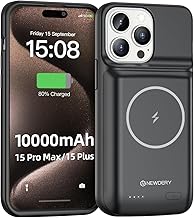 Best true battery case · Newdery Battery Case for iPhone 15 Pro Max — Check price on Amazon →
Hands-busy work. Warehouse scanning, field service, event photography, cycling delivery — anywhere a detachable pack would get knocked off. A fixed case never separates.
People who lose accessories. A case can't be left on a hotel nightstand.
For almost everyone else, the magnetic route is better value. The Anker MagGo Power Bank 10K with its kickstand and charge display is the default recommendation: Qi2-certified 15W, roughly a full charge for a large phone, useful as a propped-up stand on a plane tray, and transferable to your next phone and the one after that.
How to choose well in either category
- Check the magnets, not just the bank. Qi2 performance depends on your phone case. A case without proper magnet arrays will cause slipping, misalignment and heat.
- Ignore headline mAh in isolation. Ask what the pack actually delivers. Reputable brands list rated output capacity alongside cell capacity.
- Prefer pass-through charging. It lets you charge pack and phone from one wall plug overnight.
- For speed, go wired. Even the best Qi2 pack can't match a USB-C cable or the Anker Nano's direct connector when you need 30% in fifteen minutes.
- Verify exact model fit for cases. Camera bump dimensions change every generation; a case advertised for "iPhone 17 series" may only properly fit one variant.
The verdict
In 2026, the phone battery case is a niche product that still serves its niche well — but it's no longer the default. Modern flagship endurance has eaten most of its reason to exist, and Qi2 has taken the rest. Buy a battery case if you have a specific, fixed-device reason. Otherwise buy a good magnetic pack, keep it in your bag, and enjoy a phone that stays the thickness its designers intended.
FAQ
Does a battery case charge faster than a Qi2 power bank? No. Battery cases typically trickle-charge at low wattage to limit heat. A Qi2 pack delivers up to 15W wirelessly, and a wired bank is faster still.
Do battery cases damage your phone's battery? Not inherently, but keeping a phone pinned near 100% in a warm enclosure is not ideal for long-term cell health. Modern phones have optimised charging features that help; heat is the bigger risk factor.
Will a Qi2 power bank work with Android? Yes, if your phone or case supports the Qi2 magnet profile. Many Android phones need a magnet-equipped case to attach securely.
Is 10,000mAh enough for a weekend away? For a modern large-battery phone, expect roughly one full charge plus a partial top-up from a 10,000mAh wireless pack. For two days of heavy use, pair it with wired charging or pick a higher-capacity pack.
Can I take these on a plane? Power banks must go in carry-on, not checked luggage. Capacities under 100Wh — which covers essentially all 10,000mAh phone banks — are generally permitted, but check your airline's current rules, as several tightened policies on in-flight use recently.
Our picks

Anker MagGo Power Bank, 10,000mAh Qi2-Certified 15W Portable Charger
Qi2-certified 15W magnetic pack with a kickstand and display — roughly a full charge without permanent bulk.
Anker Nano Power Bank,5,000mAh Portable Charger, Built-in USB-C Connector
Plugs straight into USB-C for fast wired top-ups with none of the wireless heat penalty.
Baseus PicoGo Magnetic Power Bank 10000mAh
Thin Qi2-class magnetic bank with pass-through charging — closest feel to a battery case.

Belkin 10000mAh Qi2 15W Slim Magnetic Power Bank with USB C Cable
Strong magnets, Qi2 15W and Belkin's conservative thermal tuning for all-day wear.
NEWDERY Battery Case for iPhone 15 Pro Max/iPhone 15 Plus, 10000mAh
One of the few still-supported wrap-around cases with real capacity and built-in protection.
Get the best tech deals in your inbox
Join the BytePlaza newsletter for hand-picked gadget deals and new buying guides. No spam, unsubscribe anytime.
Related reads
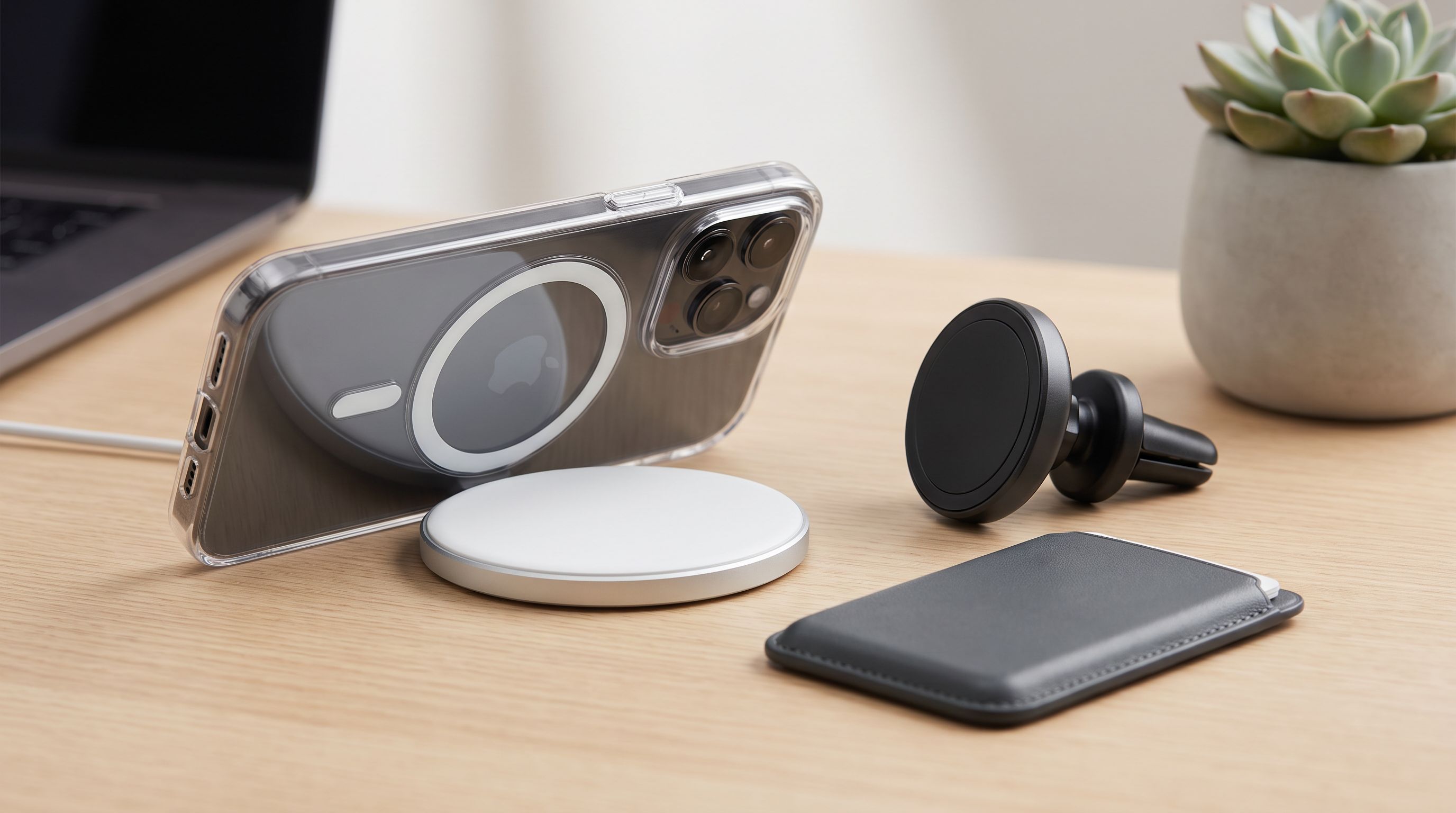
Qi2 Magnetic Phone Cases in 2026: 5 Picks That Hold Tight
The best Qi2 magnetic phone case picks for 2026, ranked by magnet strength, drop ratings and real owner complaints about cases that slip off chargers and mounts.
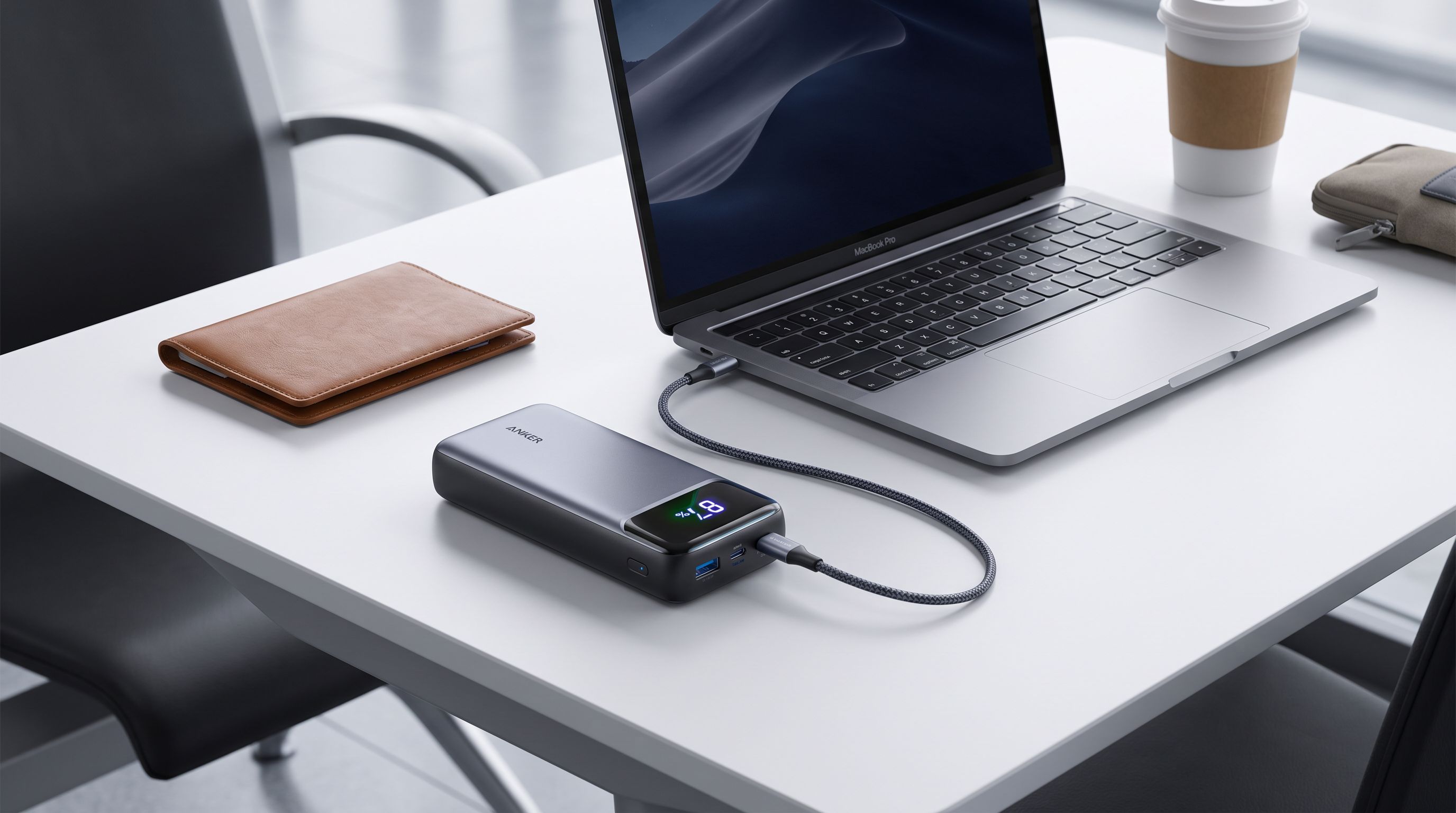
Laptop Power Banks in 2026: 5 Picks That Hit 140W
Which laptop power bank should you buy in 2026? We compare 100W–250W USB-C PD 3.1 banks on capacity, airline limits and real-world MacBook charge speeds.
Bedside Charging Stations in 2026: 5 Picks That Kill Cable Clutter
The best bedside charging station for 2026: Qi2 magnetic docks, alarm-clock combos and USB-C hubs compared for speed, dimmable displays and nightstand footprint.