Heart Rate Monitor Earbuds 2026: What the Sensors Really Do
Heart rate monitor earbuds in 2026 add optical HR and blood oxygen sensing to your workout. Here's which models actually ship it, how accurate it is, and who needs it.
Reader-supported: we may earn a commission from links on this page, at no extra cost to you. It never affects our picks. Learn more.
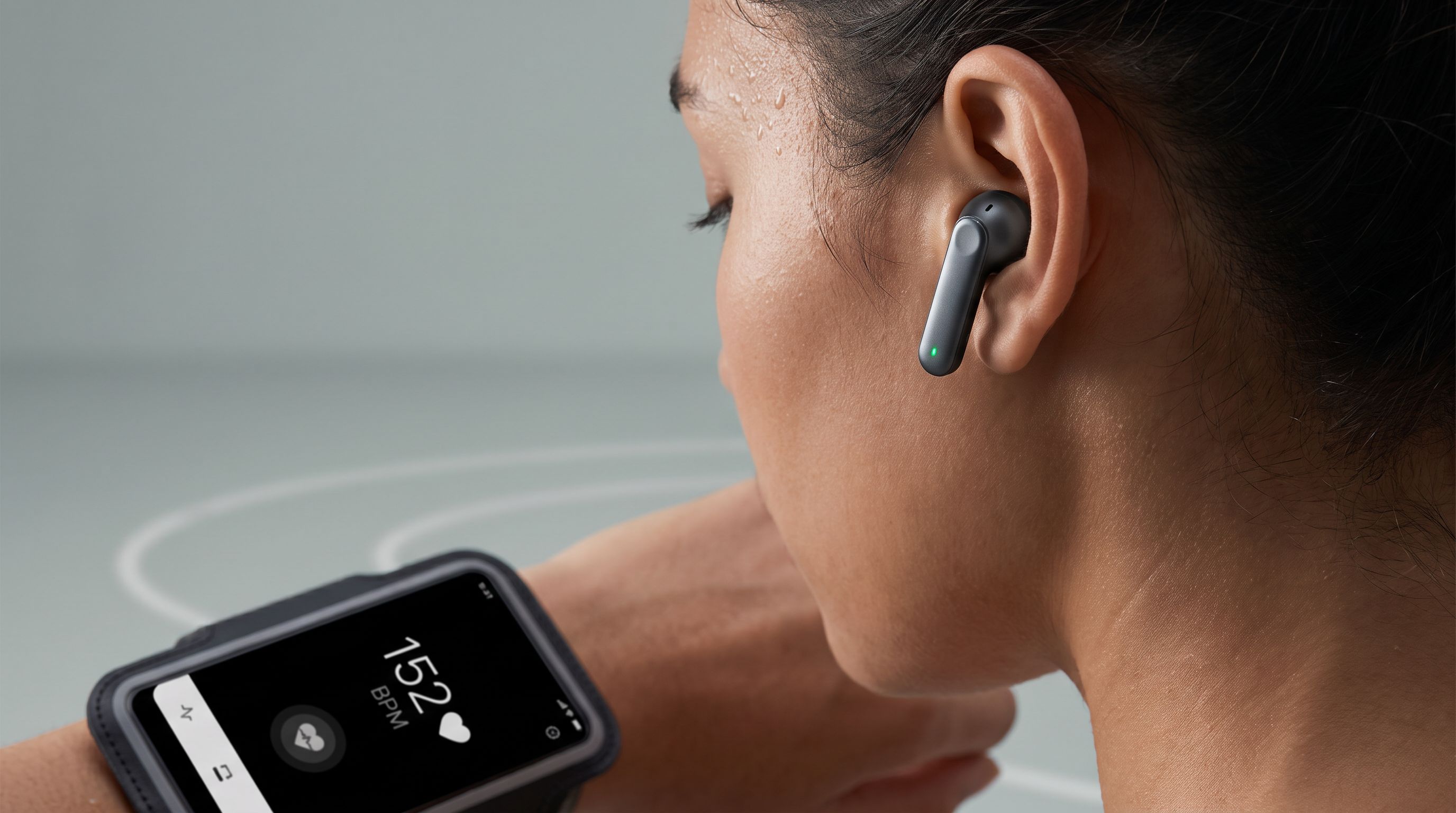
Earbuds have quietly become the most interesting health wearable of the moment. Not because they do more than a smartwatch — they do less — but because of where they sit. The ear canal is one of the best places on the body to read a pulse: it's well-perfused, relatively stable, and shielded from the wrist-flick artifacts that wreck watch data during weightlifting or cycling.
In 2026, that theory has turned into shipping products. Apple, Beats, and Sony all sell mainstream earbuds with optical heart-rate sensing built in. Blood oxygen (SpO2) from the ear is the next frontier, and it's worth being precise about what's actually available versus what's still marketing hand-waving. Here's what we found after comparing spec sheets, expert reviews, and owner feedback across the current crop.
What's actually in the ear right now
The sensor package in a modern "health" earbud is almost always PPG — photoplethysmography. Tiny LEDs pulse light into the skin of the ear or concha, a photodiode measures how much bounces back, and the device infers a heartbeat from the rhythmic change in blood volume. It's the same basic technology as the green flashing lights on the back of your watch.
Two things follow from that:
- Heart rate is the reliable output. Optical HR from the ear is well-established; hearing-aid and sports-science research has used ear-based PPG for years.
- SpO2 from earbuds is far less common than headlines suggest. Blood oxygen requires red and infrared wavelengths plus careful calibration, and regulatory caution around medical claims means most consumer earbuds stop at heart rate. If a product page doesn't explicitly list SpO2, assume it doesn't do it. Treat any "blood oxygen earbuds" claim as something to verify on the manufacturer's spec sheet before you buy.
So the honest 2026 framing is this: earbuds are heart-rate wearables with excellent potential for more. Buy for the HR, treat anything else as a bonus.
Which shipping earbuds include heart-rate sensing
Apple AirPods Pro 3 are the headline act. Apple added optical heart-rate sensing to the Pro line, and the data flows straight into the Workout app on iPhone and Apple Watch, so a run or a strength session logs HR zones without a wrist device at all. Independent reviewers running them against chest straps have been notably positive about the accuracy — several outlets have called them the first earbuds to get HR genuinely right. Fit matters enormously here, and Apple's multiple tip sizes plus the foam-ish seal help keep the sensor pressed where it needs to be.
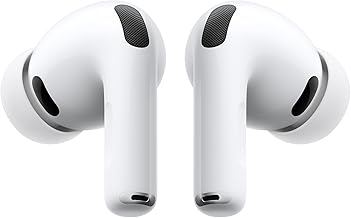 Best overall · Apple AirPods Pro 3 — Check price on Amazon →
Beats Powerbeats Pro 2 take the same idea and wrap it in an ear-hook design built for people who actually sweat. The hooks hold the sensor against the ear with consistent pressure, which is the single biggest variable in optical accuracy. Crucially, Beats made the HR data available beyond Apple's walled garden — it broadcasts to third-party fitness apps on both iOS and Android, which matters if your training lives in Strava, Nike Run Club, or a coaching platform. If you lift, sprint, or do anything that makes a wrist-based reading go haywire, this is the most sensible pick in the category.
 Best for hard training · Beats Powerbeats Pro 2 — Check price on Amazon →
Sony WF-1000XM6 are the outlier: a flagship noise-cancelling bud, tuned for sound first, that now also carries heart-rate monitoring. If you want one pair that handles a flight, a commute, and a treadmill session, this is the compromise with the fewest sacrifices on audio. The trade-off is fit — a sealed in-ear design without hooks is less bombproof during high-impact movement than Powerbeats.
 Best sound with HR · Sony WF-1000XM6 — Check price on Amazon →
Anker Soundcore Sport X20 is the honest budget entry. It doesn't do heart rate, and we're including it deliberately: if your watch already tracks HR well, you'd often be better served by durable, secure, long-battery workout buds than by paying a premium for a sensor you'll duplicate. Rugged build, ear hooks, and good sweat resistance cover the actual job most people need done.
 Budget workout pick · Anker Soundcore Sport X20 — Check price on Amazon →
And if accuracy is non-negotiable — intervals, threshold work, anything where a 10 bpm error changes your session — the Polar Verity Sense armband remains the pragmatic answer. It's not an earbud, but it broadcasts over Bluetooth and ANT+ to essentially anything, and optical armband placement is consistently one of the most accurate non-chest-strap options available.
 Best accuracy add-on · Polar Verity Sense — Check price on Amazon →
Comparison
| Model | HR sensing | Fit style | Best for | Key trade-off |
|---|---|---|---|---|
| Apple AirPods Pro 3 | Yes, optical | Sealed in-ear with tips | iPhone users wanting HR + top ANC in one | Ecosystem-first; best data inside Apple apps |
| Beats Powerbeats Pro 2 | Yes, dual optical | Ear hooks | Hard training, lifting, Android users | Bulkier case and profile |
| Sony WF-1000XM6 | Yes | Sealed in-ear with tips | Sound quality first, fitness second | Less secure for high-impact work |
| Anker Soundcore Sport X20 | No | Ear hooks | Budget workouts, pair with a watch | No onboard health sensing |
| Polar Verity Sense | Yes (armband) | Arm strap | Maximum accuracy, any app | Separate device to charge and wear |
What the data is actually good for
Be realistic about the use cases, because this is where a lot of buyers get disappointed.
Genuinely useful:
- Training zones in real time. Knowing you're drifting out of Zone 2 on an easy run is the single highest-value thing ear HR gives you.
- Calorie estimates that aren't nonsense. HR-informed burn figures beat step-count guesses by a wide margin.
- Strength and cycling sessions. Wrist sensors struggle when your wrist is bent, gripping, or vibrating. Ears don't.
- Post-session recovery context. How fast your HR drops after effort is a legitimate fitness signal over time.
Not useful, or not yet:
- Continuous all-day monitoring. You take earbuds out. Resting heart rate trends, sleep HR, and HRV baselines still need a watch or ring.
- Medical screening. No consumer earbud is a diagnostic device. Atrial-fibrillation notifications and ECG remain watch territory.
- SpO2 for altitude or sleep apnea. Even where SpO2 appears, consumer-grade readings are wellness data, not clinical pulse oximetry.
How to choose
Ask three questions in order.
- Do you already wear a watch or ring that tracks HR well? If yes, earbud HR is a convenience, not a necessity. Spend the money on fit and sound instead.
- What does your workout look like? High-impact or heavy-grip training rewards the hook design of Powerbeats Pro 2. Treadmill, rowing, and gym cardio are fine with AirPods Pro 3 or WF-1000XM6.
- Which app owns your training history? Apple's integration is seamless but inward-looking. Beats' broader broadcasting is the safer bet if you're on Android or committed to a third-party platform.
One last practical note: optical sensing is only as good as the seal. Reviewers consistently find that a poor tip size or a loose hook degrades HR accuracy far more than any difference between brands. Try the tip sizes in the box, and re-seat the buds if a reading looks wrong mid-session — it usually is the fit, not the sensor.
FAQ
Do any earbuds really measure blood oxygen in 2026? Very few, and claims vary by region because of medical-device rules. Heart rate is the standard, dependable feature. Check the manufacturer's spec page for an explicit SpO2 listing before buying on that basis.
Are earbud heart-rate readings as accurate as a chest strap? Not quite, but they're closer than most wrist sensors during movement. Chest straps measure electrical signal rather than light, and remain the reference standard. For zone training, good earbud HR is usually accurate enough.
Do Powerbeats Pro 2 heart-rate features work on Android? Yes — Beats broadcasts heart-rate data to compatible third-party fitness apps on Android as well as iOS, which is the main reason to choose them over AirPods if you're not on an iPhone.
Will heart-rate sensing hurt battery life? It draws power, so expect shorter runtime with sensing active than in pure playback. Most models only enable it during a tracked workout, so everyday listening time is largely unaffected.
Can I use earbud HR and a watch at the same time? Generally yes, but your app will pick one source. Decide which device you trust more for the session rather than letting them compete — mixed sources are the most common cause of weird-looking data.
Our picks
Apple AirPods Pro 3 Wireless Earbuds with Active Noise Cancellation
Adds optical heart-rate sensing to top-tier ANC and fit, with tight Apple Fitness integration.
Powerbeats Pro 2 - Wireless Noise Cancelling Workout Earbuds with Secure- Fit Earhooks, Up to 45-Hour Battery with Charging Case, Sweat & Water Resistant, Heart Rate Monitoring - Jet Black
Ear-hook stability plus dual heart-rate sensors that broadcast to Apple and Android fitness apps.
Sony WF-1000XM6 The Best Truly Wireless Noise Cancelling Earbuds (2026 Model), Bluetooth in-Ear Headphones Studio-Quality Sound Up to 24hr Battery, Black Bundle w/Deco Essentials 6 Pairs Earbud Tips
Class-leading noise cancelling and audio quality, now with heart-rate monitoring built in.
Soundcore Sport X20 by Anker Noise-Cancelling Sports Earbuds (Black)
Rugged, secure ear-hook buds for sweaty sessions when you'd rather track HR on your watch.
POLAR Verity Sense - Optical Heart Rate Monitor Armband - ANT+, Dual Bluetooth
Armband optical sensor that broadcasts HR to any earbuds or app when you need reliable data.
Get the best tech deals in your inbox
Join the BytePlaza newsletter for hand-picked gadget deals and new buying guides. No spam, unsubscribe anytime.
Related reads
Smart Scales for Athletes in 2026: 4 Segmental Picks
Segmental smart scales measure each limb separately. We compared the best options for athletes in 2026 on accuracy, electrode count, app data and multi-user support.
Heart Rate Chest Straps in 2026: 5 Picks Watches Can't Match
Why a chest strap still beats wrist sensors for interval accuracy, plus the best heart rate monitor chest strap picks of 2026 ranked by battery, ANT+ and app support.
OTC Hearing Aid Earbuds in 2026: 5 Picks That Actually Help
Compare the best OTC hearing aids and earbuds for 2026, from AirPods Pro 3's hearing aid mode to self-fitting Sennheiser and budget JLab picks.