Cloud Gaming Handheld 2026: Do You Still Need a PC?
Is a cloud gaming handheld worth it in 2026 without a gaming PC? We compare streaming-first devices vs local-play handhelds on screens, latency and sub costs.
Reader-supported: we may earn a commission from links on this page, at no extra cost to you. It never affects our picks. Learn more.
Cloud gaming has been "almost there" for about six years. In 2026 it's finally good enough that a real question has appeared: if you don't own a gaming PC or a current console, can a streaming-first handheld be your whole setup?
The short answer: for some people, yes — and they'll save a lot of money. For others it's a frustrating purchase that depends entirely on a router they've never thought about. Here's how to tell which group you're in before you spend anything.
What "cloud gaming handheld" actually means in 2026
The category has split into three shapes, and the marketing blurs them deliberately.
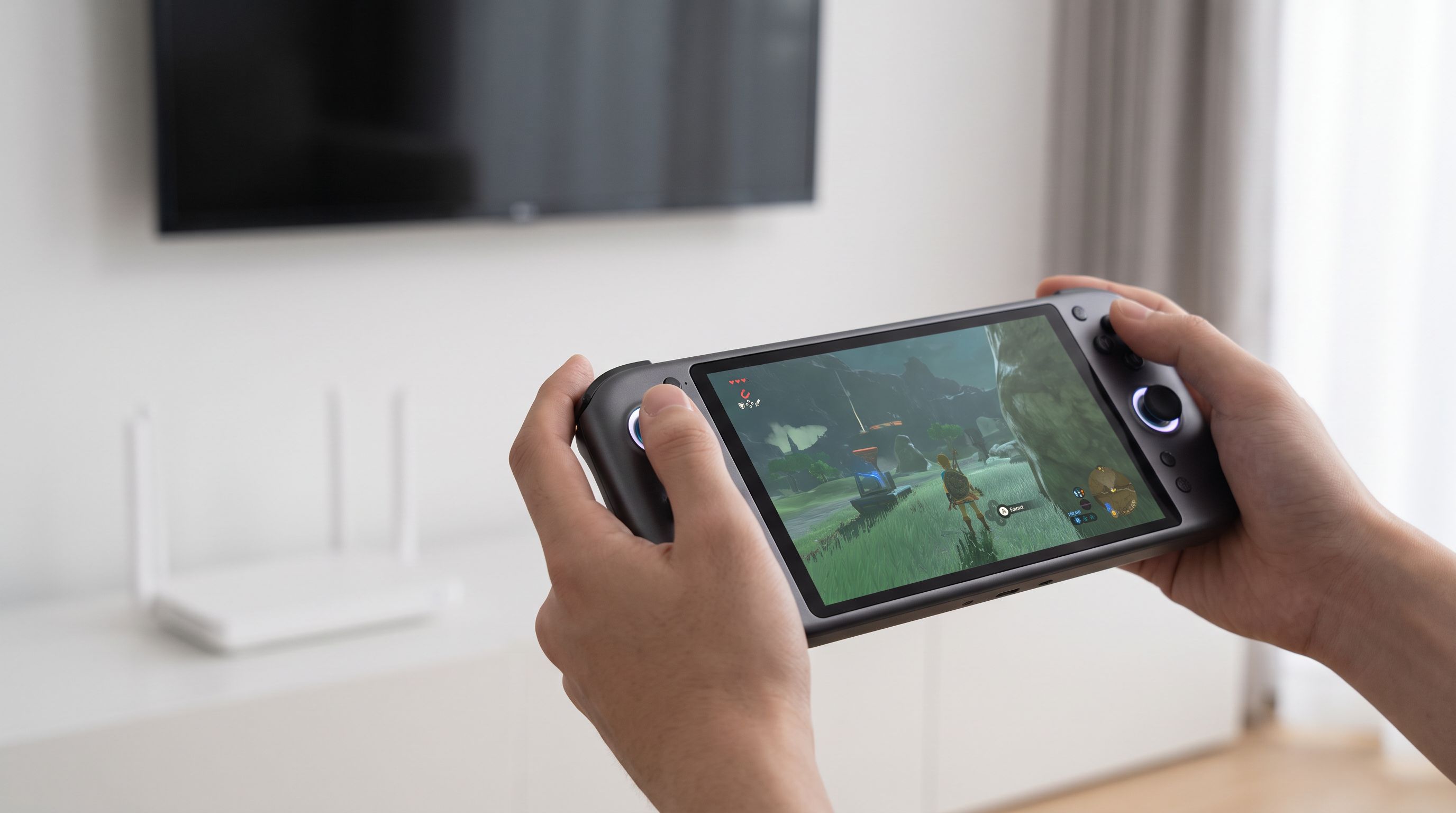
True streaming-first devices. Android-based, modest chips, big batteries, no local AAA ambitions. The Logitech G Cloud Gaming Handheld is the cleanest example: it boots more or less straight into GeForce NOW and Xbox Cloud Gaming, runs cool and silent, and gets battery life a Windows handheld can't touch. New entrants like the ARC X1 push the same idea with Android, cloud and emulation bundled into one launcher.
 Best streaming-first pick · Logitech G Cloud Gaming Handheld — Check price on Amazon →
Android hybrids. The Razer Edge 5G sits here. It streams, but it also runs native Android games and emulators at a real framerate, so a dropped connection doesn't mean a dead evening. Its AMOLED panel is also a genuine upgrade over most LCD cloud handhelds.
Local-play handhelds that happen to stream well. The ASUS ROG Ally X and Valve Steam Deck OLED run games off local storage, then stream whatever's too heavy. They cost more, weigh more and run hotter — but they're never bricked by a bad hotel Wi-Fi.
 Best screen for the money · Valve Steam Deck OLED — Check price on Amazon →
 Best overall if you want local play too · ASUS ROG Ally X — Check price on Amazon →
A fourth option barely gets mentioned: your phone. A Backbone One clipped to a modern handset streams from the same services on hardware you already paid for. If you're unsure whether cloud gaming suits you, that's the cheapest possible test.
The latency question, honestly
Manufacturers like quoting end-to-end numbers in the 30–60ms range. Those figures are real — on a wired 5GHz or 6GHz connection, close to a server location, with a service tier that supports high refresh streaming. They are not what you get on a shared apartment Wi-Fi network at 9pm.
What matters in practice:
- Your router, not your download speed. Cloud gaming needs maybe 15–35Mbps sustained, which almost any connection manages. What kills it is jitter and packet loss. A modern Wi-Fi 6/6E router near your sofa beats a faster plan on an ISP box in the hallway.
- Distance to a data centre. Both GeForce NOW and Xbox Cloud Gaming have expanded coverage, but if your nearest region is several hundred miles away, you'll feel it. Both services let you check before committing.
- Genre tolerance. Single-player RPGs, strategy, racing and most third-person action are fine. Competitive shooters and anything with tight parry timing are where streaming still loses to local play — and reviewers in 2026 still say so.
Recent hands-on write-ups, including testing across varied networks abroad, describe Xbox Cloud Gaming as finally "great" on good connections while being clear that the experience collapses on bad ones. That's the honest summary of the whole category.
Screens: the spec that quietly decides this
Streaming output is compressed. A screen that's too sharp can actually make artifacts more obvious, while a good contrast ratio hides them beautifully. This is why the Steam Deck OLED and Razer Edge 5G look better streaming than their resolutions suggest — deep blacks mask compression blocking in dark scenes.
Also check refresh rate against what your service supports. A 144Hz panel is lovely for native Android games, but if your cloud tier caps at 60fps you're paying for headroom you won't use at launch.
Comparison: streaming-first vs local-play handhelds
| Logitech G Cloud | Razer Edge 5G | ASUS ROG Ally X | Steam Deck OLED | Backbone One + phone | |
|---|---|---|---|---|---|
| Primary use | Cloud only | Cloud + Android | Local Windows + cloud | Local Steam + cloud | Cloud + mobile |
| Works offline | No | Yes (Android games) | Yes | Yes | Limited |
| Display type | LCD | AMOLED | LCD | OLED | Your phone's |
| Battery for streaming | Excellent | Good | Moderate | Good | Phone-dependent |
| Fan noise | None | None | Audible under load | Audible under load | None |
| Weight in hand | Light | Very light | Heavy | Heavy | Lightest |
| Ongoing subs needed | Yes | Yes | Optional | Optional | Yes |
| Best for | Couch streamers on solid Wi-Fi | Travellers wanting a fallback | No-PC buyers who want everything | Big local libraries | Testing the waters |
The subscription maths nobody shows you
A cloud handheld's sticker price is only part of it. You'll typically need a streaming tier (GeForce NOW's higher tiers, or Xbox Game Pass Ultimate for Xbox Cloud Gaming) — plus, on GeForce NOW, you still have to own the games unless they're free-to-play. Xbox's model bundles a catalogue instead, which is simpler but locks you into that library.
Run a rough three-year total before buying. A cheaper streaming-first handheld plus 36 months of a premium tier can land uncomfortably close to a ROG Ally X or Steam Deck OLED that owns its games outright. If you already pay for Game Pass Ultimate, the maths swings back toward cloud hardware fast. If you don't subscribe to anything, local play usually wins on lifetime cost.
Also budget for the invisible item: a decent router. It's the single highest-impact upgrade for cloud gaming and it costs less than most handhelds.
So: worth it without a PC?
Buy a streaming-first handheld if you have strong, stable Wi-Fi, you already subscribe to Game Pass Ultimate or GeForce NOW, you mostly play single-player games, and you value light weight, silence and long battery life. The Logitech G Cloud is the purest version of that deal.
Buy an Android hybrid if you travel, commute, or simply don't trust your connection. The Razer Edge 5G keeps playing when the stream doesn't, and its screen is a real asset.
Buy a local-play handheld if cloud gaming is a nice-to-have rather than the plan. The ASUS ROG Ally X is the most flexible no-PC purchase in 2026 — Windows means every storefront, every launcher, plus cloud when you want it. The Steam Deck OLED is the better-feeling device with the better screen, if a curated Steam library suits you.
Buy nothing yet if you're unsure. Spend a little on a Backbone One, stream for a fortnight on your actual home network, and let the results decide. That's the most useful test available, and it's the one no spec sheet can run for you.
FAQ
Can a cloud gaming handheld fully replace a gaming PC in 2026? For single-player and catalogue gaming on a good connection, broadly yes. For competitive multiplayer, modding, or games outside the supported libraries, no — those still need local hardware.
How much internet speed do I need? Roughly 15–35Mbps sustained for 1080p60, but stability matters far more than raw speed. Low jitter on 5GHz or 6GHz Wi-Fi is the real requirement.
Is GeForce NOW or Xbox Cloud Gaming better? GeForce NOW streams games you already own at higher quality tiers; Xbox Cloud Gaming bundles a catalogue through Game Pass Ultimate. Owners of big Steam libraries lean GeForce NOW; people starting fresh usually find Xbox better value.
Does 5G actually help? It can, on a strong signal with a generous data plan, which is why the Razer Edge 5G exists. Mobile networks are more variable than home Wi-Fi, so treat it as a bonus rather than the main use case.
Should I wait for the next Steam Deck? If you need a device now, the Steam Deck OLED remains excellent and well supported. If you can wait and local play is your priority, holding out costs you nothing but time.
Our picks
Logitech G Cloud Gaming Handheld, Portable Console with Long Battery Life, 1080P 7-Inch Touchscreen, Lightweight Design, Xbox Cloud Gaming, NVIDIA GeForce NOW, Google Play
Light, long-lasting and built purely for GeForce NOW and Xbox Cloud — no fan noise, no driver drama.
Razer Edge 5G
A 144Hz AMOLED tablet and Kishi V2 Pro controller that plays native Android titles when the stream drops.
ASUS ROG Xbox Ally X 7-inch Gaming Handheld, FHD 120Hz Display, AMD Ryzen AI Z2 Extreme, 24GB RAM, 1TB SSD, Windows - BLACK
Runs real Windows games offline and streams anything else — the safest buy if you own no gaming PC.
Valve Steam Deck OLED 1TB Handheld Gaming Console (Renewed)
Superb HDR OLED panel, excellent battery and a huge verified local library that never needs Wi-Fi.

BACKBONE One Mobile Gaming Controller, USB-C, 2nd Gen | For Android & iPhone 18/17/16/15, 2nd Gen, Play Xbox, Fortnite, Call of Duty, & More
Turns the phone you already own into a cloud handheld for a fraction of a dedicated device.
Get the best tech deals in your inbox
Join the BytePlaza newsletter for hand-picked gadget deals and new buying guides. No spam, unsubscribe anytime.
Related reads
Best Handheld Gaming PC 2026: ROG Ally vs Steam Deck
We compare the best handheld gaming PCs of 2026 — ROG Xbox Ally X, Steam Deck OLED, Legion Go S and more — on battery life, performance per dollar and screen quality.
Golf Watches in 2026: 5 GPS Picks That Actually Earn Their Place
Which golf watch should you buy in 2026? We compare Garmin, Shot Scope and Coros on course databases, shot tracking, subscriptions and battery life.
Laptop Backpack With USB Charging Port 2026: 5 Worth It
We compared commuter laptop backpacks with USB charging ports on padding, capacity and reported durability. Five picks for 2026, plus what the port really does.