Best USB Microphone for Podcasting 2026: Top Picks
The best USB microphone for podcasting in 2026, tested picks for streamers and podcasters across price tiers — including USB/XLR hybrids and boom arm tips.
Reader-supported: we may earn a commission from links on this page, at no extra cost to you. It never affects our picks. Learn more.
USB microphones have quietly become good enough that the old "you must go XLR to sound professional" advice no longer holds. In 2026, the best USB microphone for podcasting is often the same mic a studio would put on an interface — just with a converter and preamp baked into the body.
This guide covers what actually matters when you're buying: pickup pattern, dynamic vs condenser, whether you need an XLR path later, and whether your desk arm will even hold the thing. Picks are split by use case, because podcasters and Twitch streamers want different things from the same box.
The short version
- Podcasting in an untreated room? Get a dynamic mic and speak close to it. The Shure MV7+ and Rode PodMic USB are the two obvious answers.
- Tight budget or a multi-person show? The Samson Q2U is still absurdly good value and has both USB and XLR out, so you can buy four of them and move to an interface later.
- Voiceover, narration, or singing? A condenser like the Rode NT-USB+ gives you more air and detail — as long as your room is quiet.
- Streaming with a camera in frame? Consider an XLR dynamic like the Elgato Wave DX on a low-profile arm, so the mic doesn't eat your face.
 Best for streamers · Elgato Wave DX — Check price on Amazon →
 Best condenser · Rode NT-USB+ — Check price on Amazon →
 Budget pick · Samson Q2U — Check price on Amazon →
 Best mid-range · Rode PodMic USB — Check price on Amazon →
 Best overall · Shure MV7+ — Check price on Amazon →
Dynamic vs condenser: the decision that matters most
Nearly every "my podcast sounds bad" problem traces back to this choice.
Dynamic microphones are less sensitive and have a tighter effective pickup range. Speak 5–10 cm away and they capture your voice while largely ignoring keyboard clatter, PC fans, and room reflections. That's why broadcast studios use them and why they're the default recommendation for anyone recording in a bedroom, spare room, or open-plan office.
Condenser microphones are more sensitive and capture more high-frequency detail. They sound more "open" and are better for singing, acoustic instruments, and polished voiceover — but they'll also faithfully record your neighbour's lawnmower. If your room has soft furnishings, curtains, and no HVAC roar, a condenser can sound superb. If not, you'll fight it forever.
There's no quality hierarchy here. A dynamic mic used correctly beats a condenser used badly, every time.
USB-only vs USB/XLR hybrid
Hybrids like the Shure MV7+, Rode PodMic USB, and Samson Q2U output both USB and analogue XLR simultaneously (or switchably, depending on the model). That matters for three reasons:
- Growth path. Start plugged into a laptop; move to an audio interface or mixer when your show grows, without rebuying mics.
- Redundancy. Some hybrids let you record a USB track to your computer and an XLR feed to a recorder at the same time — a genuine safety net for interviews you can't redo.
- Multi-mic shows. USB gets awkward past one or two mics on the same machine. XLR into an interface scales cleanly to four guests.
If you're certain you'll only ever record solo at your desk, a USB-only condenser like the NT-USB+ is perfectly sensible and usually simpler to live with.
Comparison table
| Mic | Type | Connection | Best for | Boom arm friendly |
|---|---|---|---|---|
| Shure MV7+ | Dynamic, cardioid | USB-C + XLR | Podcasters who want one mic to do everything | Yes — but it's heavy; use a sturdy arm |
| Rode PodMic USB | Dynamic, cardioid | USB-C + XLR | Broadcast look and sound at mid-range cost | Yes — designed for arms; internal swing mount |
| Samson Q2U | Dynamic, cardioid | USB + XLR | First mic, guest mics, remote co-hosts | Yes — light, works on almost any arm |
| Rode NT-USB+ | Condenser, cardioid | USB-C | Voiceover, narration, treated rooms | Yes — light, includes stand mount |
| Elgato Wave DX | Dynamic, cardioid | XLR (needs interface) | Streamers already on a Wave XLR / Stream Deck setup | Yes — compact body stays out of frame |
The picks in detail
Shure MV7+ — best overall
The MV7+ is the mic most podcast studios would hand a beginner without hesitation. It's a cardioid dynamic in the lineage of Shure's broadcast mics, so it's forgiving about room noise, and the onboard DSP (accessed through Shure's desktop app) handles things like tone shaping and level control without you needing to learn a compressor first.
The reason it wins "best overall" isn't the sound alone — it's that the same mic works over USB-C for a beginner and over XLR into a proper interface three years later. Two caveats: it's a heavy mic, so pair it with a genuinely rigid boom arm; and like all dynamics, it wants you close. Back off 30 cm and it goes thin and distant.
Rode PodMic USB — best mid-range
The PodMic USB takes Rode's popular broadcast dynamic and adds a USB-C output with built-in processing. It has that classic radio-voice weight in the low-mids, an internal pop filter, and an integrated yoke mount that's clearly designed to live on an arm rather than a desk stand.
For a two-person in-room podcast, a pair of these on arms looks the part on camera and sounds consistent. It's also the pick if you like a slightly richer, more coloured tone than the MV7+'s more neutral delivery.
Samson Q2U — budget pick
The Q2U has been the default budget recommendation for over a decade, and nothing has really dethroned it. It's a handheld-style dynamic with USB and XLR outputs, a headphone jack for monitoring, and a small desk stand in the box. Sound quality is a step below the MV7+, but the gap is much smaller than the price gap.
Its real superpower is guest mics: shipping cheap Q2Us to remote co-hosts is a standard move for double-ender recordings, and it removes the "my guest used laptop audio" disaster. (The Audio-Technica ATR2100x-USB is a near-identical alternative if the Q2U is out of stock.)
Rode NT-USB+ — best condenser
If your room is quiet and your content is narration, audiobook, voiceover, or vocals, the NT-USB+ gives you detail that dynamics simply don't reach. It includes a pop shield, zero-latency headphone monitoring with a direct/USB blend, and Rode's onboard processing via their software.
Be honest about your room before buying this. Condensers reward acoustic treatment and punish echo.
Elgato Wave DX — best for streamers
The Wave DX is an XLR dynamic aimed squarely at gaming desks. It's small enough not to block your face on camera, tuned to sound good at typical streaming distances, and slots neatly into the Elgato ecosystem alongside the Wave XLR interface and Stream Deck. If you want mute buttons, per-source mixing, and stream-friendly routing, that combination is hard to beat. Note it needs an interface — it's not a USB mic on its own.
Boom arms: don't skip this
A boom arm isn't a luxury; it's what stops desk thumps and keyboard vibration reaching the mic, and it lets you position the capsule properly without hunching.
- Check the weight rating. The MV7+ and PodMic USB are heavy. A cheap arm will droop within a week.
- Check the thread. Most mics use 5/8" threading; many arms ship with a 3/8" adapter. Confirm before you order.
- Cable management matters. Internal-routing arms look far cleaner on camera.
- Clamp depth. Thick desks and desks with rear cable trays defeat some clamps.
Rode's PSA1+ and Elgato's Wave Mic Arm LP (a low-profile design that sits below the camera line) are the two most commonly recommended options, and both handle heavy dynamics.
How to actually sound good
Buying the mic is maybe 40% of the result. The rest:
- Get close. A hand-width from a dynamic mic, slightly off-axis so plosives pass by rather than into the capsule.
- Set gain properly. Aim for peaks around −6 dBFS. Don't fix quiet audio by amplifying noise later.
- Kill the room. A rug, curtains, and a bookshelf behind you do more than any plugin.
- Monitor with headphones. Every mic here has a headphone jack for a reason — you'll catch problems live rather than in the edit.
FAQ
Is a USB microphone good enough for a professional podcast?
Yes. Shows on major networks have been recorded on USB dynamics. Listeners notice room echo, plosives, and inconsistent levels far more than they notice converter quality.
Do I need an audio interface?
Not for a solo USB setup. You need one if you're recording multiple mics in the same room, or if you buy an XLR-only mic like the Elgato Wave DX.
Can I use a USB mic with my phone or iPad?
Usually, with the right USB-C or Lightning adapter, and sometimes a powered hub. Check the manufacturer's compatibility notes for your specific model before relying on it.
Condenser or dynamic for streaming?
Dynamic, almost always. Mechanical keyboards, GPU fans, and open rooms are exactly what condensers pick up best.
Should I buy a pop filter?
The PodMic USB and NT-USB+ have built-in protection that's adequate for most voices. If you have strong plosives, an external filter is a cheap fix — or just angle the mic slightly off-axis.
Our picks
Shure MV7+ USB-C & XLR Podcast Dynamic Microphone - Black | USB-C and XLR dynamic mic with LED touch panel, auto level and pop filter for podcasting, streaming and recording
Dynamic USB/XLR hybrid with excellent room rejection and genuinely useful onboard processing.
RØDE PodMic USB Dynamic Broadcast Microphone with XLR and USB Connectivity for Podcasting, Streaming and Content Creation (White) | XLR and USB Connectivity for Podcasting, Streaming and Content Creation White
Broadcast-style dynamic with built-in DSP that sounds great over USB and scales to XLR later.
SAMSON Q2U Handheld Dynamic XLR/USB Microphone Bundle | Includes Desktop Boom Arm Stand, Shock Mount, and Pop Filter
The classic cheap USB/XLR dynamic — forgiving in untreated rooms and ships with a stand.
RØDE NT1 Signature Series Large-Diaphragm Condenser Microphone with Shock Mount, Pop Filter and XLR Cable for Music Production, Vocal Recording, Streaming and Podcasting (Green) | Shock Mount, Pop Filter and XLR Cable for Music Production, Vocal Recording, Streaming and Podcasting (Green)
Studio-grade condenser detail with zero-latency monitoring for voiceover and vocals.
Elgato Wave DX Dynamic XLR Microphone, Cardioid Pattern | Speech-optimized capsule, Room noise rejection, No signal booster needed, Swivel mount included, Broadcast-ready
XLR dynamic tuned for gaming desks; pairs with Wave XLR for a clean stream-ready chain.
Get the best tech deals in your inbox
Join the BytePlaza newsletter for hand-picked gadget deals and new buying guides. No spam, unsubscribe anytime.
Related reads
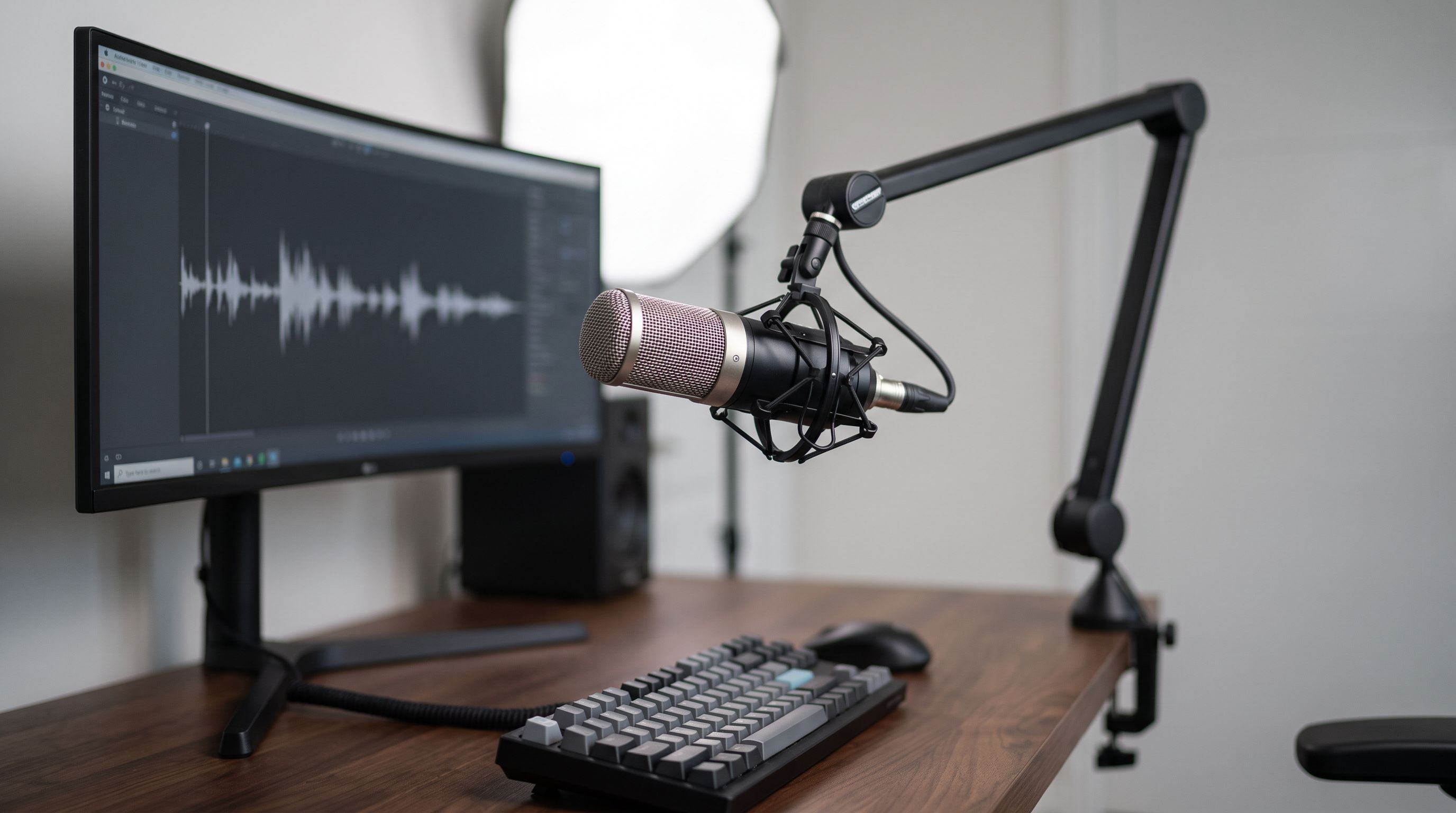
Mic Arms in 2026: 5 Picks That Kill Desk Thump
The best microphone boom arm stops keyboard clatter and desk thumps. We compare RØDE PSA1+, Elgato Wave Mic Arm LP, Blue Compass and more for USB and XLR mics.
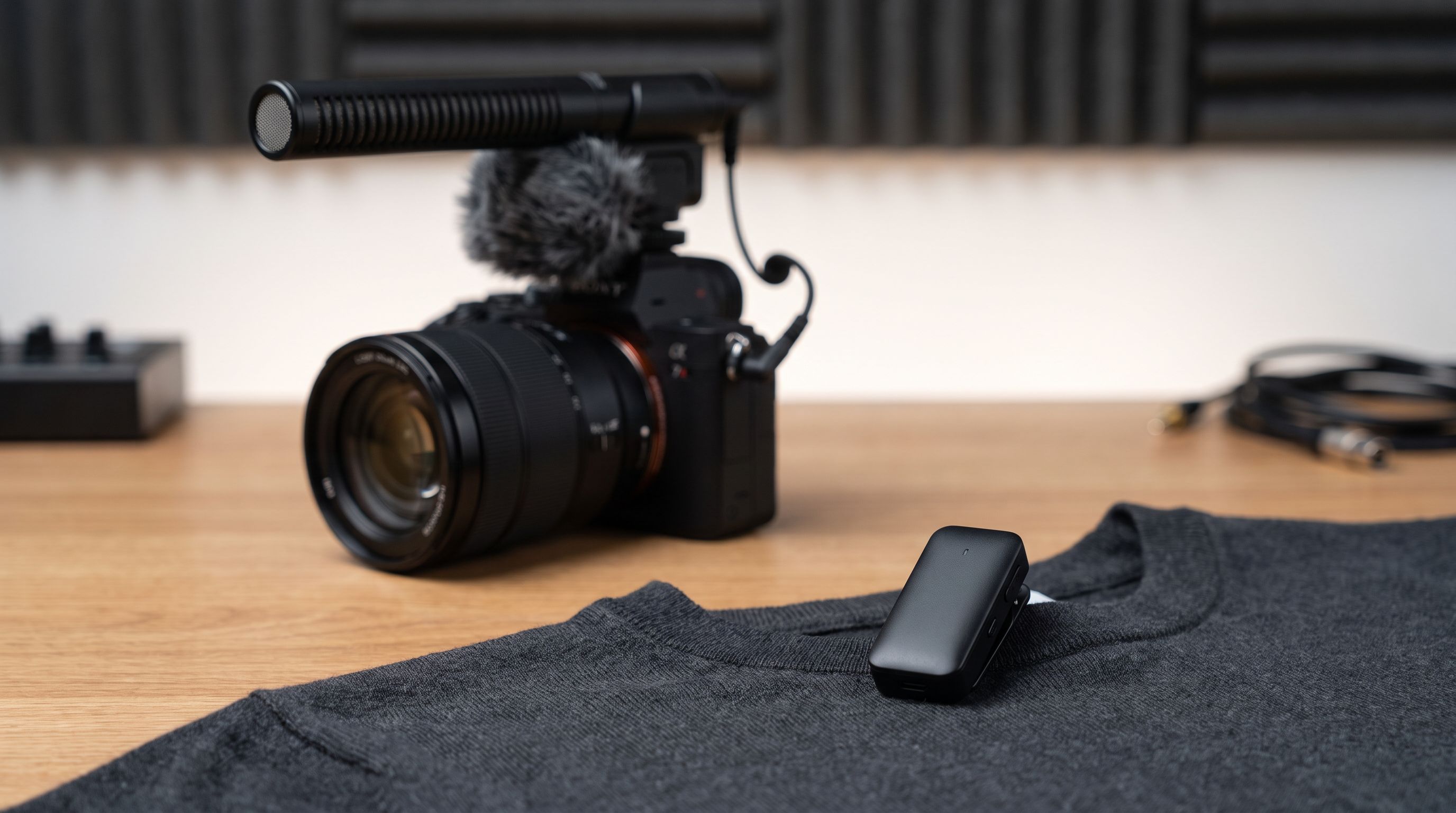
Vlogging Mics in 2026: 4 Picks That Fix Bad Audio
The best vlogging microphones for 2026, compared: wireless lavs, on-camera shotguns, and phone-friendly picks for clean audio outdoors, indoors, and on the move.
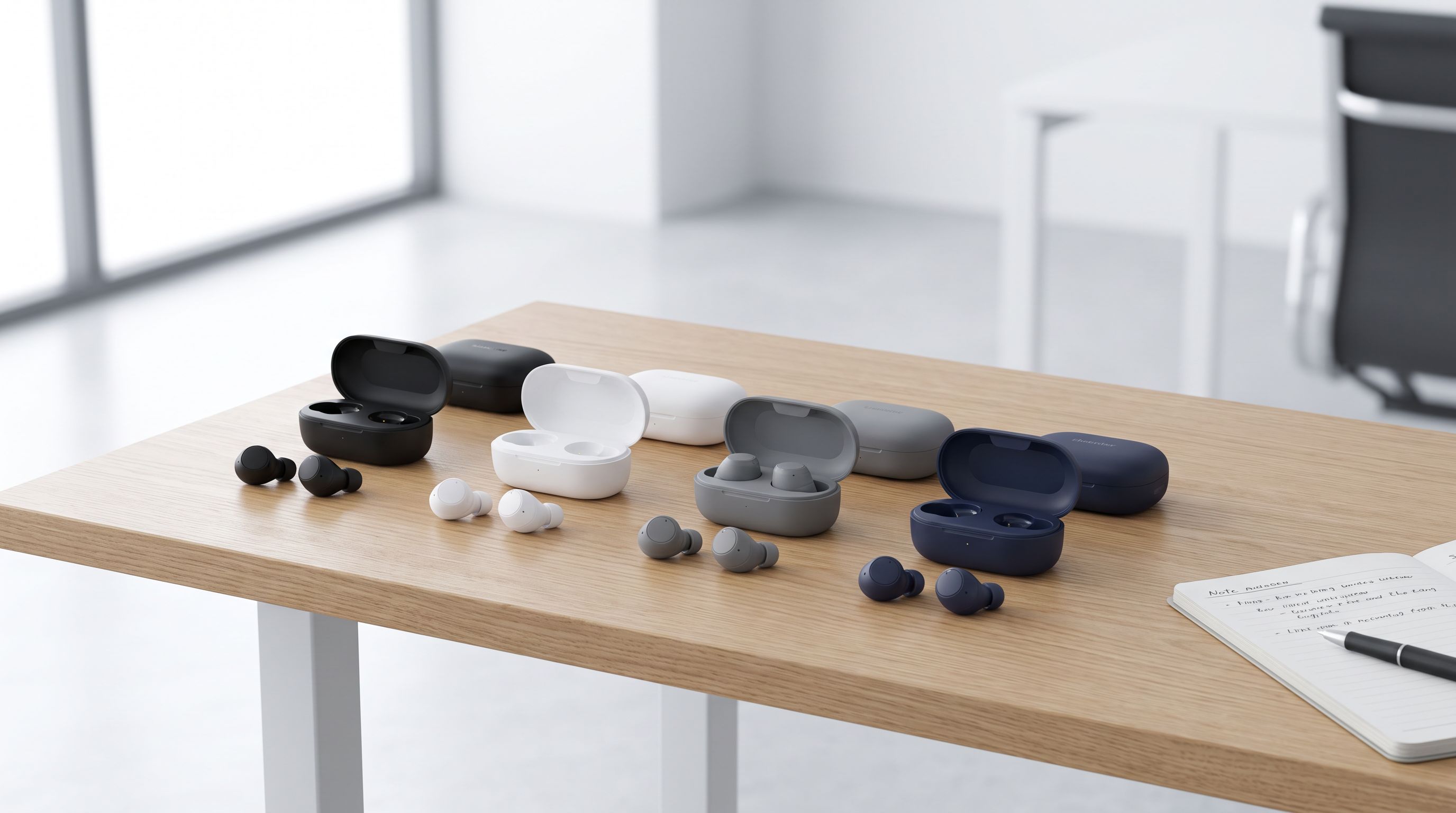
Best Wireless Earbuds in 2026: Compared & Ranked
Our ranked guide to the best wireless earbuds in 2026, from the Sony WF-1000XM6 to Soundcore's Liberty 5 Pro — with a comparison table, fit tips and FAQs.