Best Portable Power Station 2026: Top Picks by Size
The best portable power station 2026 picks, ranked by capacity tier for camping, blackouts and RV use — LiFePO4 runtimes, solar input notes and real-world research.
Reader-supported: we may earn a commission from links on this page, at no extra cost to you. It never affects our picks. Learn more.
Portable power stations stopped being a novelty somewhere around 2023. In 2026 they're a mature category: nearly everything worth buying uses LiFePO4 (lithium iron phosphate) cells rated for thousands of cycles, most units charge from empty in an hour or two off a wall outlet, and app control over Wi-Fi or Bluetooth is standard rather than a premium feature.
That maturity makes the decision simpler than it looks. The single most important choice isn't brand — it's capacity tier. Buy too small and you'll be nursing the battery all weekend. Buy too big and you'll leave a 60-pound box in the garage because you can't be bothered to carry it. This guide is organised the way you should actually shop: by what you're powering.
How we think about the numbers
Watt-hour ratings on the box are nameplate cell capacity. What you get at the AC outlet is less, because the inverter takes a cut. In practice, expect roughly 85–90% of rated capacity delivered to AC loads on a modern unit, and worse at very low draws where inverter idle consumption (typically 5–15W) eats into the total.
That single fact reframes runtime maths. A 1,000Wh station running a 60W load isn't giving you 16 hours — subtract idle overhead and figure closer to 12–13. Run a 700W induction burner and you'll see a bit under an hour and a half. Anyone quoting exact hours to the minute is guessing; we prefer ranges.
The other numbers worth checking before you buy:
- Continuous AC output (W) — this decides what you can run, independent of how long. A kettle, hair dryer or microwave needs 1,000W+.
- Surge/peak output — fridges, pumps and power tools draw 3–8× their running wattage for a fraction of a second at startup.
- Solar input (W and voltage window) — a 400W MPPT input is meaningless if your panels' open-circuit voltage falls outside the accepted range.
- Pass-through / UPS switchover time — sub-20ms matters for desktops and NAS boxes, not for lamps.
Choosing a capacity tier
| Tier | Typical capacity | Realistic use | Weight feel | Example |
|---|---|---|---|---|
| Compact | ~250–350Wh | Phones, laptops, CPAP, camera gear, lights | One-hand carry | EcoFlow RIVER 3 Plus |
| Mid / all-rounder | ~1,000Wh | Weekend camping, fridge during a short outage, WFH backup | Two-hand carry, still liftable | Anker SOLIX C1000 Gen 2, Jackery Explorer 1000 v2 |
| Home backup | ~2,000Wh | Fridge + freezer + comms for 12–24h, CPAP for several nights | Heavy but portable-ish | BLUETTI Elite 200 V2 |
| RV / whole-home | 4,000Wh+, expandable | 240V appliances, RV air-con, multi-day outages | It lives on wheels | EcoFlow DELTA Pro 3 |
 Premium / RV pick · EcoFlow DELTA Pro 3 — Check price on Amazon →
 Best for blackouts · BLUETTI Elite 200 V2 — Check price on Amazon →
 Best compact / camping pick · EcoFlow RIVER 3 Plus — Check price on Amazon →
 Best value 1kWh · Jackery Explorer 1000 v2 — Check price on Amazon →
 Best overall · Anker SOLIX C1000 Gen 2 — Check price on Amazon →
If you only read one line: most people should buy the ~1kWh tier. It's the crossover point where the unit is still portable but genuinely useful during a blackout.
Best overall: Anker SOLIX C1000 Gen 2
The C1000 Gen 2 is our default recommendation because it gets the balance right in every direction at once. You get roughly a kilowatt-hour of LiFePO4, an inverter with enough continuous output to handle kitchen appliances, and surge headroom that copes with fridge compressor startup — the failure mode that catches people out with cheaper 1kWh units.
Charging is the quiet highlight. Anker's fast AC charging gets it back to a usable state over a lunch break, which matters more than it sounds: during rolling outages, the window when grid power returns is often short. Solar input is generous enough that a pair of 200W folding panels in decent conditions will meaningfully top it up over a day rather than just offsetting your draw.
It's not the lightest 1kWh unit, and the handle design means it's a two-hand carry to the campsite. But for a box you'll use for both camping and emergencies, it's the one we'd own.
Best value at 1kWh: Jackery Explorer 1000 v2
Jackery's second-generation Explorer 1000 moved to LiFePO4 and shed weight in the process, and that weight reduction is the reason to pick it over the Anker. If your use case skews toward carrying it places — tailgates, festivals, van trips, a boat — a few pounds is the difference between taking it and leaving it behind.
The trade-off is a slightly less aggressive spec sheet on peak output and DC ports. It's also the friendliest unit here for someone who has never owned a power station: the display is legible, the app is straightforward, and Jackery's own solar panels pair with essentially zero configuration. That matters more than enthusiasts admit.
Best compact: EcoFlow RIVER 3 Plus
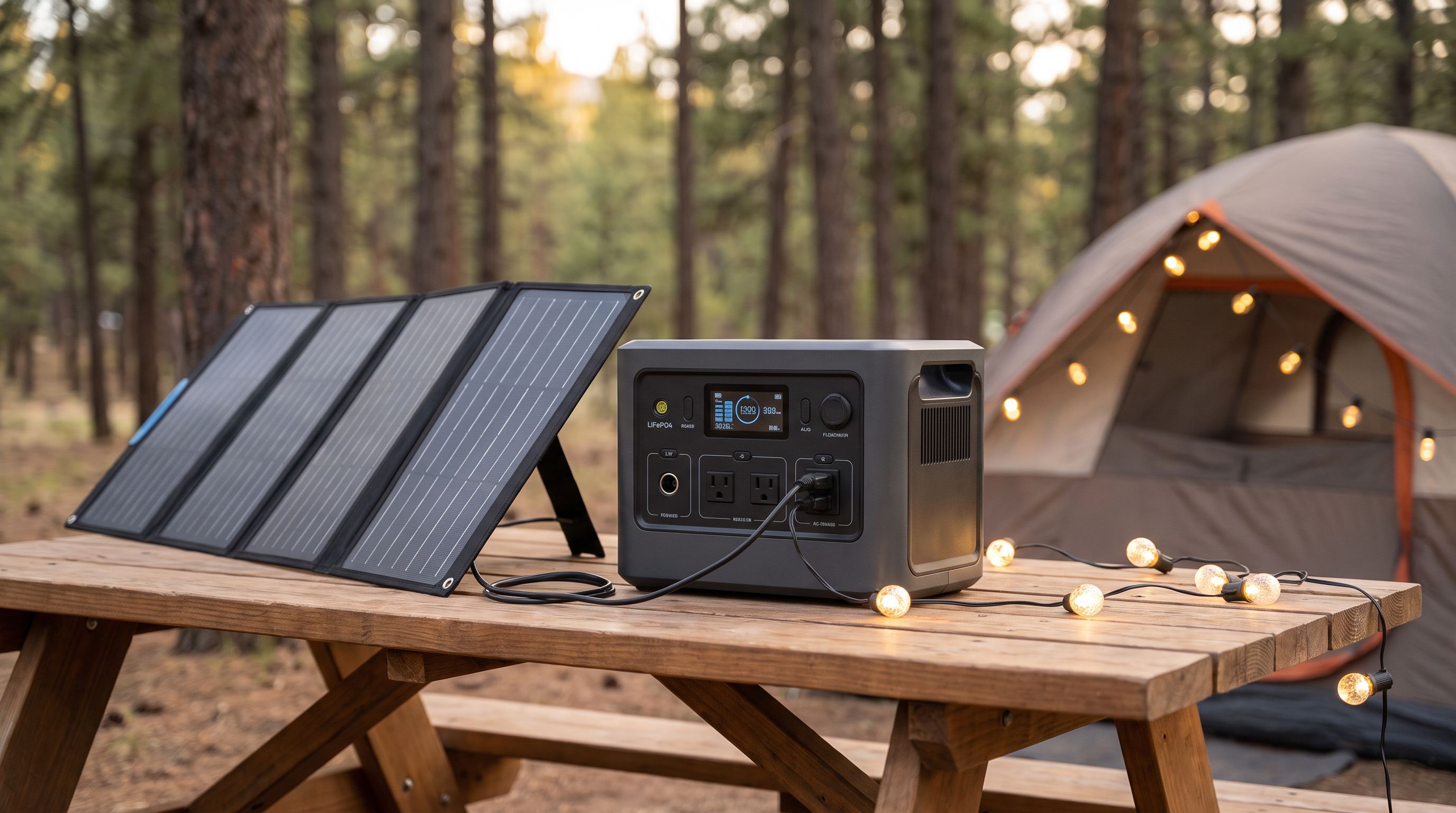
Below the 1kWh tier, the question changes from "what can it run" to "will I actually pack it". The RIVER 3 Plus is small and light enough to live in a backpack side pocket area or a camera bag, and it still has the output to run a CPAP overnight, keep a couple of laptops alive through a working day, or run string lights and a fan at a campsite.
Two details make it more useful than its capacity suggests. First, the fast UPS switchover means you can leave a router and modem plugged into it permanently and never notice a short outage. Second, EcoFlow's X-Stream charging refills it absurdly quickly — so the small capacity is less limiting when you have any access to mains power at all.
Don't buy it expecting to run a fridge for a day. Buy it because it's the one you'll bring.
Best for blackouts: BLUETTI Elite 200 V2
Around 2kWh with roughly 2,600W of continuous output is the sweet spot for household outages. That's enough to run a full-size fridge and a chest freezer and your router, phones and a few lights through a 12–24 hour outage without rationing — and enough inverter headroom to occasionally run a microwave or kettle rather than staring at cold food.
The Elite 200 V2 also does the boring things well: quiet fans at low loads, a sensible AC/DC/solar port mix, and a robust UPS mode. If your primary motivation for buying is the thing that happened last winter, this is the tier to shop in. Expect to move it with two hands and a bit of intent — it is not a camping accessory.
Premium / RV pick: EcoFlow DELTA Pro 3
Once you need 240V appliances, an RV air conditioner, or genuinely multi-day autonomy, you're in a different product category — modular battery systems that happen to have handles and wheels. The DELTA Pro 3 is the most complete version of that idea: a 4kWh-class base unit, high continuous output, expansion batteries that stack capacity substantially, and very high solar input for people building semi-permanent off-grid setups.
It's overkill for camping and expensive for a first purchase. But if you're outfitting an RV or want a backup system you can grow rather than replace, buying into an expandable platform is the smarter long-term move than daisy-chaining three mid-size units.
Solar input: what actually matters
Solar marketing is where this category gets sloppy. Three rules:
- Rated panel wattage is a lab figure. In real conditions — imperfect angle, haze, warm panels — plan on 60–75% of nameplate. A "400W" folding array realistically delivers 240–300W at midday in good sun.
- Match voltage, not just watts. Every station has a PV voltage window. Panels wired in series can exceed the maximum and the unit will simply refuse to charge; wired in parallel they may fall below the minimum on a cloudy day.
- Rigid panels beat folding for anything permanent. Folding panels are for trips. If the station lives at a cabin or on an RV roof, rigid panels are cheaper per watt and survive weather.
For a 1kWh station, 200–400W of panels is the practical sweet spot: enough to meaningfully recharge in a day of camping without hauling an unreasonable amount of gear.
Care and longevity
LiFePO4 is forgiving, but not indestructible. Store it around 50–60% charge if it's going to sit for months, avoid leaving it in a car in summer heat, and let it come up to room temperature before charging in freezing conditions — most units block sub-zero charging in software, which is a feature, not a fault. Cycle it a few times a year rather than letting it sit untouched, and check the app for firmware updates before a trip.
FAQ
How long will a 1,000Wh power station run a fridge? A modern full-size fridge averages roughly 40–80W over a day because the compressor cycles. Realistically that's around 10–16 hours from a 1kWh unit, though a very efficient fridge can stretch further and an old one will do worse. Keep the door shut.
Is LiFePO4 really better than older lithium-ion? For this use case, yes. LiFePO4 cells typically deliver several thousand cycles to 80% capacity versus several hundred for NMC, and they're substantially more thermally stable. Every pick here uses LiFePO4.
Can I run a power station indoors? Yes — that's the main advantage over a fuel generator. There's no exhaust and no carbon monoxide risk. Just give the fans some airflow and don't box it in.
Do I need a UPS-grade switchover time? Only if you're protecting a desktop PC, NAS, or networking gear that hates power interruptions. For lamps, fans and fridges, any pass-through mode is fine.
Should I buy the manufacturer's own solar panels? It's the simplest path, and connector compatibility is guaranteed. Third-party panels are often better value per watt, but check the input voltage range and get the right adapter cable before your trip, not during it.
Our picks
Anker SOLIX C1000 Portable Power Station, 1800W (Peak 2400W) Solar Generator, Full Charge in 58 Min, 1056wh LiFePO4 Battery for Home Backup, Power Outages, and Outdoor Camping (Optional Solar Panel)
Roughly 1kWh of LiFePO4 in a genuinely carryable box, with fast AC recharge and strong surge headroom.
Jackery Explorer 1000 v2 Portable Power Station,1070Wh,1500W | 1 Hr Fast Charge, LiFePO4 Battery, 100W USB-C Output, Solar Generator for Camping, Emergency, RV (Solar Panel Optional)
Light for its class, simple to live with, and one of the easiest 1kWh units to pair with solar.
EF ECOFLOW RIVER 2 240 Portable Power Station, 243Wh 300W | LiFePO4 Battery, 1-Hour Fast Charge, 300W Up to 600W AC Outlets, Solar Generator for Camping/Outdoor
Small enough to toss in a duffel, still runs a CPAP, drone chargers and lights all weekend.
BLUETTI Elite 200 V2 Portable Power Station 2073.6Wh 2600W Solar Generator | LFP Battery Backup w/ 4 2600W AC Outlets (3900W Power Lifting), 0-80% Fast Charge in 50 Min. for Camping, Off-grid, Emergency
~2kWh and 2,600W output — enough to carry a fridge, router and a few circuits' worth of gear.
EF ECOFLOW DELTA Pro 3 Portable Power Station, 4096Wh, 4000W AC Output | LFP Battery, Expandable to 48kWh, 120/240V, Solar Generator for Home Use, Camping Accessories, Emergencies, Power Outages, RV
Expandable 4kWh-class platform with 240V capability for RVs and whole-home-ish backup.
Get the best tech deals in your inbox
Join the BytePlaza newsletter for hand-picked gadget deals and new buying guides. No spam, unsubscribe anytime.
Related reads
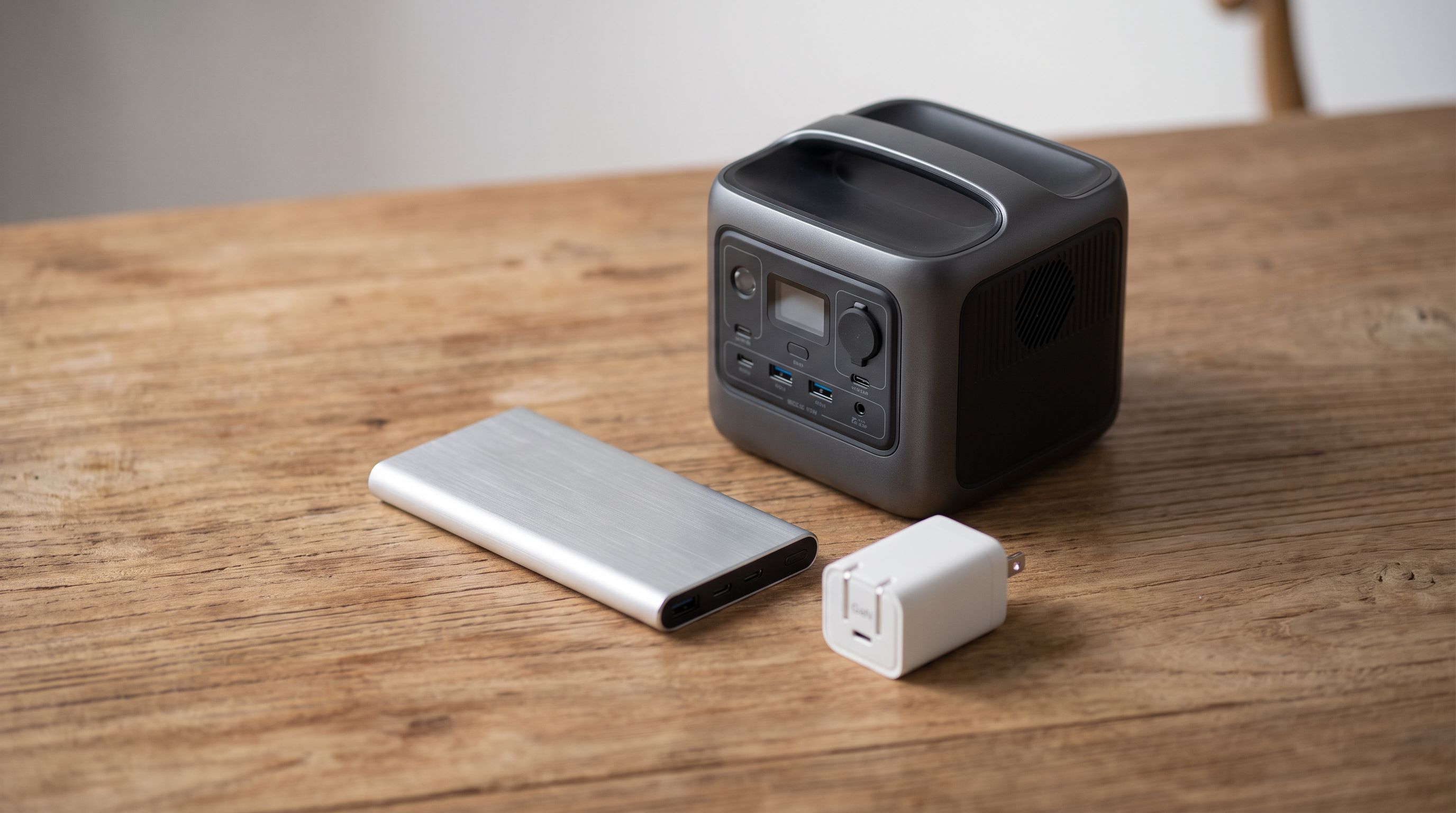
Prime Big Deal Days 2026: Power Station Deals Worth Setting an Alarm For
Prime Big Deal Days 2026 runs Oct 6–7. Here's what a genuinely good discount looks like on portable power stations, power banks and fast chargers — plus the models to watch.
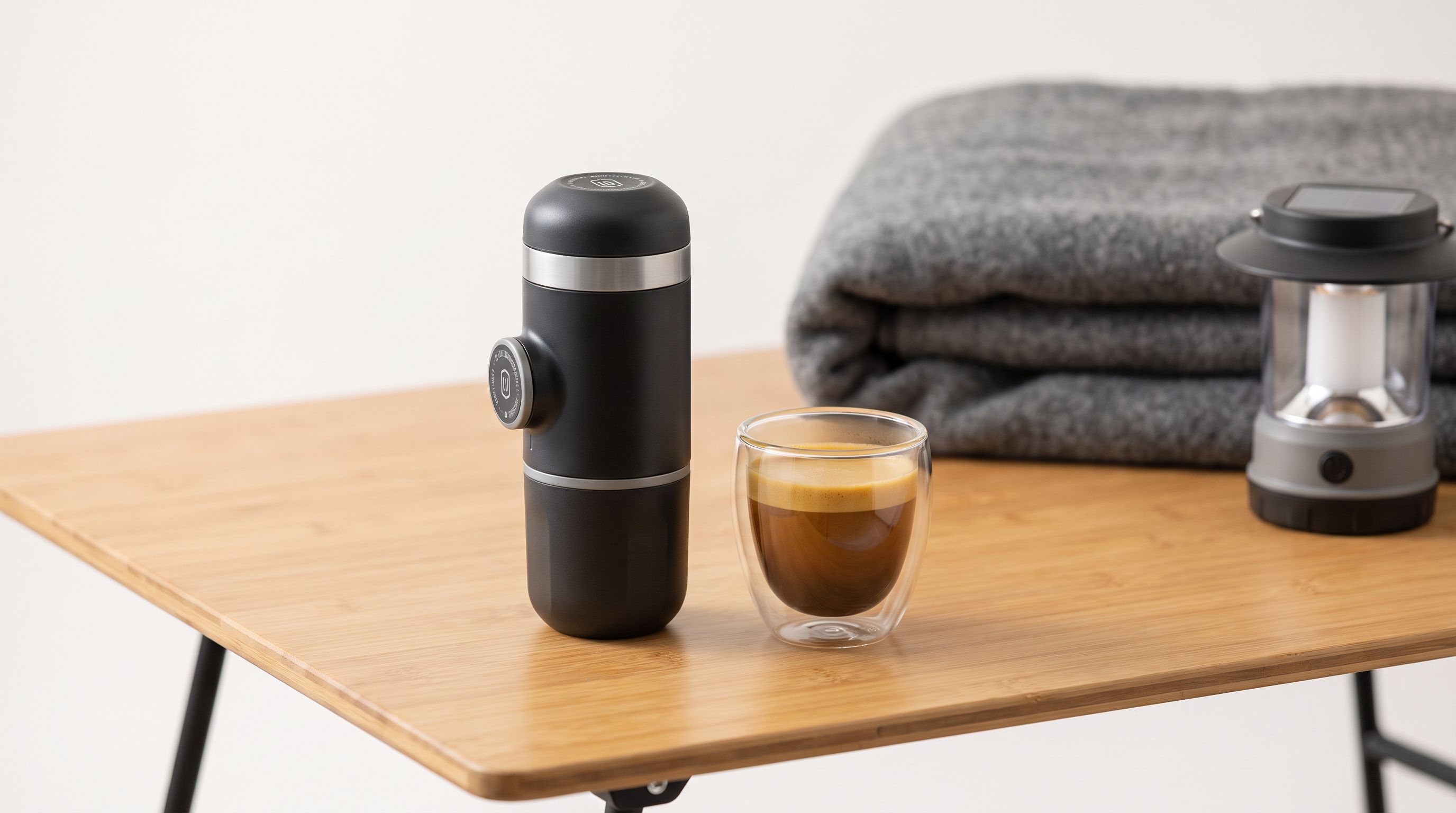
Portable Espresso Makers in 2026: 5 Picks That Pull Real Shots
Battery or hand pump? We compared the best portable espresso makers for 2026 on pressure, heating, cleanup and travel bulk — from Wacaco to OutIn and Flair.
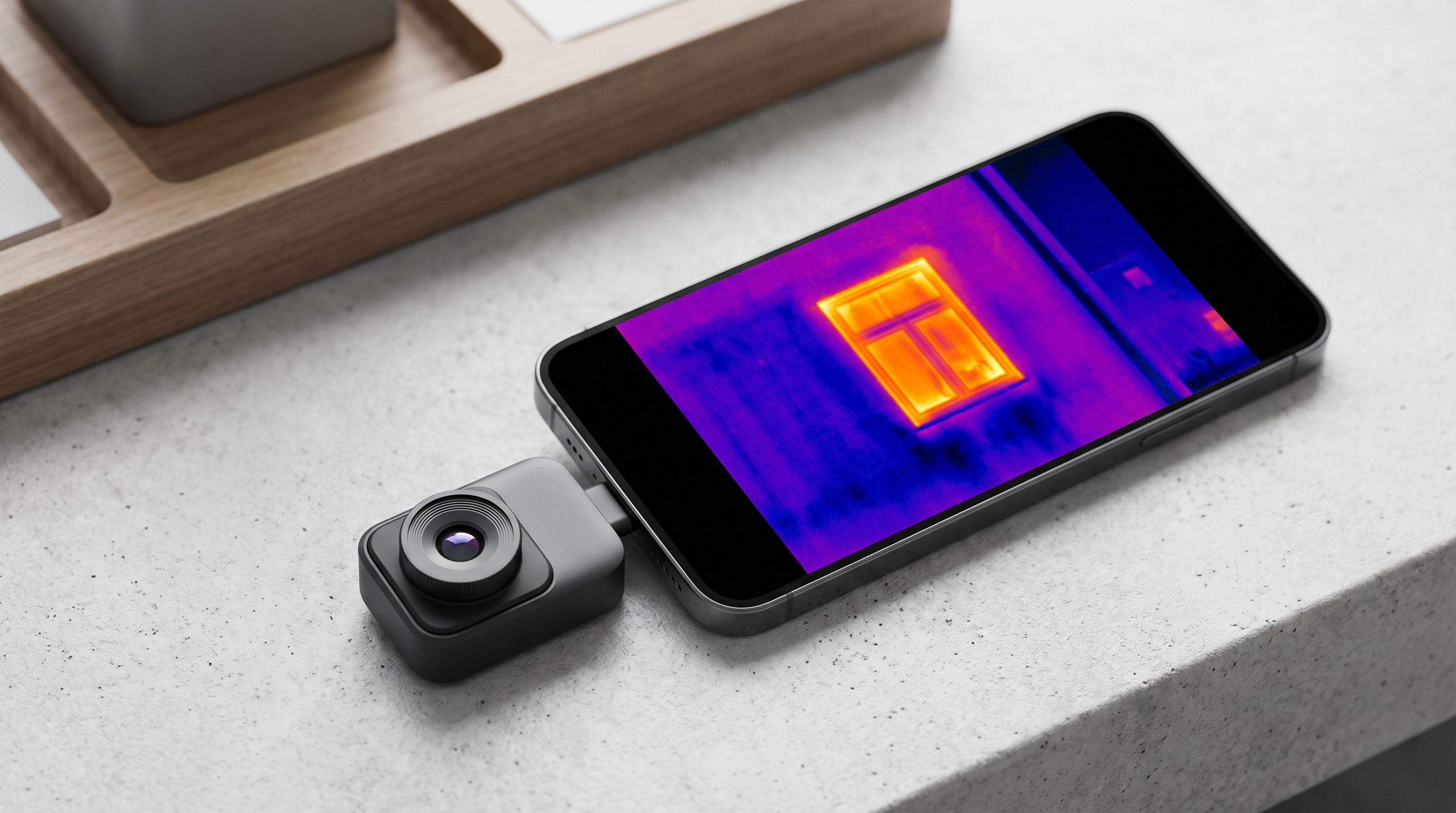
Thermal Camera for Phone 2026: Which Resolution Tier?
Picking the best thermal camera for phone 2026? We compare USB-C and Lightning clip-on imagers by resolution, NETD and app quality for home, plumbing and car work.