USB-C Wired Earbuds in 2026: 5 Picks That Actually Deliver
The best USB-C wired earbuds in 2026, from budget commuter buds to DAC-equipped IEMs. We compare sound, mics, latency and cable quality for gaming and flights.
Reader-supported: we may earn a commission from links on this page, at no extra cost to you. It never affects our picks. Learn more.
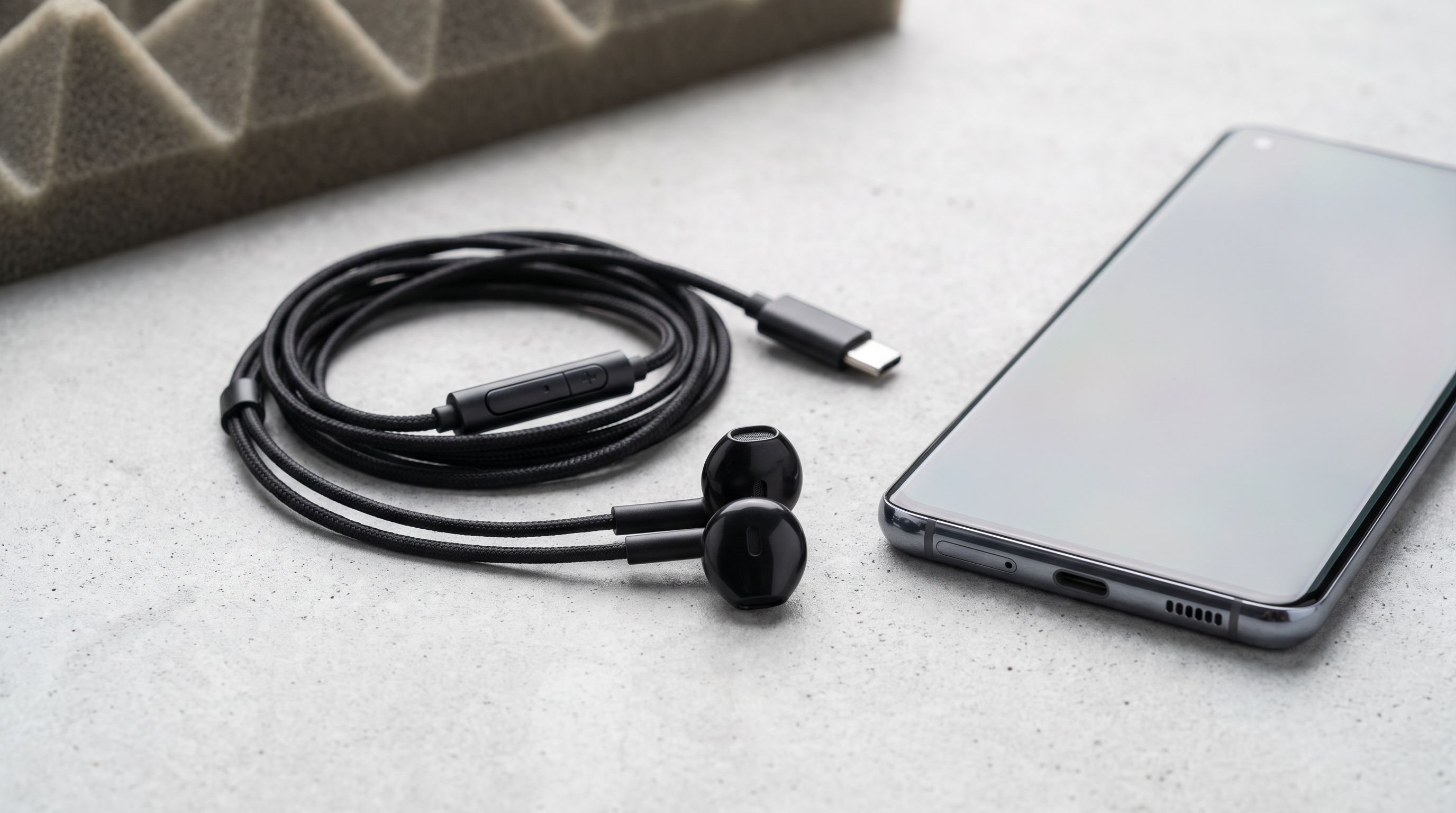
The 3.5mm headphone jack is effectively gone from flagship phones, but wired listening isn't. It just moved ports. USB-C earbuds sidestep Bluetooth entirely: no pairing, no codec negotiation, no battery, and — crucially for gamers and video editors — no audio lag. They also solve the "my earbuds died at hour three of a long-haul flight" problem, because the phone is the battery.
The catch is that USB-C is a data port, not an analogue one. That single fact explains almost every compatibility complaint you'll read online, and it's the first thing to understand before you buy.
How USB-C earbuds actually work (and why some don't)
There are two ways audio comes out of a USB-C port:
- Digital (UAC / USB Audio Class). The earbuds contain their own tiny DAC and amplifier. You plug in, the phone or laptop sees a USB audio device, and it works. This is what almost every modern USB-C earbud does, and it's the type you want.
- Analogue passthrough (audio adapter accessory mode). The port dumps out the same analogue signal the old headphone jack did, and the earbuds are just 3.5mm buds with a different plug. Cheap, but only works on devices that support the mode — many laptops, tablets and newer phones don't.
If a listing doesn't say "built-in DAC", "USB Audio Class" or "Hi-Res Audio", assume it's passthrough and check your device. Digital buds are the safer buy in 2026, and they're the only ones that work reliably across a Steam Deck, a Nintendo Switch, a MacBook and an Android phone.
One more wrinkle: most in-flight entertainment systems still use 3.5mm jacks, often twin-pronged on older aircraft. USB-C buds will not plug into a seatback screen without an adapter — but many aircraft now have USB-C power ports that also carry audio, and if you're watching downloaded content on your own device, none of this matters.
What we looked for
BytePlaza doesn't physically test units. We compared manufacturer specifications, independent measurements and expert reviews from outlets like What Hi-Fi? and RTINGS, and cross-referenced patterns in verified owner feedback — particularly around the two things that kill wired earbuds: cable failure at the strain relief and microphone quality on calls. We weighted comfort for long sessions, mic clarity, driver quality relative to what you pay, and how gracefully each pair handles device switching.
The picks at a glance
| Model | Best for | Connection | Detachable cable | Inline mic | Notable |
|---|---|---|---|---|---|
| JBL Tune 310C | Everyday all-rounder | USB-C, built-in DAC | No | Yes | Hi-Res Audio support, onboard EQ presets |
| Apple EarPods (USB-C) | Calls, flights, comfort | USB-C, built-in DAC | No | Yes | Open fit, excellent mic, near-universal support |
| Skullcandy Set USB-C | Tight budgets, workouts | USB-C | No | Yes | Sweat-resistant, fin tips for secure fit |
| FiiO FH3 + USB-C DAC | Critical listening | 3.5mm via dongle | Yes (MMCX) | Cable-dependent | Hybrid dynamic + BA drivers |
| FiiO KA11 dongle | Upgrading buds you own | USB-C to 3.5mm | N/A | Passes through | Adds power and hi-res decoding |
 Best DAC dongle add-on · FiiO KA11 USB-C DAC Dongle — Check price on Amazon →
 Audiophile pick · FiiO FH3 In-Ear Monitors — Check price on Amazon →
 Budget pick · Skullcandy Set USB-C Wired Earbuds — Check price on Amazon →
 Best for calls and flights · Apple EarPods (USB-C) — Check price on Amazon →
 Best overall · JBL Tune 310C USB-C Wired Earbuds — Check price on Amazon →
Best overall: JBL Tune 310C
The Tune 310C is the pair we'd point most people to. It's a proper digital USB-C earbud with an onboard DAC, supports hi-res playback, and — unusually at this level — includes EQ presets you can cycle without opening an app. That matters because the default tuning on cheap USB-C buds is often bass-heavy and smeared; being able to switch to a flatter profile for podcasts or a bassier one for the gym is a genuine feature, not a spec-sheet line.
The flat, tangle-resistant cable is the other reason it ranks highly. Cable failure is the number one long-term complaint about wired earbuds in owner reviews, and flat cables with a decent strain relief hold up better in a bag than thin round ones. The inline mic is fine for calls in quiet-to-moderate environments.
Where it's less impressive: isolation is average, and if you're used to active noise cancelling you'll notice the difference on a plane. It's a well-executed mainstream earbud, not an audiophile object.
Best for calls and flights: Apple EarPods (USB-C)
The USB-C EarPods are a strange product to recommend to audiophiles and a very easy one to recommend to everyone else. The open, non-sealing fit means no ear pressure over a six-hour flight, no occlusion effect when you talk, and no "my ears feel stuffed" fatigue — and the microphone remains one of the best you'll find on a sub-premium wired earbud, which is why so many podcasters keep a pair in a drawer.
They contain a DAC, so they work on Android phones, Windows laptops, iPads and the Switch, not just iPhones. The trade-off is obvious: with an open fit you get essentially zero passive isolation, so on a noisy aircraft you'll push the volume up. If you want to block out engine drone, look elsewhere. If you take a lot of calls and hate silicone tips, they're the most comfortable option here.
Budget pick: Skullcandy Set USB-C
The Skullcandy Set exists to be cheap, sweat-resistant and secure. Fin-style ear tips keep them anchored during runs, there's an inline mic and remote, and they're built for a life of being crammed into a jacket pocket. Sound is warm and bass-forward — fine for gym playlists, less so for acoustic recordings.
Buy these as your travel-bag spare or workout pair. At this price the calculus is simple: you're not agonising if they get crushed in an overhead locker.
Audiophile pick: FiiO FH3 with a USB-C DAC dongle
If you actually care about detail retrieval and imaging, the honest answer is that dedicated USB-C earbuds are a compromise. The DAC is squeezed into a cable housing with a fixed power budget, and the drivers are chosen to be cheap and forgiving.
The better path is a proper IEM plus a separate dongle. The FiiO FH3 pairs a dynamic driver for bass with balanced armatures for mids and treble, and — the important bit — uses a detachable MMCX cable. Cables are the wear item on any wired earbud, so a detachable design means a frayed cable costs a few pounds rather than the whole set. Pair it with the FiiO KA11, a thumbnail-sized USB-C dongle that outputs meaningfully more power than a phone's bundled adapter and handles hi-res decoding. Together they're a modular system: upgrade the IEM later, keep the dongle, or vice versa.
For gaming, this combo has a real advantage. USB-C is latency-free in practical terms, and a dongle with headroom drives IEMs loudly enough that faint footsteps sit above the noise floor.
The dongle-only route
Already own earbuds you like? A FiiO KA11 or similar USB-C-to-3.5mm DAC turns any 3.5mm pair into a USB-C pair, usually with better output than the sub-£10 adapters bundled with phones. It's the cheapest meaningful upgrade in personal audio, and it means your next phone upgrade doesn't obsolete your headphones.
Buying checklist
- Confirm digital, not passthrough, especially if you'll use a laptop, Switch or Steam Deck.
- Check the connector length — some USB-C plugs are too fat for thick phone cases.
- Prefer flat or detachable cables for longevity.
- Pack a USB-C to 3.5mm adapter if you fly often and use seatback screens.
- Don't expect ANC. Almost no wired USB-C earbud has active noise cancelling; isolation comes from the tips. Try foam tips before you write a pair off.
FAQ
Do USB-C earbuds work on any phone? Any pair with a built-in DAC will work on virtually any device with a USB-C port that supports USB audio, including most Android phones, iPhone 15 and later, iPads, Macs, Windows laptops and handheld consoles. Analogue passthrough models are far pickier.
Are USB-C earbuds better than Bluetooth for gaming? Yes, in the way that counts. There's no wireless encoding step, so audio latency is negligible and footstep cues line up with what's on screen. You also don't have to worry about battery.
Will they work with in-flight entertainment? Not directly — seatback systems use 3.5mm. Carry a USB-C to 3.5mm adapter, or use a pair of 3.5mm IEMs with a dongle for your own device and plug the IEMs straight into the seat.
Do USB-C earbuds drain phone battery? A little, since the phone powers the DAC. It's modest compared with screen-on time, and far less hassle than a dead earbud on a long flight.
Is a DAC dongle worth it if I already have good earbuds? Usually yes. Bundled adapters are built to a price and often lack the voltage swing to drive higher-impedance earbuds properly. A dedicated dongle like the KA11 typically delivers more headroom and cleaner output for a modest outlay.
Our picks

JBL Tune 310C - Wired Hi-Res in-Ear Headphones, Tangle-Free Flat Cable, 3-Button Remote with Microphone (Black)
Hi-Res-capable USB-C buds with onboard EQ presets, a tangle-resistant flat cable and a usable inline mic.

Apple EarPods Headphones with USB-C Plug, Wired Ear Buds with Built-in Remote to Control Music, Phone Calls, and Volume One Size USB-C
Open-fit comfort, an excellent inline mic and plug-and-play compatibility with nearly every USB-C device.
Skullcandy Set USB-C Wired Earbuds
Cheap, sweat-resistant sport buds with fin tips and a mic — the pair you don't mind losing in a seat pocket.
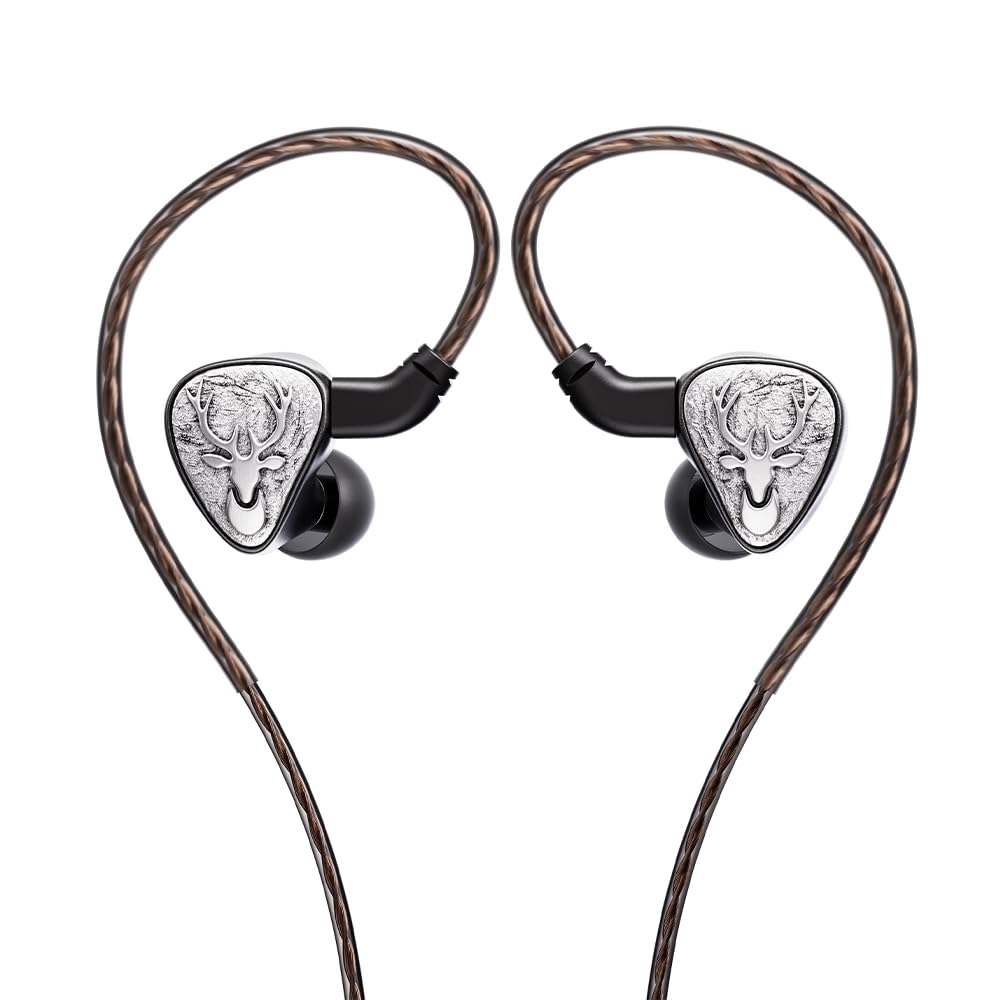
FiiO FH3 LUMI Hybrid IEM Earphones, 1DD + 2BA Triple Driver in-Ear Monitors, Vintage Vocal Tuning, Cashmere Wood Fiber Diaphragm, Detachable Cable(Silver)
Hybrid driver IEMs with detachable MMCX cable — pair with a USB-C DAC dongle for real audiophile scaling.

FiiO KA11 USB C to 3.5mm Audio Adapter 32bit/384KHz, USB Type C Dongle HiFi DAC Amplifier for Android/iOS/Windows/Mac (Silver, TC) TC Silver
Tiny USB-C-to-3.5mm dongle that adds real headroom and hi-res decoding to any wired earbuds you already own.
Get the best tech deals in your inbox
Join the BytePlaza newsletter for hand-picked gadget deals and new buying guides. No spam, unsubscribe anytime.
Related reads
Best Noise Cancelling Headphones for Travel (2026)
The best noise cancelling headphones for travel in 2026, tested for flight comfort, battery life, multipoint pairing and packability on long-haul trips.
DAP vs Phone + DAC: The Best Digital Audio Player 2026
Does a dedicated DAP still beat a phone with a dongle DAC in 2026? We compare formats, storage, battery and five hi-res audio players worth buying.
Prime Big Deal Days 2026: Headphone Deals Worth Waiting For
Prime Big Deal Days 2026 runs Oct 6–7. Here's what a genuinely good headphone or earbud discount looks like, plus the AirPods, Sony, Bose and budget models to watch.