USB-C Car Chargers in 2026: 5 Picks That Hit 65W+
The best USB-C car charger 2026 picks for laptops and phones: GaN multi-port models, real PD wattage splits, socket fit and the cables you actually need.
Reader-supported: we may earn a commission from links on this page, at no extra cost to you. It never affects our picks. Learn more.
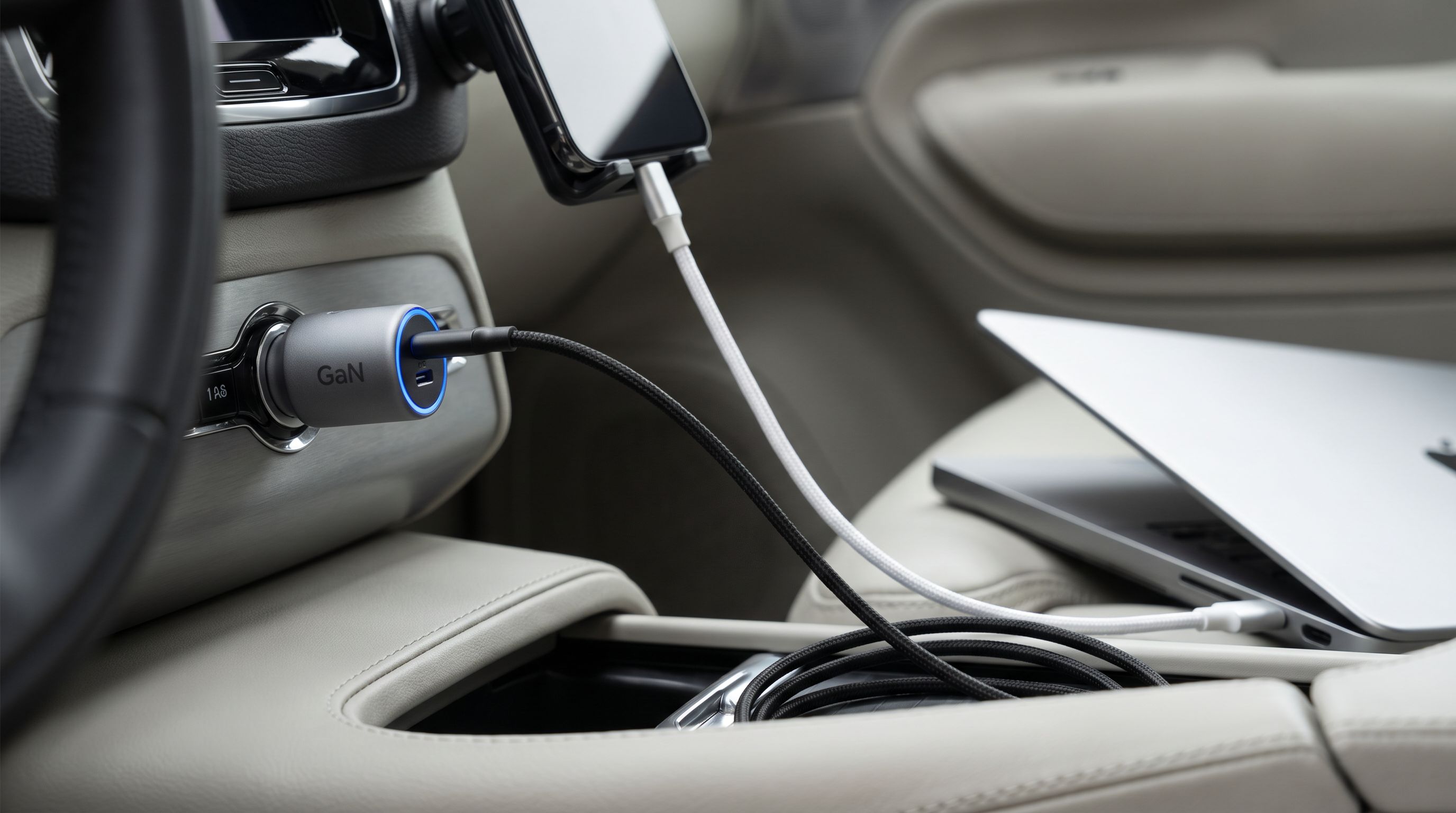
Car chargers used to be an afterthought: a 5W nub that kept your phone from dying on a three-hour drive. In 2026 the expectation is different. People run a laptop from the passenger seat, charge a phone that pulls 25-45W, top up earbuds and a dashcam, and expect it all from one socket that was designed in the 1950s to light cigarettes.
The good news is that gallium nitride (GaN) chargers have shrunk 60-130W of output into something the size of a thumb. The bad news is that advertised wattage is close to meaningless until you read the fine print on how that power splits between ports — and that a surprising number of chargers physically don't fit modern 12V sockets properly.
Here's how to choose, and the models we'd actually buy.
Why 65W is the number that matters
65W is the practical threshold where a car charger stops being a phone accessory and becomes a laptop charger. It's the sweet spot that covers:
- A MacBook Air, Dell XPS 13, or most 13-14" ultrabooks at or near full speed
- An iPhone or flagship Android at maximum PD speed (typically 20-45W depending on model)
- A tablet and a pair of earbuds simultaneously
Below 65W total, you're generally charging one device fast or two devices slowly. Above it — the 100-160W models — you're buying headroom for a gaming laptop or for genuinely simultaneous full-speed charging of two power-hungry devices.
One caveat worth stating plainly: a standard 12V accessory socket is usually fused at 10-15A, which is roughly 120-180W before conversion losses. A 160W charger is near the ceiling of what many sockets will comfortably deliver, and some vehicles cut power to the socket when the ignition is off. Check your owner's manual if you plan to draw heavily.
The wattage split is the spec that actually matters
Manufacturers advertise the total. What determines your real-world experience is the per-port split when two things are plugged in.
A 67W dual-port charger might deliver 67W to a single USB-C port alone, but drop to something like 45W + 22W when both are occupied. That's fine — 45W still charges most ultrabooks. But a "100W" charger that splits to 65W + 30W when loaded is a very different product from one that splits 45W + 45W.
Look for these details on the spec sheet before buying:
- Single-port max on the primary USB-C port
- Two-port split — the most common real-world scenario
- PPS support (Programmable Power Supply), required for Samsung Galaxy 45W Super Fast Charging and increasingly useful on other Android phones
- USB-A presence, if you still have an older cable or a passenger who does
Fit, heat, and the socket problem
Three physical issues sink otherwise good chargers:
Depth and retention. Many modern cars use shallower or recessed 12V sockets, and some chargers rattle loose over bumps. Short, stubby GaN units with a spring-loaded contact tend to seat more reliably than long barrel designs. Owner reviews are the best signal here — look specifically for complaints about the charger falling out or losing contact.
Protrusion. In a center console cubby, a charger that sticks out 40mm may stop the lid from closing. Measure before you buy if your socket is inside a compartment.
Heat. GaN runs cooler than old silicon designs, but a 130W charger in a sun-baked car still gets warm and will throttle. Sustained laptop charging is where cheap units show their limits. Metal-bodied chargers generally shed heat better than all-plastic ones.
The 2026 picks
Anker 535 Car Charger (67W) is our best overall. Two USB-C ports, 67W total, and a split that leaves enough on the primary port for a thin laptop while a phone charges alongside. It's a known-quantity brand with a long record in this category, which matters for something that lives in a hot car for years.
 Best overall · Anker 535 Car Charger (67W) — Check price on Amazon →
Anker Nano Car Charger (67W, 3-Port) adds a USB-A port to broadly the same power budget. Choose this if your household still runs Lightning cables, a dashcam on USB-A, or if you frequently have passengers with mismatched gear. The trade-off is that spreading 67W across three ports means nobody gets a laptop-class share once all three are loaded.
 Best multi-device pick · Anker Nano Car Charger (67W, 3-Port) — Check price on Amazon →
Anker 323 Car Charger (52.5W) is the budget pick. It doesn't reach 65W, and we're including it deliberately: if you only ever charge phones and tablets, the extra wattage is money you won't use. 30W on USB-C PD fills a modern phone quickly, and the second port handles a passenger.
 Budget pick · Anker 323 Car Charger (52.5W) — Check price on Amazon →
UGREEN 130W Car Charger (3-Port) is the premium option. The headline feature is up to 100W on a single USB-C port — that's full-size laptop territory, including 15-16" machines that choke on 65W. It's the right buy for mobile workers, van-lifers and anyone who treats the car as an office. Expect it to be physically larger and to get warm under sustained load.
 Premium pick · UGREEN 130W Car Charger (3-Port) — Check price on Amazon →
Anker 2-in-1 Car Charger with Retractable USB-C Cable solves a different problem: clutter. The built-in retractable cable means one less loose cable in the footwell, and a free second port for everything else. Retractable mechanisms are the wear point on this category of product, so it's a convenience-vs-longevity trade.
Comparison
| Model | Ports | Best for | Key trade-off |
|---|---|---|---|
| Anker 535 Car Charger (67W) | 2× USB-C | Ultrabook + phone together | No USB-A for legacy cables |
| Anker Nano Car Charger (67W, 3-Port) | 2× USB-C, 1× USB-A | Mixed-device households | Power thins out across three ports |
| Anker 323 Car Charger (52.5W) | 1× USB-C, 1× USB-A | Phones and tablets only | Not enough for most laptops |
| UGREEN 130W Car Charger (3-Port) | 2× USB-C, 1× USB-A | Full-size laptops, mobile offices | Bigger, runs warmer |
| Anker 2-in-1 Retractable USB-C Car Charger | Built-in USB-C + 1 port | Clutter-free daily driving | Retractable cable is a wear point |
Don't ruin it with the wrong cable
This is where most people lose their fast charge. A USB-C cable rated for 60W (3A) will cap a 100W charger at 60W no matter what. For anything above that you need a 100W/5A cable, which contains an e-marker chip.
Practical rules:
- For 65W charging: any decent 60W/3A-rated USB-C to USB-C cable will do
- For 100W+ charging: buy a cable explicitly rated 100W or 240W (USB PD 3.1 EPR)
- Avoid thin, unbranded cables in cars — heat cycling and repeated flexing near the console kill them fast
- Length matters: 1m is usually right for a front-seat socket; 2m for passing to the back seat, but very long cheap cables add resistance
If you own an iPhone 15 or newer, or any recent Android, a USB-C to USB-C cable is the one to buy. Keep an old USB-A cable in the glovebox only as a backup.
Who should buy what
- Commuters charging a phone: the Anker 323 is enough. Spending more buys capability you won't use.
- Anyone who works from the car on a 13-14" laptop: the Anker 535 at 67W is the efficient choice.
- Families and ride-share drivers: the 3-port Anker Nano, because port count beats peak wattage when four people need power.
- Heavy laptop users: the UGREEN 130W, for the 100W single-port output.
- Tidiness obsessives: the Anker retractable model.
FAQ
Will a 100W car charger damage my car's socket? No, if the socket is healthy. The charger draws only what's needed, and the socket's fuse protects the circuit. Very high-output chargers can blow a fuse in older vehicles with lower-rated sockets, so check your manual if you're near 150W+.
Can I leave the charger plugged in all the time? In most modern cars the socket is switched with the ignition, so it's fine. In vehicles with an always-live socket, a charger drawing standby current can contribute to battery drain over weeks of non-use — unplug it if the car sits.
Does my phone really need 65W? Almost certainly not. Most phones peak between 20W and 45W. The 65W figure is about charging a laptop, or charging two devices at full speed at once.
Why is my laptop charging slowly in the car? Three likely causes: a cable rated below your charger's output, another device sharing the power budget, or thermal throttling because the charger is hot. Try it alone, with a known 100W cable, and in a cooler cabin.
Is GaN actually better? For cars, yes — mainly for size and heat. GaN chargers deliver more watts per cubic centimetre and run cooler, which matters in a vehicle that can hit 50°C inside on a summer afternoon.
Our picks
Anker 535 67W 3-Port Compact PowerIQ 3.0 USB C Car Charger | Fast Charging Adapter for iPhone 17 / 16 / 15 / 14 Series, Galaxy S25 / S24 / 23, MacBook, iPad, and More (Cable Included)
67W across two USB-C ports with a sensible 45W+22W split — enough for a thin-and-light laptop.
Anker 167.5W Max 3-Port Ultra-Compact USB C Fast Charging Car Charger | Fast Charging Adapter for MacBook Pro / Air, iPhone 17 / 16 / 15 Series, Samsung S25, iPad Pro, AirPods, and More
Two USB-C plus USB-A so a passenger's older cable still works without an adapter.
Anker 323 52.5W USB C Car Charger with 30W PowerIQ 3.0 Fast Charging
Tiny, cheap and still does 30W USB-C PD plus 22.5W USB-A — fine for phones and tablets.
UGREEN 130W 3-Port USB C Car Charger, Type C Cigarette Lighter Adapter
100W on a single USB-C port for full-size laptops, with two more ports for everyone else.

Anker 75W Fast Charging USB C Car Charger with Retractable Built-in Cable
Built-in retractable USB-C cable kills cable clutter while a second port stays free.
Get the best tech deals in your inbox
Join the BytePlaza newsletter for hand-picked gadget deals and new buying guides. No spam, unsubscribe anytime.
Related reads
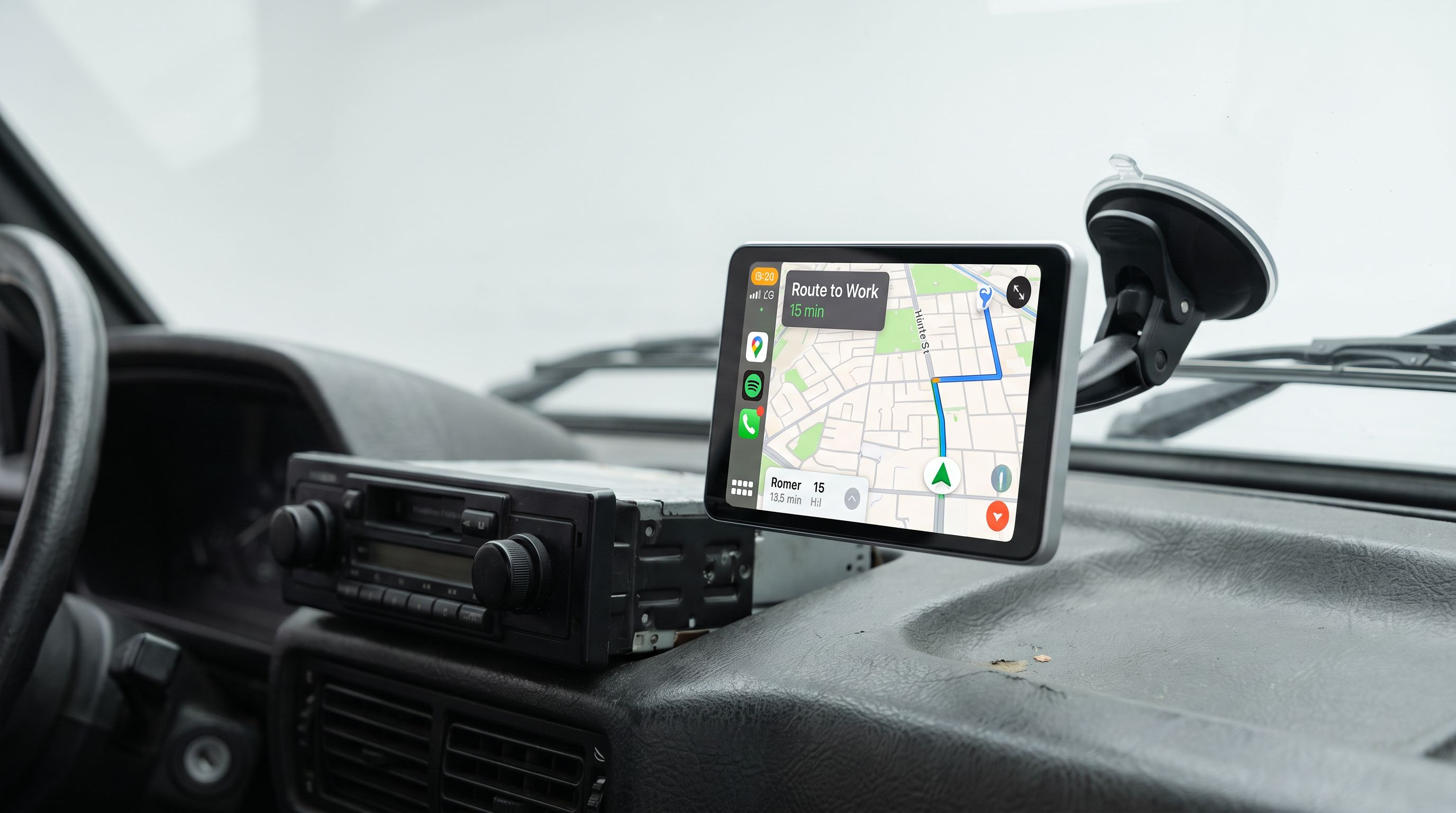
Portable CarPlay Screen vs Head Unit: Which Fits Your Car in 2026?
A portable CarPlay screen for car dashboards installs in minutes — but a double-DIN head unit does more. Here's how they compare in 2026, plus four solid picks.
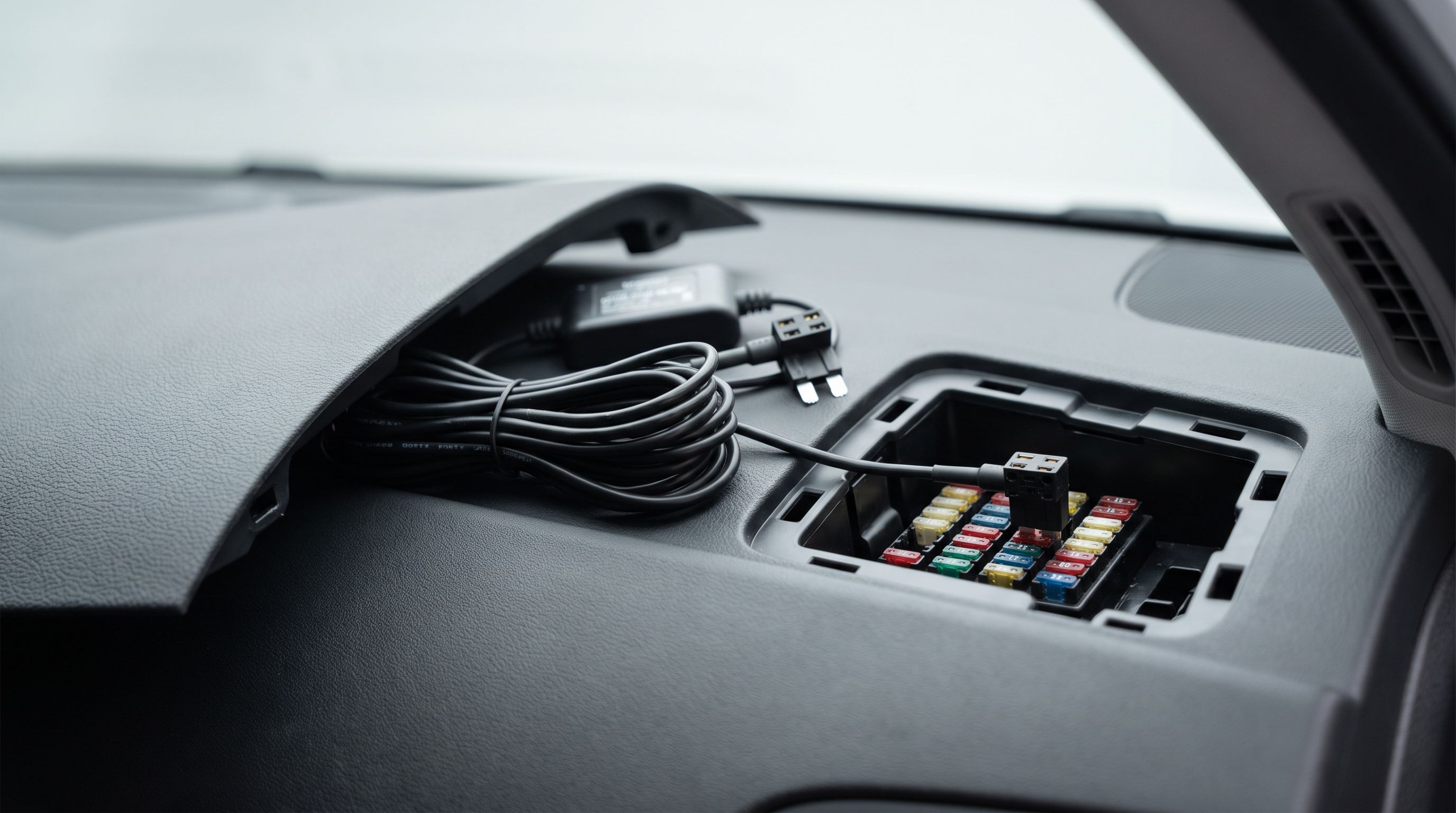
Dash Cam Hardwire Kit Guide 2026: Park Without a Dead Battery
A practical 2026 guide to dash cam hardwire kits and parking-mode power packs, from voltage cutoff devices to lithium battery packs that spare your car battery.

Portable Monitors Under $200 in 2026: 4 Travel Picks
We compared budget 15.6-inch USB-C portable monitors for 2026 — panel type, brightness claims, port layout and weight — to find the best portable monitor under $200.