Smart Fitness Mirrors in 2026: What You're Really Locked Into
The best smart fitness mirror 2026 guide: compare Tonal, Tempo, Echelon Reflect and Forme on subscription cost, screen size, class libraries and lock-in.
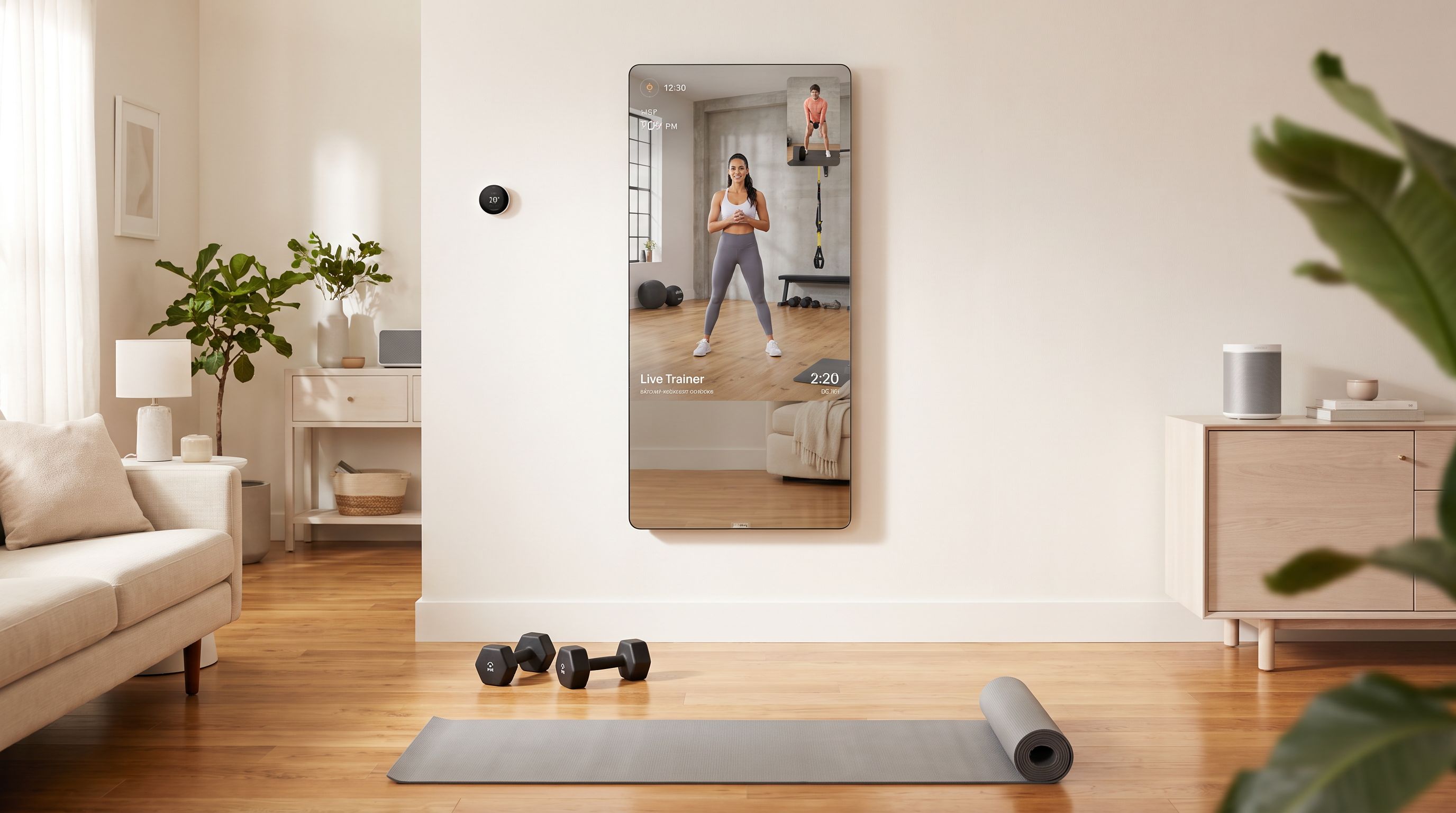
Reader-supported: we may earn a commission from links on this page, at no extra cost to you. It never affects our picks. Learn more.
Smart fitness mirrors made a lot of noise in the early 2020s, then the market thinned out dramatically. Lululemon wound down the Mirror, NordicTrack's Vault faded from shelves, and several startups vanished with their class libraries. That history matters more than any spec sheet, because a connected mirror is not really a screen purchase — it's a multi-year software subscription with a mirror attached.
So this guide is organised around the thing most reviews bury in a footnote: what you're locked into. Subscription cost, what the hardware does if you stop paying, how big the panel actually is, and whether the class library suits how you train. We compared current manufacturer specs, independent expert reviews and verified owner feedback to shortlist the systems still worth buying in 2026.
The one rule before you buy anything
Assume the subscription is mandatory and permanent. Nearly every connected mirror is a dumb slab of glass without an active membership — no classes, often no metrics, sometimes not even a basic free-weight mode. A handful of brands offer a limited offline or "just a mirror" state, but none of them are a satisfying fallback for a four-figure purchase.
Two practical consequences:
- Multiply the monthly fee by 36 months and add it to the hardware cost. That's your real number, and it reorders the rankings substantially.
- Check whether the membership covers your whole household. Most do include multiple user profiles — that's the single biggest value lever if more than one person trains.
How to choose: four questions
1. Do you want to lift heavy, or follow classes?
This is the fork in the road. Tonal is a strength machine first: electromagnetic resistance delivered through two adjustable arms, with the screen acting as coach and control panel. It handles progressive overload, eccentric modes and auto-weight adjustment in ways dumbbells can't. Echelon Reflect and ProForm Vue are class-first mirrors — cardio, HIIT, yoga, barre, boxing — where weights are optional accessories.
Buy the wrong side of that line and no amount of class library will fix it.
2. How much wall do you actually have?
Measure before you fall in love. A 50-inch class mirror needs roughly a metre of clear wall plus workout space in front of it — most brands recommend around 6 ft x 6 ft of clear floor. Strength systems with fold-out arms need extra clearance on both sides and must be mounted into studs or with a specified floor stand.
If you're in a flat or a shared room, Tempo Move sidesteps the problem entirely: it's a small cabinet that stores dumbbells and uses your iPhone's depth camera, cast to your TV, for AI form tracking. No wall drilling, no giant mirror.
3. Does the class library match your actual habits?
Library size is a vanity metric. What matters is depth in the two or three formats you'll genuinely do every week. iFIT (which powers ProForm Vue) is unusually strong on outdoor-filmed and destination content. Echelon leans hard into live, schedule-driven classes with leaderboards. Tonal's catalogue is narrower but almost entirely strength-programming built around its own hardware. Forme emphasises one-to-one and small-group live coaching rather than a vast on-demand pile.
4. What happens to resale and support?
Connected fitness hardware has poor resale value and most brands restrict membership transfers or charge an activation fee on second-hand units. Check the warranty length on the arms/motor (the expensive part) and whether in-home service is available in your region before you commit.
Comparison: the shortlist
| Model | Type | Display / footprint | Resistance | Subscription model | Best for |
|---|---|---|---|---|---|
| Tonal | Wall-mounted strength trainer | Large touchscreen panel, two fold-out arms | Digital/electromagnetic, adjustable in small increments | Required for full functionality; household profiles included | Serious strength training in a small footprint |
| Echelon Reflect 50" | Class mirror | 50-inch vertical mirror, leaning or wall-mounted | None built in (optional dumbbells/bands) | Echelon membership, tiered; large live + on-demand library | Apartments and cardio/yoga-led routines |
| ProForm Vue | Class mirror + weights bundle | Mirror display with included dumbbell set and rack | Free weights supplied | iFIT membership, typically bundled for an initial term | Buyers who want everything in one box |
| Tempo Move | Camera-based AI trainer | No mirror — casts to your TV; compact cabinet | Included dumbbells/weight plates | Tempo membership required for classes and form feedback | Small spaces and lower upfront spend |
| Forme Studio Lift | Premium mirror + resistance arms | Furniture-grade full-length mirror, concealed arms | Cable resistance via fold-out arms | Membership plus optional live personal training add-ons | Design-led homes wanting real coaching |
The picks, in context
Tonal remains the one piece of connected fitness hardware that does something a rack of dumbbells genuinely can't. Reviewers consistently praise the smoothness of its digital weight and the quality of its strength programming; the common criticisms are the installation requirements and the total cost of ownership once the subscription is counted. If strength is your priority and you have a stud wall, it's the strongest argument in the category.
Echelon Reflect 50" is the sensible pick for most people shopping "fitness mirror" in the literal sense. It's slim, it looks like a mirror when it's off, and Echelon's class schedule is busy enough that live sessions are always available. You supply your own weights, which keeps the entry price down and avoids paying premium prices for basic dumbbells.
ProForm Vue is the anti-faff option: mirror, dumbbells and rack arrive together, and iFIT's catalogue is among the deepest in connected fitness. The trade-off is that the bundled membership term eventually ends, and the renewal is where the real cost lives.
Tempo Move is the pick for renters and anyone unconvinced that they'll still be doing this in a year. It needs a compatible iPhone and a TV, which is a hard dependency worth checking, but the form-feedback approach is clever and the physical footprint is tiny.
Forme Studio Lift sits at the top end. It's built like furniture, hides its resistance arms, and its differentiator is access to live human coaching rather than a bigger video library. For buyers who'd otherwise pay for a personal trainer, that maths can actually work.
Three mistakes to avoid
- Buying on library size. You will use four or five instructors. Sample their free content on YouTube or a trial first.
- Ignoring the camera. Most mirrors include one for form tracking and video calls. If a camera in your living room is a non-starter, prioritise models with a physical shutter or choose a non-camera option.
- Forgetting the floor. A mirror doesn't give you a mat, a stable surface or ceiling height for overhead presses. Budget for those too.
FAQ
Do smart fitness mirrors work without a subscription?
Mostly no. Without an active membership, expect to lose classes, metrics and programming — leaving you with an expensive mirror. A few models retain a basic free-weight or offline mode, but treat the subscription as a permanent running cost.
What screen size do I need?
Around 40–50 inches of vertical display is the sweet spot for following a trainer from 6–8 feet away. Smaller panels get hard to read for floor work, where you're looking up from a mat at an angle.
Is a smart mirror better than a tablet and dumbbells?
For cardio and yoga classes, honestly, a tablet plus a cheap app gets you 80% of the way for a fraction of the price. Mirrors justify themselves through form feedback, full-body reflection and integrated resistance — which is why Tonal and Forme Studio Lift make a stronger case than pure class mirrors.
Can multiple people in one household use the same membership?
Generally yes — most brands include several user profiles with separate stats and programming at no extra cost. Confirm the profile limit before buying if you're in a larger household.
Will my mirror become e-waste if the company folds?
It's a real risk, as Lululemon's Mirror and NordicTrack's Vault demonstrated. Favour brands with diversified hardware businesses and, where possible, systems whose hardware still has standalone value — included dumbbells and resistance arms outlive a server shutdown better than a pure display does.
Our picks
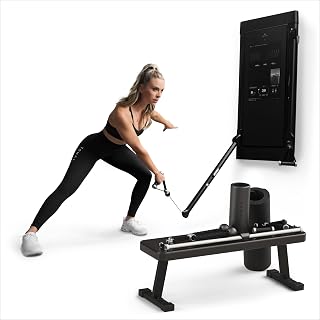
Tonal 2 Smart Home Gym System: AI-Powered Strength Training & Smart Cable Machine with Wall-Mounted Design, 250 lbs Adaptive Resistance, Expert Coaching, Accessory Bundle, & Pro Installation Included
Digital-weight arms turn a wall panel into a full strength gym with auto-adjusting resistance.
Echelon Reflect 50" Smart Fitness Mirror
A slim 50-inch mirror that leans or mounts almost anywhere and runs Echelon's huge live class library.
Tempo Move
Uses your phone's camera plus a dumbbell-storing cabinet for AI form feedback without a giant screen.
ProForm Vue
Mirror display bundled with dumbbells and a storage rack, running iFIT's global class catalogue.
Forme Studio Lift
A furniture-grade mirror with fold-out resistance arms and genuine live personal training options.
Get the best tech deals in your inbox
Join the BytePlaza newsletter for hand-picked gadget deals and new buying guides. No spam, unsubscribe anytime.
Related reads

Smart Electric Toothbrushes 2026: Is App Coaching Worth It?
We compared smart electric toothbrushes for 2026 on pressure sensors, brush modes and app coaching — plus which features are actually worth paying extra for.
Pet Cameras in 2026: Treat Tossers vs Plain Watchers
Treat-tossing or plain monitoring? We compare the best pet camera 2026 options on subscription costs, app features, and owner-reported reliability.
Smart Ovens in 2026: Which Countertop Camera Actually Earns Its Keep
Looking for the best smart oven in 2026? We compare app-connected countertop ovens on capacity, probe cooking, built-in cameras and hidden subscription costs.