Sleep Trackers in 2026: Ring, Band or Under-Mattress Mat?
We compared the best sleep tracker options for 2026 — Oura Ring 4, Whoop, RingConn Gen 2 and Withings Sleep — on accuracy, subscriptions and useful data.
Reader-supported: we may earn a commission from links on this page, at no extra cost to you. It never affects our picks. Learn more.
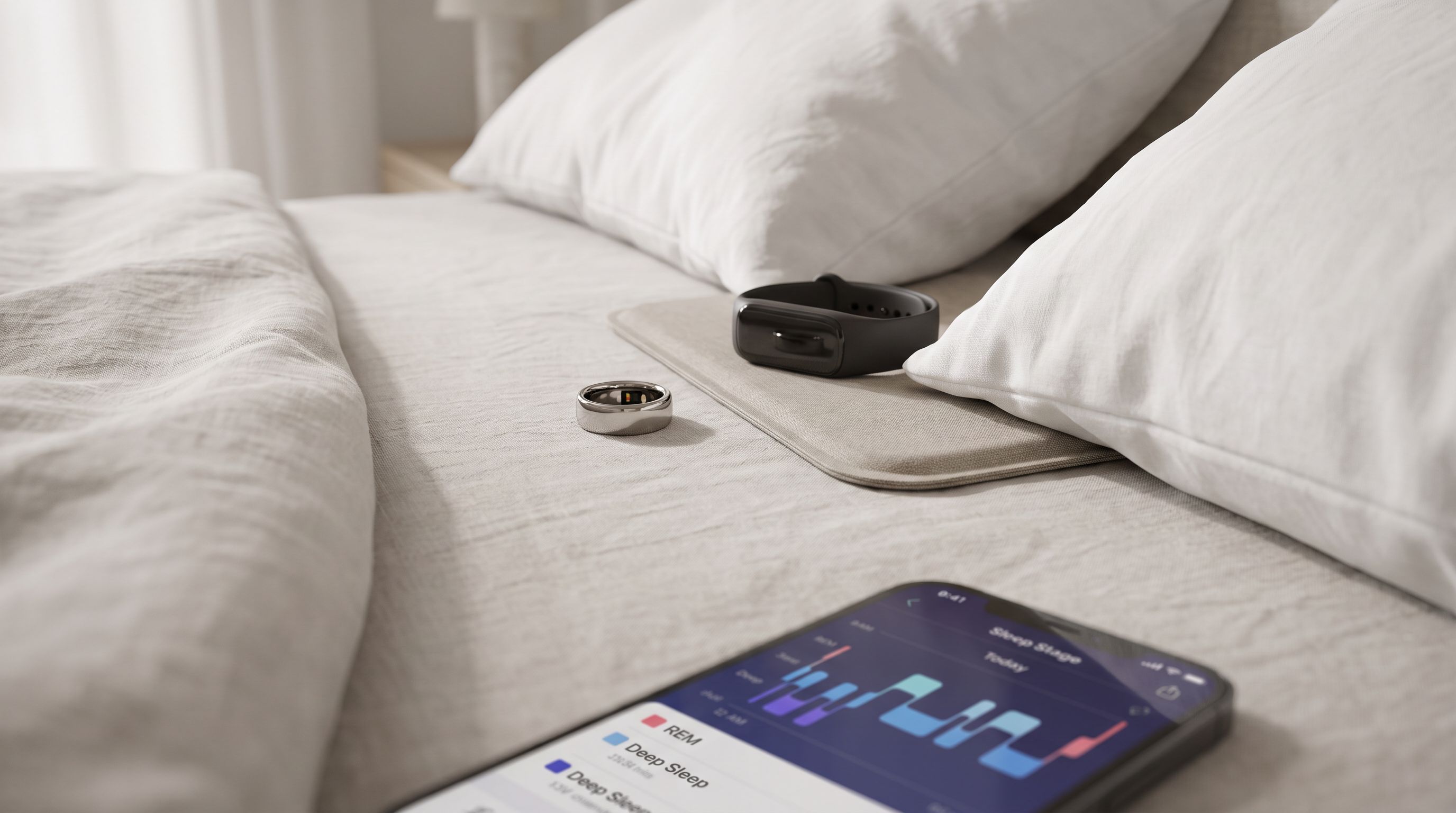
Sleep tracking has quietly split into three camps: rings you wear on a finger, bands you wear on a wrist, and sensor mats that live under your mattress and touch you not at all. They measure broadly the same things — how long you slept, roughly which stages you cycled through, your heart rate and breathing overnight — but they disagree more often than the marketing suggests, and they charge for the privilege in very different ways.
We compared the leading 2026 options on four things that actually matter: how close they get to lab-grade sleep staging, whether you'll wear them every night, what the subscription really costs you in flexibility, and — most importantly — whether the data gives you anything you can act on.
The short version
If you want the best sleep tracker overall and don't mind a subscription, the Oura Ring 4 is still the one to beat; it's the consensus top pick across Wirecutter, CNET and most long-term reviewers. If subscriptions are a dealbreaker, RingConn Gen 2 delivers most of the same picture for a one-time payment. If you hate wearing anything to bed, the Withings Sleep Analyzer slides under the mattress and forgets you exist. And if sleep is really a proxy for training recovery, Whoop 5.0 frames the same data around strain and readiness.
 Best for recovery and training load · Whoop 5.0 — Check price on Amazon →
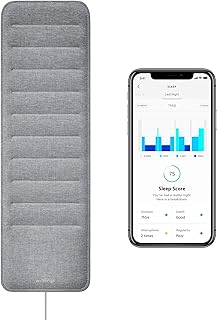 Best under-mattress mat · Withings Sleep Analyzer — Check price on Amazon →
 Best without a subscription · RingConn Gen 2 — Check price on Amazon →
 Best overall · Oura Ring 4 — Check price on Amazon →
How accurate are these things, really?
Be realistic about the ceiling. The gold standard is polysomnography — a sleep lab wiring your scalp, eyes and chin. Consumer wearables infer sleep from movement, heart rate, heart-rate variability and skin temperature. Independent validation studies consistently show modern wearables are good at total sleep time and sleep/wake detection (often within 20–30 minutes of lab results) and considerably weaker at distinguishing light, deep and REM sleep. Deep sleep in particular is where devices diverge most from each other and from the lab.
The practical takeaway: treat nightly stage percentages as a rough trend, not a diagnosis. Where these devices genuinely earn their keep is in the patterns over weeks — the alcohol nights, the late-caffeine nights, the room-too-warm nights that show up as elevated resting heart rate and fragmented sleep.
Finger vs wrist vs mattress
- Rings sit on the finger's palmar arteries, which produce a cleaner PPG signal than the back of the wrist, and they're less affected by loose straps. Most reviewers find rings the most comfortable option for sleep, though they can be awkward with hand-heavy gym work.
- Wrist bands are the most versatile — they double as watches, workout trackers and notification hubs — but strap tightness and tattoos affect optical readings, and some people simply won't wear a watch to bed.
- Under-mattress mats use ballistocardiography (measuring the tiny mechanical forces of your heartbeat and breathing through the mattress). Nothing to charge, nothing to wear, and they're the best of the three at detecting snoring and breathing disturbances. The trade-off: they only work in that bed, and a restless partner or pet can muddy the signal.
Comparison at a glance
| Device | Type | Subscription | Battery | Standout strength | Main limitation |
|---|---|---|---|---|---|
| Oura Ring 4 | Smart ring | Required for full data | Multi-day (roughly a week) | Best-in-class sleep staging, readiness and temperature trends | Ongoing fee; sizing kit needed |
| RingConn Gen 2 | Smart ring | None | Around 10 days, plus charging case | Full features with zero recurring cost; apnea-risk screening | Smaller app ecosystem and community |
| Withings Sleep Analyzer | Under-mattress mat | None | Mains powered | Snoring and breathing-disturbance detection, nothing worn | Bed-specific; no daytime data |
| Whoop 5.0 | Screenless band | Membership-based | Multi-day, wireless pack | Recovery, strain and HRV framing for athletes | No screen; device is bundled into the membership |
| Fitbit Charge 6 | Wrist band | Optional Premium | About a week | Cheapest credible sleep score, plus GPS and workouts | Deeper insights sit behind Premium |
 Best budget band · Fitbit Charge 6 — Check price on Amazon →
The picks in detail
Oura Ring 4 — best overall
Oura remains the reference point because it does the boring things well: it stays on, it charges quickly, and its sleep staging tracks closest to lab comparisons among mainstream consumer devices. The Ring 4's redesigned sensor layout improved signal quality over Gen 3, and the app's Sleep Score and Readiness Score are the clearest translation of raw data into "should I push today or take it easy."
Nighttime skin-temperature trending is a genuine differentiator — it flags illness and cycle changes days before you'd notice them subjectively. The catch is the membership: without it, you get little more than basic scores. Budget for it as an ongoing cost, not a one-off.
RingConn Gen 2 — best without a subscription
The strongest argument against Oura is arithmetic: several years of membership fees buy a lot of hardware. RingConn Gen 2 answers that directly with sleep staging, HRV, SpO2, resting heart rate and a sleep-apnea risk screening feature — all with no recurring fee. Battery life is a highlight at roughly ten days, and the charging case extends that dramatically for travel.
Reviewers consistently find its sleep-duration tracking close to Oura's, with more variance in stage breakdown. If you mainly want "how long and how well did I sleep, trending over months," it's the best value in the category.
Withings Sleep Analyzer — best if you won't wear anything
Some people simply cannot sleep with a device on. The Sleep Analyzer is a thin pad that goes under the mattress at chest height, plugs into mains power, and syncs automatically — no charging, no wearing, no remembering. Its snoring detection and breathing-disturbance index are the most useful outputs here; if you've ever wondered whether you should raise sleep apnea with a doctor, this is the consumer device most likely to give you something worth showing them.
It won't track your steps and it won't follow you to a hotel, but for pure bedroom-only sleep data it's the least intrusive option available.
Whoop 5.0 — best for training recovery
Whoop's pitch isn't really "sleep tracker," it's "recovery system that happens to measure sleep very carefully." The screenless band is unobtrusive overnight, HRV and resting heart rate tracking are well regarded, and the sleep coach recommends bedtimes against your accumulated strain and sleep debt. Wirecutter rates it alongside Oura for accuracy.
It's membership-based by design — the hardware comes with the plan — so it makes most sense if you'll use the daytime training data too. As a pure sleep device, it's overkill.
Fitbit Charge 6 — best budget band
If you want to dip a toe in without committing to a smart-ring sizing kit or a monthly fee, the Charge 6 gives you a nightly sleep score, sleep-stage estimates, SpO2 and resting heart rate at a fraction of the cost. Basic sleep data is free; the richer breakdowns and long-range trends sit behind Fitbit Premium. Comfort is decent, though a wrist band is the most likely of these to end up in a drawer after a month.
What data actually changes your night?
After all the metrics, only a handful reliably lead to behaviour change:
- Sleep consistency — going to bed and waking at similar times moves scores more than almost anything else. Every device here tracks it.
- Resting heart rate curve — if your RHR doesn't drop and settle in the first few hours, look at alcohol, late meals and room temperature.
- Breathing disturbances / snoring — the one metric that can send you to a doctor for a real diagnosis. Strongest on the Withings mat.
- Overnight temperature deviation — a practical early warning for illness (Oura leads here).
Everything else — precise REM minutes, deep-sleep percentages, single-night scores — is interesting but rarely actionable. Buy the device you'll wear or install every night, not the one with the longest spec sheet.
FAQ
Is a ring more accurate than a watch for sleep? Generally yes for the optical signal, because the finger gives cleaner blood-flow readings than the wrist and rings don't shift with a loose strap. The gap is modest for total sleep time and larger for stage detection.
Do I need a subscription to get useful sleep data? No. RingConn Gen 2 and Withings Sleep Analyzer are fully functional without one, and Fitbit's basic sleep tracking is free. Subscriptions mostly buy trend analysis, coaching and longer data history.
Can these devices diagnose sleep apnea? No consumer tracker diagnoses apnea. Some — including RingConn Gen 2 and the Withings Sleep Analyzer — screen for signs of breathing disturbance and can prompt a conversation with a clinician, which is where an actual diagnosis happens.
Will an under-mattress mat work if I share a bed? Usually, yes — it's positioned on your side of the bed and tuned to the nearest body. A very restless partner or a pet sleeping on your side can introduce noise, so results are less reliable than a worn device in busy beds.
How long before the data is meaningful? Give it two to four weeks. Single nights are noisy; the value is in baselines and deviations from them.
Our picks
OURA Ring 4 Smart Ring - Silver - Size 9 | Sleep, Activity, Women’s Health, AI Advisor, Up to 8 Days of Battery Life, Size Before You Buy, Android & iOS Compatible
The most refined sleep data on the market, in a form factor you actually forget you're wearing.
RingConn Gen 2 Smart Ring - Sleep Apnea Monitoring(Silver, Size 10) | No APP Subscription, 12-Day Battery Life, Stress/Heart Rate/Women's Health Tracker, Android & iOS Compatible
Full sleep staging, apnea-risk screening and ~10-day battery with no monthly fee.
Withings Sleep - Sleep Tracking Pad Under The Mattress With Sleep Cycle Analysis
Slides under the mattress and tracks sleep, snoring and breathing disturbances with nothing on your body.
WHOOP 5.0/MG Activity Tracker - 12 Month Membership - Health and Fitness Wearable – 24/7 Activity and Sleep Tracker, Personalized Coaching, Menstrual Cycle Insights – 14+ Days Battery Life
Screenless band built around strain and recovery, with strong overnight physiological tracking.
Google Fitbit Charge 6 - Fitness Tracker - Obsidian/Black | Google apps, heart rate on exercise equipment, 3-month Google Health Premium membership included, small and large bands
Cheap, comfortable and gives a usable sleep score plus SpO2 without a wearable-shaped commitment.
Get the best tech deals in your inbox
Join the BytePlaza newsletter for hand-picked gadget deals and new buying guides. No spam, unsubscribe anytime.
Related reads
Smart Sleep Masks in 2026: 4 Picks That Earn Their Batteries
We compared smart sleep masks for 2026 on blackout fit, built-in audio, sunrise wake light and travel comfort — plus when a plain silk mask beats a smart one.
Golf Watches in 2026: 5 GPS Picks That Actually Earn Their Place
Which golf watch should you buy in 2026? We compare Garmin, Shot Scope and Coros on course databases, shot tracking, subscriptions and battery life.
Smart Scales for Athletes in 2026: 4 Segmental Picks
Segmental smart scales measure each limb separately. We compared the best options for athletes in 2026 on accuracy, electrode count, app data and multi-user support.