Running Smartwatches in 2026: 5 GPS Picks That Deliver
We compared the best running smartwatch options for 2026 on GPS accuracy, battery life and training metrics — from budget Garmins to the Apple Watch Ultra 3.
Reader-supported: we may earn a commission from links on this page, at no extra cost to you. It never affects our picks. Learn more.
Buying a running watch in 2026 is easier than it's ever been — and more confusing. Almost every model now has a bright AMOLED screen, a heart-rate sensor and some form of "readiness" score. What actually separates them is narrower: how accurately the GPS tracks a twisting city route, how long the battery lasts with the screen on, and whether the training data is useful or just decorative.
We compared the leading running-focused watches using manufacturer specs, independent review testing (The Run Testers, Runner's World, GearLab and others), and verified owner feedback, then ranked them by who they're actually best for. No physical testing on our end — just careful cross-referencing of the people who do it at scale.
How we ranked running watches
Four things decide whether a running watch is worth wearing:
- GPS accuracy. In 2026 the meaningful dividing line is multiband (dual-frequency, L1+L5) GNSS versus single-band. Multiband makes a real difference in cities with tall buildings, under tree cover and in canyons. On an open track or park loop, single-band is usually fine.
- Battery life in the mode you'll actually use. Manufacturers quote best-case numbers. What matters is GPS-on battery with your chosen accuracy mode, plus whether always-on display is enabled. Expect real-world figures below the headline claim.
- Training metrics that change what you do. Training load, recovery time, VO2 max estimates and race predictors are only useful if they're consistent enough to trend over weeks. Garmin and Coros have the deepest ecosystems here; Apple has closed a lot of ground.
- Wearability. A watch you take off between runs stops collecting sleep and HRV data, which is where a lot of the value lives.
The comparison at a glance
| Watch | Best for | GPS | Display | Standout strength | Trade-off |
|---|---|---|---|---|---|
| Garmin Forerunner 970 | Serious runners & triathletes | Multiband GNSS | AMOLED, sapphire | Deepest training suite, maps, flashlight | Flagship pricing |
| Garmin Forerunner 265 | Most runners | Multiband GNSS | AMOLED | Best balance of features and cost | No onboard maps |
| Apple Watch Ultra 3 | iPhone users who run | Multiband GNSS | LTPO OLED | Smartwatch features + safety tools | Shortest battery of the group |
| Coros Pace Pro | Long-distance & ultra | Multiband GNSS | AMOLED | Very long battery for the weight | Smaller app ecosystem |
| Garmin Forerunner 165 | Beginners | Single-band GPS | AMOLED | Core Garmin metrics, low entry cost | Less GPS precision in cities |
 Budget pick · Garmin Forerunner 165 — Check price on Amazon →
 Best battery life for the money · Coros Pace Pro — Check price on Amazon →
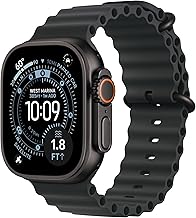 Best smartwatch for runners · Apple Watch Ultra 3 — Check price on Amazon →
 Best value · Garmin Forerunner 265 — Check price on Amazon →
 Best overall · Garmin Forerunner 970 — Check price on Amazon →
Best overall: Garmin Forerunner 970
The Garmin Forerunner 970 is the watch most reviewers land on when they're allowed to ignore price. Runner's World calls it the best running watch currently available, and GearLab ranks it first for accuracy and battery among GPS watches. It's the top of Garmin's running line rather than its rugged line, so you get a titanium bezel and sapphire lens without the bulk of a Fenix.
What justifies it: multiband GNSS, full-colour onboard maps with routing, running dynamics without a separate pod, ECG, a built-in LED flashlight (genuinely useful for pre-dawn runs), and Garmin's complete training stack — training readiness, acute load, race predictions and post-run suggested workouts.
Buy it if you're marathon training, racing triathlons, or you want maps on the wrist. If you mostly do a 10K loop from your front door three times a week, you're paying for headroom you won't use.
Best value: Garmin Forerunner 265
The Garmin Forerunner 265 remains the most frequently recommended running watch for regular runners in 2026, and for good reason. It has the same AMOLED screen quality and dual-frequency GPS as watches costing considerably more, plus training readiness, HRV status, daily suggested workouts and Garmin's full recovery picture.
What you give up versus the 970: no onboard maps (breadcrumb navigation only), no ECG or flashlight, and a plastic bezel instead of titanium. For road running and structured training, none of those change your workout. Owner feedback consistently flags battery life as strong for an AMOLED watch, especially if you leave always-on display off.
It's the pick we'd give to someone running four or five times a week who wants one watch for the next three or four years.
Best smartwatch for runners: Apple Watch Ultra 3
If your phone is an iPhone and you want a watch, not a running computer, the Apple Watch Ultra 3 is the strongest option. The Run Testers put it at the top of their 2026 list, and Apple has steadily improved the running-specific side: precision dual-frequency GPS, custom workouts, running form metrics (ground contact time, vertical oscillation, stride length), Race Route, and a training load feature that finally lets you trend effort over time.
The rest of the package is what nothing else matches — cellular independence from your phone, a genuinely excellent display, crash and fall detection, an emergency siren, dive-rated water resistance, and the entire watchOS app library including Strava, Runna and TrainingPeaks.
The trade-off is honest and unavoidable: battery life measured in days, not weeks. For most runners doing daily hour-long sessions that's fine with a nightly or every-other-night charge. For a 12-hour ultra with music and always-on display, it's tighter than a Garmin or Coros.
Best battery per gram: Coros Pace Pro
The Coros Pace Pro is the answer for runners who prioritise endurance and lightness. It pairs an AMOLED touchscreen with dual-frequency GNSS and delivers multi-day GPS battery in a body that's noticeably lighter than most rivals — a combination that used to require choosing two out of three.
Coros's training platform (EvoLab) has matured into something serious: base fitness, load, marathon level, and an increasingly good structured workout builder. Its offline maps and route navigation are strong for the category, and the app is clean. The catch is ecosystem breadth — fewer third-party integrations and a smaller accessory world than Garmin. If you already live in Strava and TrainingPeaks, that barely matters.
Ultra and trail runners in particular should shortlist this alongside Garmin's Fenix and Coros's own Apex line.
Budget pick: Garmin Forerunner 165
Starting out? The Garmin Forerunner 165 gives you the AMOLED screen, Garmin Connect, structured workouts, recovery time, VO2 max and training effect — the metrics beginners and intermediate runners actually use — without flagship spend. It uses single-band GPS, so expect slightly noisier tracks in dense downtown areas or heavy tree cover, and it lacks training readiness and running dynamics.
For parkrun, 5K to half-marathon training, and general fitness tracking, it's more watch than most new runners need in year one.
Which tier should you buy?
- New to running, under ~40km a week: Forerunner 165. Upgrade later if you outgrow it.
- Consistent training, road races, want one watch for years: Forerunner 265. The default answer.
- Marathon/triathlon, want maps and every metric: Forerunner 970.
- iPhone owner who wants a smartwatch first: Apple Watch Ultra 3.
- Ultra distance, trail, or you hate charging: Coros Pace Pro.
One last note on accuracy: no wrist optical heart-rate sensor is reliable during intervals or in cold weather. If your training is built around heart-rate zones, pair any of these with a chest strap. It's the single cheapest upgrade to data quality you can make.
FAQ
Do I really need multiband GPS? Only if you run in cities with tall buildings, dense forest or steep valleys. On open roads, tracks and parks, single-band GPS from a modern watch is accurate enough that the difference is within normal run-to-run variation.
How much battery life do I actually need? For most runners, anything with 15+ hours of GPS tracking is plenty — that's several weeks of typical training between charges. Ultra runners and multi-day hikers should look at Coros or Garmin's higher-tier models with 30+ hour GPS modes.
Is an Apple Watch good enough for marathon training? Yes, with caveats. The Ultra 3 has the sensors, the GPS and the workout tools. You'll charge it more often, and Garmin's long-term load and readiness analysis is still more mature. Many runners pair an Apple Watch with Runna or a coaching app to fill the gap.
Should I buy last year's model? Often, yes. Garmin's previous-generation Forerunners keep receiving firmware updates and drop substantially in price once a successor lands. Check that the model you're considering still gets software support before committing.
Do these watches work with Strava? All of them sync to Strava automatically via their companion apps — Garmin Connect, Apple Health, or the Coros app.
Our picks
Garmin Forerunner 970 Running Smartwatch (Carbon Gray) with P-Bank Bundle | Premium GPS Running & Triathlon Smartwatch AMOLED Display Enhanced Navigation 47mm
The most complete running watch in 2026: multiband GPS, AMOLED, ECG, flashlight and deep training tools.
Garmin Forerunner 265 Running Smartwatch, Colorful AMOLED Display, Training Metrics and Recovery Insights, Black and Powder Gray (Renewed)
AMOLED screen, dual-frequency GPS and Garmin's core training metrics without the flagship extras.
Apple Watch Ultra 3 [GPS + Cellular 49mm] Running & Multisport Smartwatch w/Rugged Titanium Case w/Black Ocean Band. Satellite Communications, Advanced Health & Fitness Tracking
Apple's most runner-focused watch: precision dual-frequency GPS plus full smartwatch and safety features.
COROS PACE 4 Ultralight Sport GPS Watch for Run - Black Crystal, Aluminum | 1.2" AMOLED Touchscreen,19 days of daily use, Voice Control, Advanced Training Tools, Accurate GPS, Heart Rate Monitor
AMOLED display, dual-frequency GPS and multi-day battery in a genuinely light package.
Garmin Forerunner 165 GPS Running Smartwatch with AMOLED Display, Bundle with Deco Essentials Charging Dock, 3 Silicone Dust Covers & USB Type C Charging Sync Cable, 11 Days Battery Life, 010-02863-20
An AMOLED entry-level Forerunner with the training basics most new runners actually use.
Get the best tech deals in your inbox
Join the BytePlaza newsletter for hand-picked gadget deals and new buying guides. No spam, unsubscribe anytime.
Related reads
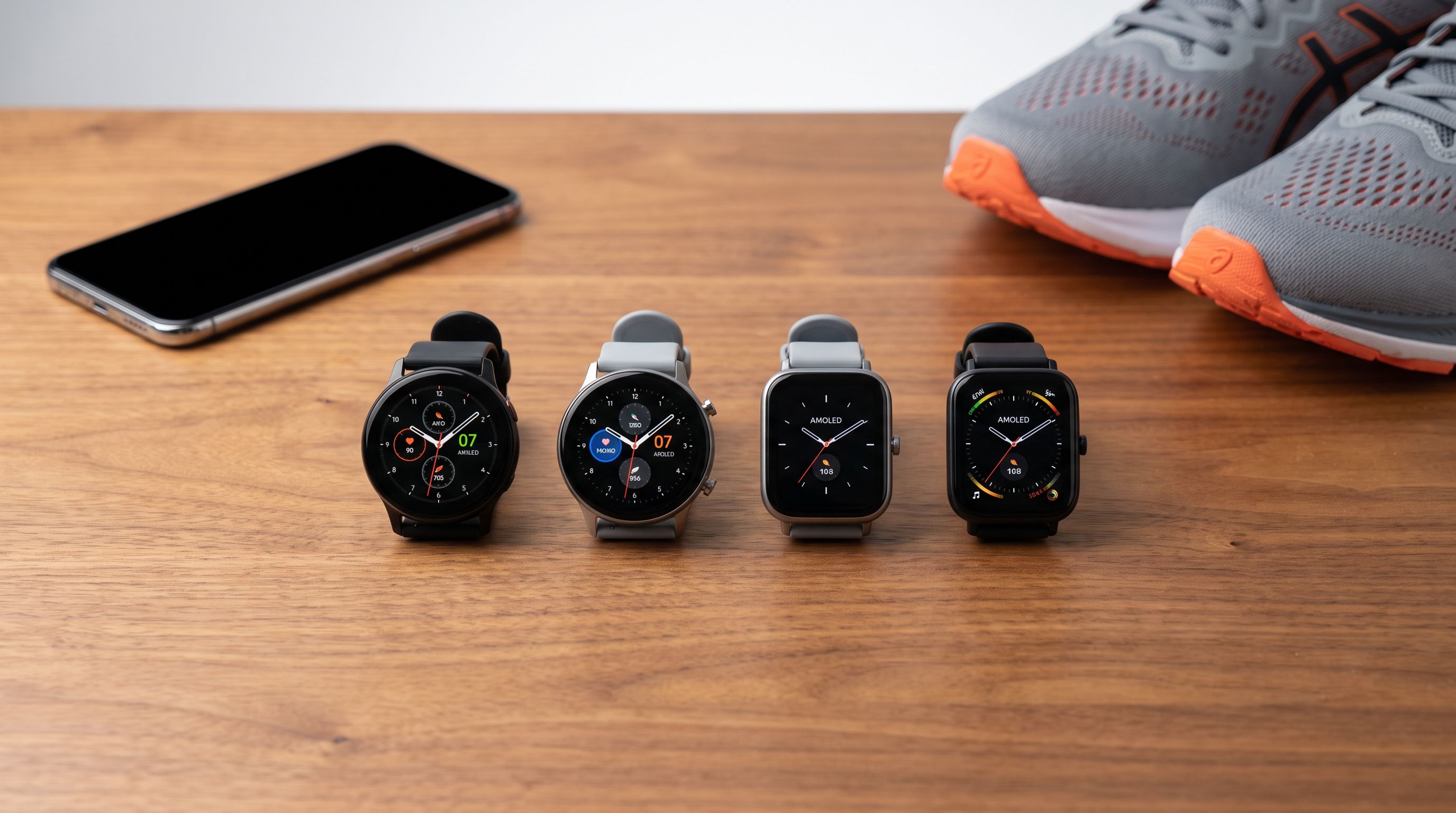
Smartwatches Under $200 in 2026: 5 That Skip the Compromises
The best smartwatch under 200 in 2026: AMOLED screens, built-in GPS and multi-day battery. We compared Amazfit, Galaxy Watch, Garmin and Apple Watch SE picks.

Wearable Health Tech in 2026: The Sensors Coming Next
Smart rings and watches are gaining AI, not new sensors. Here's what's actually shipping in 2026, what's still unproven, and what's worth buying now.
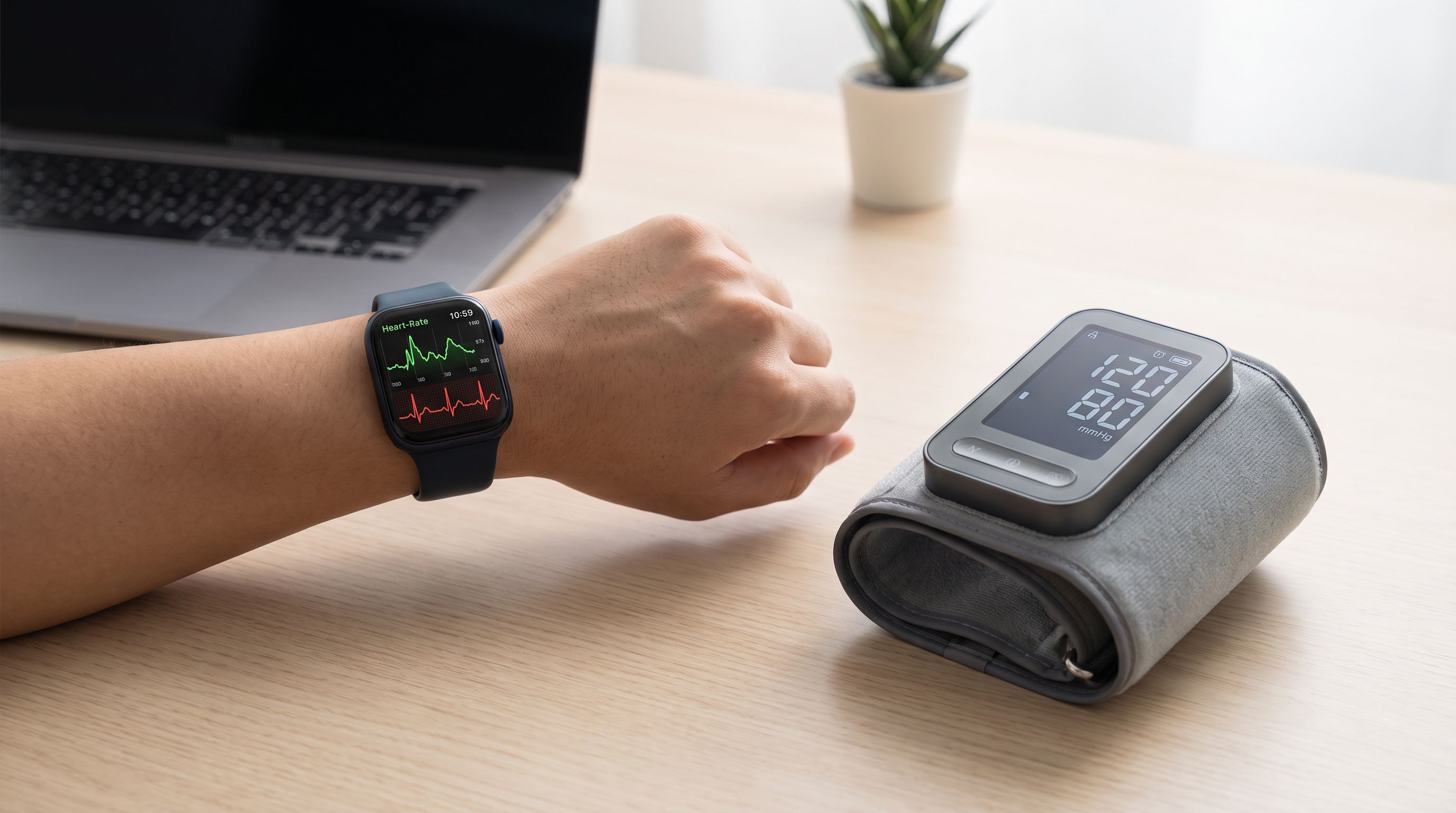
Blood Pressure Smartwatches in 2026: What's Real, What's Hype
Which blood pressure smartwatch actually works in 2026? We separate FDA-cleared BP and ECG features from marketing hype, with 5 researched picks.