eSIM Phone 2026: Should Travelers Ditch the SIM Tray?
eSIM-only phones are now mainstream. Here's what travelers need to know in 2026 about dual-eSIM, roaming plans, regional quirks — plus four handsets worth buying.
Reader-supported: we may earn a commission from links on this page, at no extra cost to you. It never affects our picks. Learn more.
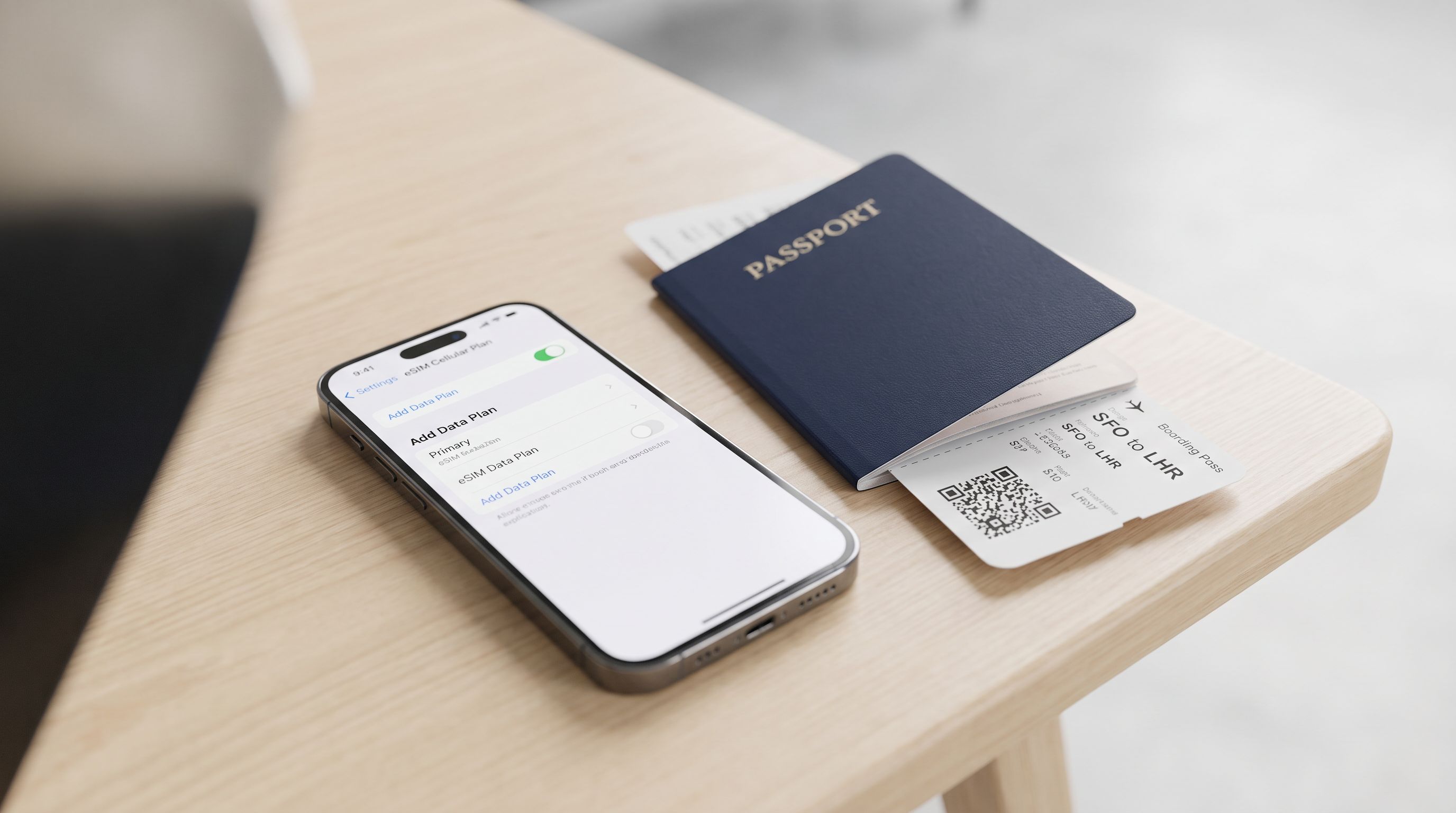
The SIM tray is disappearing, and travelers are the people most affected. In 2026, every major phone launch supports eSIM, several Apple models ship with no SIM tray at all in a growing list of countries, and the practical question has shifted from "does my phone support eSIM?" to "can I actually get a working data plan where I'm going?"
BytePlaza researched manufacturer specs, carrier documentation, and owner reports to put together this guide. We don't physically test handsets — what follows is a comparison and a set of recommendations based on verified capabilities and widely reported real-world behaviour.
What "eSIM-only" actually means in 2026
An eSIM is a chip soldered into the phone that can be reprogrammed with a carrier profile downloaded over the internet or scanned from a QR code. An eSIM-only phone has no removable SIM tray, so every line you use must be provisioned digitally.
Three things matter for travelers:
- How many eSIM profiles the phone can store. Modern iPhones and flagship Android handsets typically store eight or more profiles, so you can keep plans from past trips dormant and reactivate them.
- How many can be active at once. Most phones are "dual SIM dual standby" — two lines live simultaneously (usually home number + travel data). A few Android models allow more stored but still only two active.
- Regional variation. This is the big one. Apple's iPhone 17 Air is eSIM-only worldwide. The iPhone 17, 17 Pro, 17 Pro Max and 17e are eSIM-only in the US, Canada, Japan and a growing list of other markets — but retain a physical tray elsewhere. Samsung and Google generally still ship a hybrid tray in most regions.
If you buy a US-market iPhone and travel to a country where the local prepaid shop only hands out plastic SIMs, you need a plan B. That's the core tension of eSIM-only life.
The hardware is solved. The plans are the bottleneck.
Several 2026 roundups make the same point and it's correct: hardware compatibility is no longer the constraint. Virtually every phone released in the last three years handles eSIM. What varies enormously is whether a usable plan exists at your destination.
Broadly you have four options:
- Your home carrier's roaming add-on. Simplest, often the most expensive, but keeps your number live for calls and SMS (important for two-factor codes).
- A global travel eSIM provider (Airalo, Holafly, Nomad, Saily and similar). You buy a regional or country data bundle in an app, install before you fly, and it activates on landing. Data-only in most cases — no local phone number.
- A local carrier eSIM. Cheapest per gigabyte and gives you a local number, but availability is patchy. Many carriers in Latin America, Southeast Asia and Africa still don't sell eSIM to prepaid walk-ins, and some require in-store ID verification that assumes a physical card.
- A multi-country MVNO that supports eSIM natively (Google Fi, some UK and EU operators) — good if your home plan already includes generous roaming.
The practical setup most frequent travelers land on: home number as a stored eSIM with data switched off, plus a travel data eSIM set as the default data line. iOS and recent Android builds let you label lines and pick per-line defaults for data, calls and iMessage, which makes this painless.
How the contenders compare
| Phone | SIM tray? | Travel strengths | Watch out for |
|---|---|---|---|
| Apple iPhone 17 Pro | eSIM-only in US/Canada/Japan + others; tray elsewhere | Stores many profiles, excellent dual-line UI, broadest carrier certification | US units can't take a local plastic SIM anywhere |
| Samsung Galaxy S26 Ultra | Hybrid tray in most regions + eSIM | Flexibility: eSIM abroad, physical SIM where eSIM isn't sold | Tray availability varies by market — check the model code |
| Google Pixel 10a | eSIM + physical SIM in most regions | Straightforward eSIM transfer, clean Android, good value | Band support is strong but not quite flagship-wide |
| Apple iPhone 17e | Follows regional iPhone 17 policy | Cheapest route into Apple's eSIM ecosystem | Single-camera, fewer premium extras |
| Samsung Galaxy A56 5G | eSIM + physical SIM | Budget-friendly backup-SIM insurance | Slower updates and charging than flagships |
 Budget Android pick · Samsung Galaxy A56 5G — Check price on Amazon →
 Budget iPhone pick · Apple iPhone 17e — Check price on Amazon →
 Best value · Google Pixel 10a — Check price on Amazon →
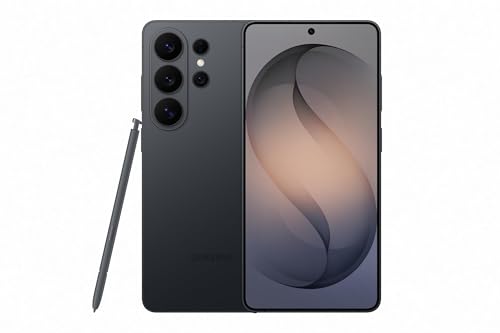 Best Android flagship · Samsung Galaxy S26 Ultra — Check price on Amazon →
 Best overall for travelers · Apple iPhone 17 Pro — Check price on Amazon →
Our picks
Best overall for travelers: Apple iPhone 17 Pro
If you cross borders often, the Apple iPhone 17 Pro is the most frictionless option. Apple has the deepest list of carriers that support eSIM Quick Transfer (moving your line to a new phone without a QR code), and iOS makes switching default data lines a two-tap job. Storing a stack of dormant travel eSIMs and reactivating the right one on arrival works reliably. The caveat is unavoidable: a US-bought unit has no tray, full stop.
Best Android flagship: Samsung Galaxy S26 Ultra
The Samsung Galaxy S26 Ultra is our pick for anyone who wants eSIM convenience without burning the lifeboat. In most regions it keeps a physical SIM slot alongside eSIM, which means you can run a travel eSIM day-to-day and still buy a local plastic SIM in countries where eSIM isn't offered to tourists. Band support is about as broad as Android gets, and the camera system is a genuine reason to travel with it.
Best value: Google Pixel 10a
The Google Pixel 10a hits the sweet spot for travelers who don't need a flagship. Android's eSIM transfer flow on Pixel is among the cleanest, dual-SIM handling is mature, and you get years of security updates. It's the phone to recommend to someone who wants eSIM to just work without spending flagship money.
Budget picks: Apple iPhone 17e and Samsung Galaxy A56 5G
The Apple iPhone 17e brings full eSIM support and iOS's dual-line tools at the bottom of Apple's current range — a sensible choice if you're already in the Apple ecosystem. On the Android side, the Samsung Galaxy A56 5G pairs eSIM with a physical slot, which is exactly the insurance policy budget-conscious travelers heading to eSIM-patchy regions want.
A pre-flight eSIM checklist
- Install before you fly. Most travel eSIMs need an internet connection to download the profile. Do it on home Wi-Fi.
- Check your phone is carrier-unlocked. A locked handset can refuse third-party eSIM profiles even if the hardware supports them.
- Keep your home line installed but with data roaming off. You'll still receive SMS two-factor codes if your carrier supports roaming SMS.
- Screenshot or email yourself the QR codes. If you wipe the phone, some providers only allow one install.
- Verify APN settings if data doesn't come up after landing — a surprising share of "broken eSIM" reports are just an unset APN.
- Have a backup. A second travel eSIM provider, or on a hybrid phone, cash for a local SIM.
So, should you ditch the tray?
If you travel mostly within North America, Europe, Japan, Australia or the Gulf, eSIM-only is genuinely fine in 2026 — often better, because you can activate a plan from the airport lounge instead of hunting for a kiosk. If your travel skews toward regions where prepaid eSIM is still rare, or you need a local number for ride-hailing and delivery apps, buy a phone that still has a tray. The Samsung Galaxy S26 Ultra and Google Pixel 10a both give you eSIM convenience with a physical fallback, and that optionality costs you nothing.
FAQ
Can I use two eSIMs at the same time? Yes on virtually all current flagships and most mid-rangers — typically two active lines from a larger pool of stored profiles. Only one is usually the default for data at a time.
What happens to my eSIM if I lose or wipe my phone? It depends on the provider. Carrier eSIMs can generally be re-issued through support. Some travel eSIM bundles are single-install, so deleting the profile can forfeit the remaining data. Always check the reinstall policy before you delete anything.
Do eSIMs use more battery than physical SIMs? No meaningfully. Running two active lines can slightly increase drain because the modem maintains two network registrations, but the difference is small compared to screen and 5G usage.
Can I keep my phone number when switching to an eSIM-only phone? Yes. Your number lives with your carrier, not the SIM. Most major carriers support transferring the line to an eSIM profile in-app or via eSIM Quick Transfer during setup.
Is 5G supported on travel eSIMs? Increasingly, yes, but it depends on the local host network the provider partners with. Many budget travel eSIMs are capped at 4G/LTE — check the plan details if speed matters.
Our picks
Apple iPhone 17 Pro, US Version, 512GB, eSIM, Deep Blue- Unlocked (Renewed)
Multiple stored eSIMs, dual-eSIM active, and the widest carrier support of any phone — eSIM-only in the US.
Samsung Galaxy S26 Ultra, Unlocked Android Smartphone, 256GB, Black | Privacy Display, Galaxy AI, AI Camera, Super Fast Charging 3.0, Durable Battery, 2026, US 1 Year Warranty
Keeps a physical SIM slot in most regions while adding eSIM, so it works anywhere a travel plan does.
Google Pixel 10a - 30+ Hours Battery, Camera Coach, Gemini - Obsidian 128GB | Gemini Live, durable design, 7 years of Pixel Drops, 30+ hour battery, Camera Coach, Call Screen, Car Crash Detection
Clean eSIM transfer tools and solid global band support at a mid-range price.
Apple iPhone 17e, 256GB, Black - Unlocked (Renewed)
The cheapest current iPhone with full eSIM support and iOS's excellent dual-line handling.
SAMSUNG Galaxy A56 5G 2025 with AI | 256GB, 8GB, Dual SIM | 6.7" 120Hz AMOLED, Water Resistant, Android 15 | International Model Factory Unlocked for T-Mobile, Global | 25W Charger Bundle (Graphite)
Affordable eSIM + physical SIM combo that's ideal if you still need a local prepaid card.
Get the best tech deals in your inbox
Join the BytePlaza newsletter for hand-picked gadget deals and new buying guides. No spam, unsubscribe anytime.
Related reads
Phones Under $250 in 2026: 5 Picks That Actually Last
We compared sub-$250 phones on update promises, 5G band support and battery life. Here are the best budget phones under $250 in 2026 for backups and kids.
Budget Phones That Actually Last: Best Battery Life Phone 2026
Which mid-range phone really lasts all day? We ranked 2026's best battery life phones under flagship money by capacity, charge speed and real owner screen-on time.
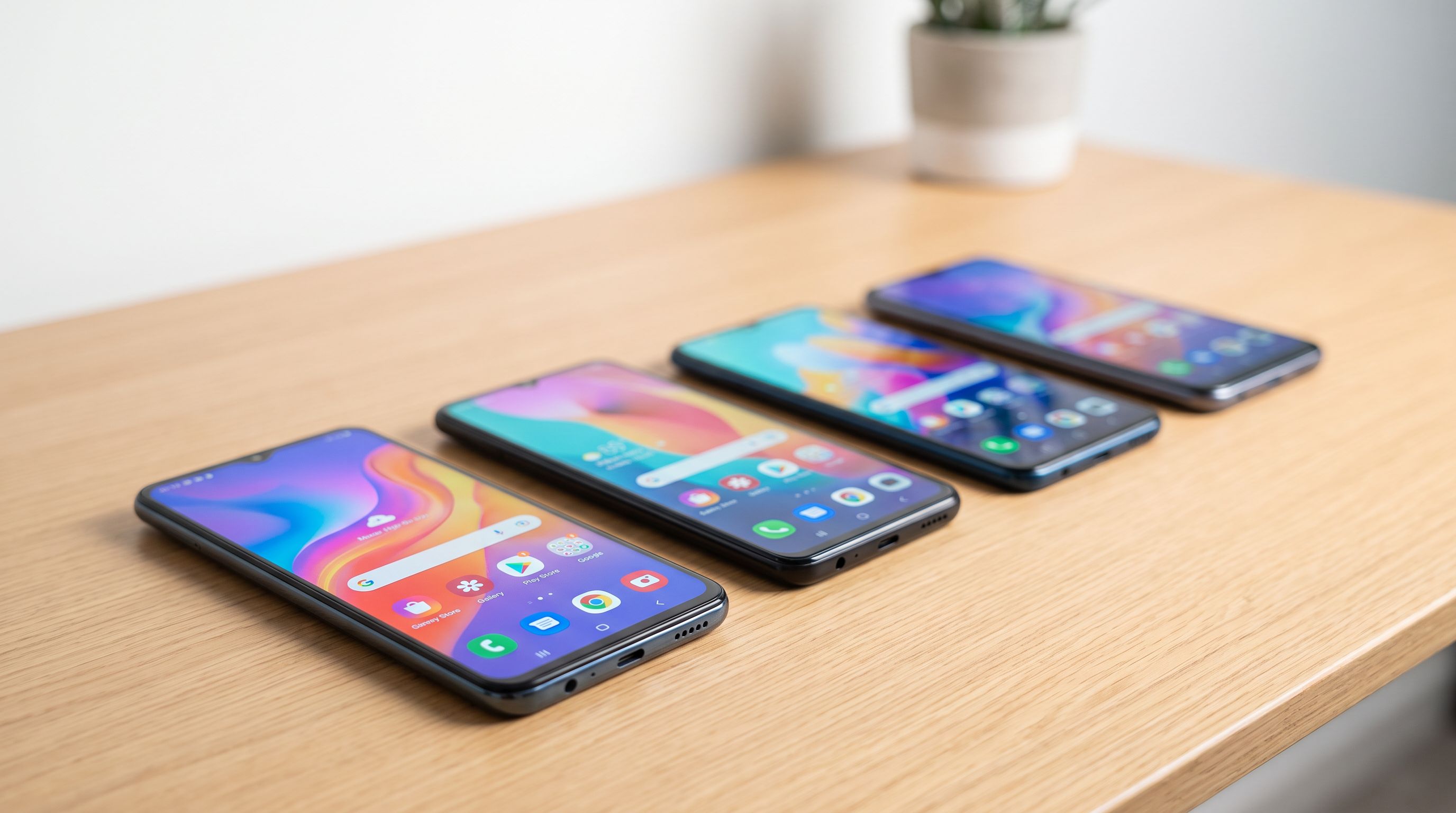
Best Budget 5G Phones Under $400 in 2026
The best budget 5G phones under $400 in 2026, evaluated against what actually matters: battery life, update support, camera quality and real-world speed.