Bone Conduction vs Clip-On Earbuds: Which Wins for Runners in 2026?
Bone conduction vs clip on earbuds for running in 2026: how they compare on fit, sweat resistance, sound leakage and awareness — plus four picks worth buying.
Reader-supported: we may earn a commission from links on this page, at no extra cost to you. It never affects our picks. Learn more.
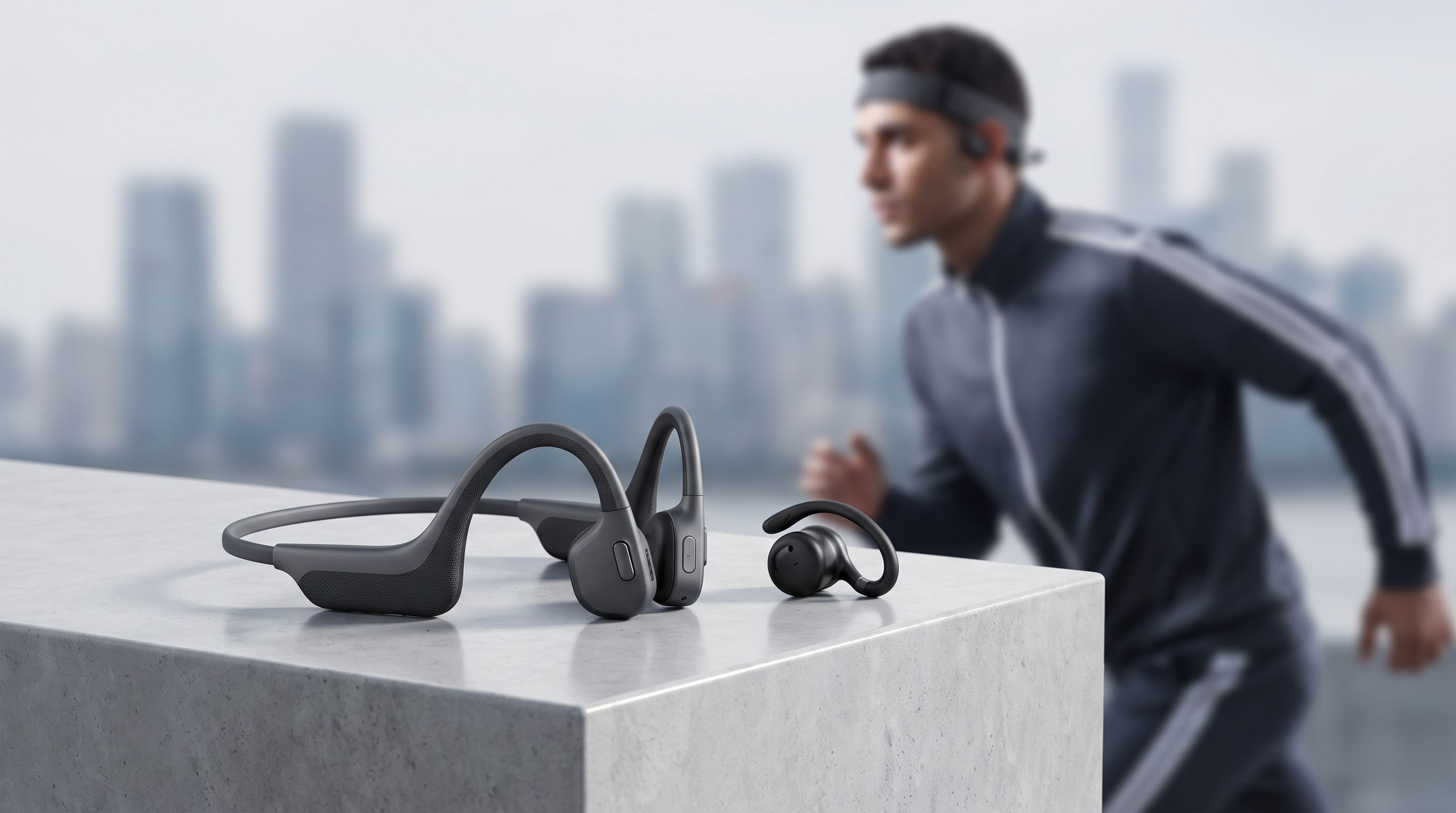
If you run outdoors, the argument for open-ear audio is simple: you hear the car, the cyclist, the dog, and your own breathing. The harder question in 2026 isn't whether to go open-ear — it's which kind. Bone conduction headphones sit on your cheekbones and vibrate sound into your skull. Clip-on (and ear-hook) open earbuds hover a tiny speaker just outside your ear canal and beam sound in through the air.
Both leave your ears unblocked. They feel completely different on a run, and they fail in completely different ways. We compared current models against manufacturer specs, independent review testing, and verified owner feedback to sort out which design suits which runner.
The 30-second answer
- Choose bone conduction if you run in traffic, sweat heavily, wear sunglasses and a cap, or want the most secure "it will not move" fit. Shokz OpenRun Pro 2 is the default recommendation.
- Choose clip-on earbuds if sound quality matters as much as safety, you also use them for calls and commuting, or a headband across the back of your neck bothers you. Shokz OpenFit 2 and Bose Ultra Open Earbuds lead here.
- Choose neither if you need bass-heavy motivation music at low volume in a noisy environment. No open-ear design does that well.
 Premium pick · Bose Ultra Open Earbuds — Check price on Amazon →
 Best clip-style all-rounder · Shokz OpenFit 2 — Check price on Amazon →
 Best overall for runners · Shokz OpenRun Pro 2 — Check price on Amazon →
How each design actually works
Bone conduction
Transducers press lightly against the bone in front of your ear and send vibration through your skull to the cochlea. Your ear canal stays completely empty. The wraparound titanium band means the whole thing is one piece — nothing to drop on the trail, nothing to lose in the grass.
The trade-off is physics. Skull vibration is a poor bass delivery mechanism, so low frequencies are thin. Push the volume and you get a tickly buzz on your cheekbones instead of more bass. Newer models fight back: the OpenRun Pro 2 pairs bone conduction for mids and highs with a small air-conduction driver aimed at the ear for low end, which reviewers consistently flag as a meaningful improvement over previous Shokz generations.
Clip-on and ear-hook open earbuds
These use a conventional miniature speaker positioned near the canal opening. Some clamp to the ear ridge like a cuff (Bose Ultra Open Earbuds), others hook over the top of the ear with a soft silicone arm (Shokz OpenFit 2). Because they're air conduction, they sound much closer to normal earbuds — wider staging, actual bass presence, better vocal clarity.
The catch: each earbud is a separate object that can shift, fall, or wander off. And because the sound is travelling through air, more of it escapes to people near you.
Head-to-head: what matters on a run
| Factor | Bone conduction | Clip-on / ear-hook open buds |
|---|---|---|
| Situational awareness | Excellent — ear canal fully open | Very good — canal open, but the driver sits closer |
| Sound quality | Thin bass, clear mids; best-in-class models add an air driver | Noticeably fuller, closer to regular earbuds |
| Fit security | Outstanding; one-piece band, no drop risk | Good to very good, but each bud is losable |
| Sweat resistance | Typically the highest ratings in the category, some fully waterproof | Usually splash/sweat rated, rarely swim-safe |
| Sound leakage | Moderate; louder volumes buzz outward | Higher at volume — bystanders can hear your playlist |
| Glasses + cap + ponytail | Band can conflict with hats and ponytails | Generally fewer conflicts; some clash with glasses arms |
| Comfort over 90+ minutes | Slight clamp pressure on cheekbones | Very light, but ear-cuff pressure builds for some ears |
| Charging case | None on most models — charges directly | Yes, so top-ups mid-day are easy |
| Best for | Road running, traffic, trails, swimming | Long runs, mixed use, calls, gym |
Fit is the deciding factor for most people
Bone conduction wins on absolute security. The band's tension is what holds it in place, and that tension doesn't care how much you sweat. It's also the only category where you genuinely never think about losing a bud.
But that same band is the main complaint. It sits across the nape of your neck, which fights with high ponytails, some hat brims, and hydration vest straps. If you've bounced off bone conduction before for that reason, clip-ons solve it — the OpenFit 2's flexible hook and the Bose cuff both leave the back of your head free.
Conversely, clip-ons vary wildly by ear shape. Cartilage thickness decides whether a cuff feels invisible or pinchy after an hour. There's no way around trying them, so buy from somewhere with a real returns window.
Sweat and rain
Look at the IP rating, not the marketing copy. Most credible running models in both camps are rated for sweat and rain. Bone conduction still owns the top end: the Shokz OpenSwim Pro is built for full submersion and stores music onboard, which makes it the pick for pool sessions, open-water swims, and anyone who wants to run without carrying a phone at all.
 Best for pools and no-phone runs · Shokz OpenSwim Pro — Check price on Amazon →
Clip-ons generally stop at splash resistance. That's fine for a rainy 10K; it's not fine for a triathlon brick.
Sound leakage — the etiquette issue
Both designs leak. Clip-ons leak more, because they're firing audio into open air near your ear. At jogging volume outdoors, nobody notices. On a quiet gym floor or a treadmill next to someone, they will. Bone conduction leaks as a thinner, buzzier sound at high volume.
Practical rule: if you'll use these indoors around other people, keep expectations modest for both, and lean bone conduction for the least conspicuous leakage profile.
Which one for which runner
Road runner in city traffic. Bone conduction. Awareness is the whole point, and the OpenRun Pro 2's added bass means you're not sacrificing as much as you used to.
Marathon trainer doing 2–3 hour long runs. Clip-on. Sound quality fatigue is real over that duration, and the OpenFit 2 or Bose Ultra Open Earbuds are far easier to listen to for hours.
Trail runner in a vest and cap. Bone conduction if you can live with the band under your cap; clip-on if you can't. Trail terrain rewards fit security, but hydration vests and neckbands don't always cooperate.
One pair for running, commuting and calls. Clip-on, without much debate. The Bose Ultra Open Earbuds and OpenFit 2 both handle calls and casual listening far better than any bone conduction set. The Anker Soundcore AeroClip covers the same brief for less if you're not chasing the top-tier sound.
 Budget pick · Anker Soundcore AeroClip — Check price on Amazon →
Swimmer or phone-free runner. OpenSwim Pro. Onboard storage and waterproofing put it in a category of one.
Buying checklist
- Check the IP rating against your worst weather, not your average day.
- Confirm battery life covers your longest session plus a margin — cold weather shortens it.
- Test fit with your actual gear: sunglasses, cap, ponytail, vest.
- Try multi-point pairing if you switch between phone and watch.
- Keep the returns window in mind. Open-ear fit is personal in a way that in-ears aren't.
FAQ
Are bone conduction headphones safer than clip-on earbuds for running? Both leave your ear canal open, so both are far safer than sealed earbuds. Bone conduction has a slight edge because nothing at all sits near the canal opening, but the difference is small compared with the gap between either design and noise-cancelling buds.
Do clip-on earbuds fall out while running? Well-designed ones rarely do — the cuff or hook grips the ear ridge rather than relying on canal friction. But each bud is a separate item, so the worst case is losing one. Bone conduction removes that risk entirely.
Does bone conduction damage your hearing? It still delivers sound energy to the cochlea, so the usual volume-and-duration rules apply. The advantage is that you don't need to crank the volume to overcome outside noise, which tends to reduce total exposure in practice.
Can I wear either with glasses? Bone conduction bands and glasses arms occasionally overlap near the temple; most people adjust and forget about it. Clip-ons sit lower on the ear and usually clear glasses more easily.
Is the sound good enough for music, or just podcasts? Podcasts and audiobooks are excellent on both. For music, clip-ons are clearly better. Modern hybrids like the OpenRun Pro 2 close the gap but still won't match sealed earbuds for bass.
Our picks
SHOKZ OpenRun Pro 2 Bone Conduction Bluetooth Sport Headphones, Black | Bundle with Reflective Strip;DualPitch premium sound;Open ear awareness; Smart Mic; IP55; 12H battery; Running/Cycling/Hiking
Bone conduction plus a small air-conduction driver adds real bass without blocking your ears.
SHOKZ OpenFit 2+ Open-Ear Earbuds, Black, Dolby Audio,Wireless Charging | Dynamic Sound; Secure Fit and Soft Comfort;48H Playtime with fast charging; IP55 Water-Resistant; Gym/Outdoor/Home Leisure
Fuller, fuller-bodied sound than bone conduction with a light ear-hook fit that stays put on long runs.
Bose Ultra Open Earbuds - Bluetooth Open Ear Earbuds with OpenAudio for Awareness, Clip-On Design for Comfort, Water Resistant, Up to 48 Hrs of Playtime, White Smoke
The most convincing clip-on sound, with a cuff design that barely touches your ear canal.
SHOKZ OpenSwim Pro Open-Ear MP3 Headphones, Grey, IP68 Waterproof, 32GB MP3 | IP68 waterproof; Bluetooth + 32GB MP3 modes; Vivid underwater sound; 9H battery; Swimming/Water sports
Waterproof bone conduction with onboard MP3 storage, so you can leave the phone behind.
Soundcore AeroClip by Anker Open Ear Earbuds, Clip On Earbuds, Open Ring | Ultra-Comfort for Running Workout, Stable, Power Bass, Hi-Res, 32H Playtime, Bluetooth 5.4, IP55 Water-Resistant, Clear Calls
A well-reviewed clip-on that undercuts the premium field without feeling flimsy on the run.
Get the best tech deals in your inbox
Join the BytePlaza newsletter for hand-picked gadget deals and new buying guides. No spam, unsubscribe anytime.
Related reads
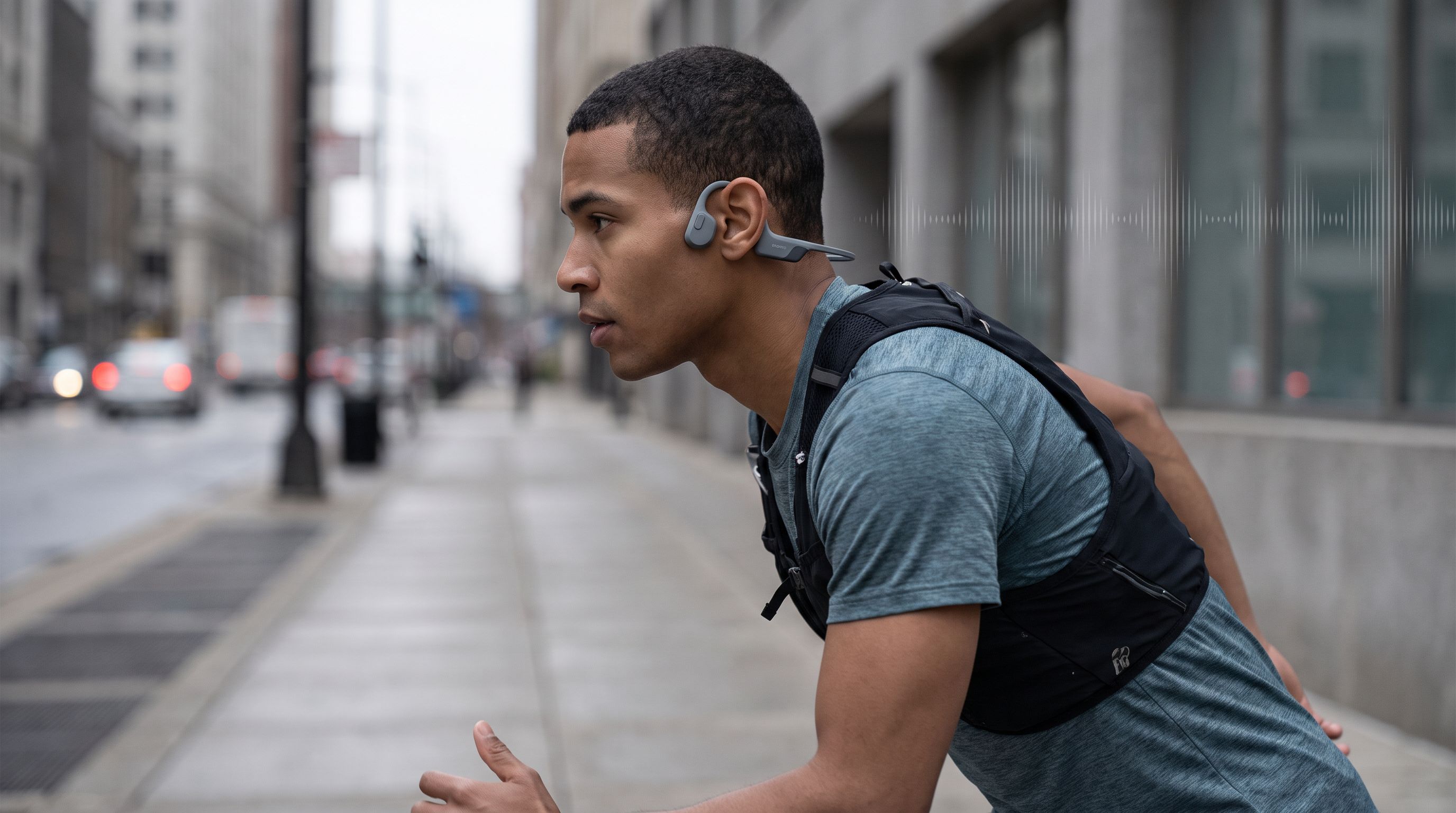
Open-Ear Headphones in 2026: Bone vs Air Conduction
Bone conduction or air conduction? We compare the best open ear headphones for runners and cyclists in 2026, from Shokz OpenRun Pro 2 to Bose Ultra Open.
Auracast Speakers in 2026: What It Actually Changes
Auracast speakers in 2026 explained: what Bluetooth LE Audio broadcast really does, where it works today, and which JBL, Sony and Bose models support it.
Open-Back Headphones Under $300 in 2026: 5 Desk-Ready Picks
The best open back headphones under $300 in 2026, compared on impedance, amp needs and soundstage — from the HiFiMan Sundara to the Sennheiser HD 505 and more.