Best Smart Glasses 2026: Ray-Ban Meta and Rivals
The best smart glasses in 2026, compared: Ray-Ban Meta, Oakley Meta HSTN, Amazon Echo Frames and Solos AirGo. Audio, cameras, AI, privacy and battery explained.
Reader-supported: we may earn a commission from links on this page, at no extra cost to you. It never affects our picks. Learn more.
Smart glasses finally stopped being a punchline. The category that flopped with Google Glass in 2013 has quietly become one of the fastest-growing wearable segments, and in 2026 the question is no longer "would anyone wear these?" but "which pair suits how you actually live?"
The honest summary: today's best smart glasses are audio devices with a camera and an assistant bolted on. Almost none of them put a display in front of your eye. If you're expecting augmented-reality overlays, you're shopping for a different (and much more expensive, much bulkier) product category. What you're really buying here is hands-free capture, open-ear sound, and a voice assistant that can see what you're looking at.
Here's how the main options compare, and what to scrutinise before you buy.
What smart glasses actually do in 2026
Strip away marketing and there are four functions worth paying for:
- Open-ear audio. Tiny speakers in the temples beam sound toward your ears without blocking them. Great for podcasts, calls and navigation prompts while staying aware of traffic.
- Point-of-view capture. A camera in the corner of the frame shoots short clips and stills from your eyeline. This is the single biggest reason people buy camera glasses — hands-free footage while cooking, climbing, cycling or holding a toddler.
- Voice AI. "Hey Meta, what am I looking at?" style queries where the assistant analyses a frame from the camera and answers out loud. Translation, plant/landmark identification, and quick reminders are the use cases that stick.
- Prescription and lens flexibility. Nearly all of these can be fitted with prescription or transition lenses, which is what turns a gadget into something you wear all day.
What they don't do well: replace your phone, replace real headphones for critical listening, or survive a full day of heavy video recording.
The picks, compared
| Model | Camera | Audio style | Assistant | Best for |
|---|---|---|---|---|
| Ray-Ban Meta Smart Glasses (Gen 2) | Yes | Open-ear speakers, multi-mic array | Meta AI, hands-free | All-round daily wear |
| Oakley Meta HSTN | Yes | Open-ear, tuned louder for outdoors | Meta AI | Running, cycling, sport |
| Amazon Echo Frames (3rd Gen) | No | Open-ear, directional | Alexa | Privacy-conscious, office wear |
| Solos AirGo 3 | No | Open-ear, swappable front frames | ChatGPT-based assistant | Budget and style flexibility |
 Best overall · Meta Ray-Ban (Gen 2) Wayfarer Smart AI Glasses — Check price on Amazon →
Specs vary by SKU and firmware; check the current listing for exact figures before you buy.
Ray-Ban Meta Smart Glasses (Gen 2) — best overall
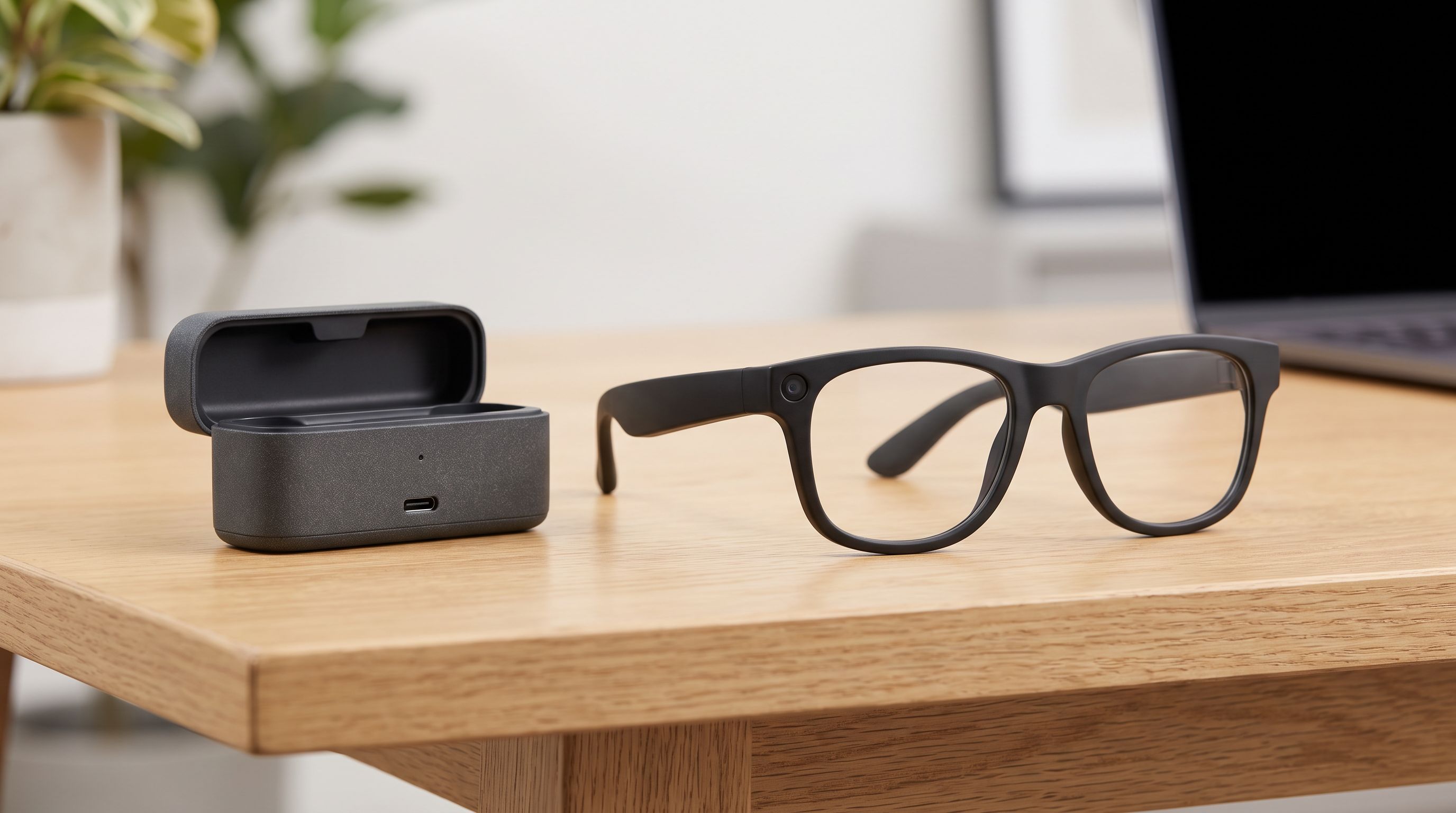
The reason the Ray-Ban Meta Smart Glasses (Gen 2) dominate this category isn't any single spec. It's that EssilorLuxottica knows how to make a frame that looks like a normal pair of Wayfarers or Skylers, and Meta has iterated the software harder than anyone else. Capture quality improved meaningfully over the first generation, the microphone array handles wind and street noise better than you'd expect, and hands-free AI queries now feel closer to instant than awkward.
Practical notes from living with them: the charging case is not optional — it's where most of your battery life actually comes from, so factor its bulk into your bag. Video clips are short by design, which nudges you toward capturing moments rather than filming events. And the capture LED is deliberately obvious, which matters for the privacy conversation below.
Where they fall down: bass is thin (physics, not laziness), and they slide around during hard exercise.
Oakley Meta HSTN — best for sport
If you run, ride or ski, the Oakley Meta HSTN is the more sensible version of the same platform. It's the identical Meta AI and camera experience in a wraparound frame with better grip, and the speakers are tuned to project harder so you can still hear a podcast at 25 km/h. Battery life is rated longer than the Ray-Ban line, which is exactly what long sessions need.
The trade-off is that it looks like sports eyewear. Nobody's wearing HSTN to a client meeting. If you want one pair for both, the Ray-Bans are the compromise; if you want the right tool for training, this is it.
Amazon Echo Frames (3rd Gen) — best camera-free option
Not everyone wants a camera on their face. The Amazon Echo Frames (3rd Gen) deliberately omit one, which solves the biggest social friction point in the category. What's left is a lightweight audio frame with genuinely good directional speakers, Alexa on tap, and the ability to take calls without visible earbuds.
These are the pair to buy if you work in an office, a school, a hospital or a lab where a head-mounted camera is a non-starter — or if you simply find the idea uncomfortable. They're also the easiest to justify to the people around you, which is worth more than a spec sheet.
Solos AirGo 3 — budget pick
Solos AirGo 3 takes a smart angle: the front of the frame detaches, so one pair of electronics-loaded temples works with several styles. Audio is respectable open-ear fare, and the assistant integration leans on ChatGPT for translation and conversational queries. There's no camera, so it lands in the same "socially easy" bucket as the Echo Frames, usually at a friendlier entry point.
Expect a less refined app experience than Meta's, and less consistent assistant latency. For a first pair, or a second pair you don't mind knocking about, it's a reasonable entry.
Audio quality: manage your expectations
Open-ear audio is a compromise by definition. Sound leaks outward, and there's no seal to reinforce bass. Every pair here — Meta, Amazon, Solos — sounds thin next to even mid-range earbuds.
What to judge instead:
- Speech clarity. Podcasts, audiobooks, navigation and calls are the real workload. All four picks handle these well.
- Leakage at volume. In a quiet train carriage, your neighbour will hear something. Test at 50–60% volume, which is where you'll live.
- Wind handling on calls. This is where the multi-microphone arrays on the Meta glasses pull ahead.
If you want music you can feel, keep a pair of earbuds in your pocket. Smart glasses are for ambient listening.
Privacy: the part reviews skip
A camera on your face is a social contract, not just a feature. Three things to internalise before you buy:
- Learn the indicator. Camera glasses use a visible LED during capture. Never cover, tape over or modify it — beyond being rude, it's illegal in some jurisdictions.
- Know local law. Recording rules differ sharply between countries and even states, especially for audio. Gyms, changing rooms, schools and many workplaces ban head-mounted cameras outright.
- Check what leaves the device. AI queries that "look" at your surroundings send an image to a server. Review the app's data controls, voice-recording retention and history-deletion settings on day one, then re-check after major firmware updates.
If any of that gives you pause, buy the Echo Frames or Solos AirGo 3 and enjoy 80% of the usefulness with none of the awkwardness.
Battery life: read the fine print
Manufacturer battery claims for smart glasses assume light, mixed use. Heavy camera work drains a pair far faster than the headline figure suggests — recording video is the most power-hungry thing these devices do, followed by AI queries, then plain audio playback.
The realistic model is: the glasses are the battery, the case is the fuel tank. Expect to top up in the case a couple of times across a full day of active use. If you'll be away from a charger, the Oakley Meta HSTN has the most headroom of the camera-equipped options, and camera-free frames like the Echo Frames go considerably longer simply because they're doing less.
How to choose
- Want one pair for everything? Ray-Ban Meta Smart Glasses (Gen 2).
- Training, riding, outdoors? Oakley Meta HSTN.
- No camera, no arguments? Amazon Echo Frames (3rd Gen).
- Testing the water on a budget? Solos AirGo 3.
And whichever you pick: if you wear prescription lenses, price the lens fitting before you commit. It's frequently the difference between a gadget in a drawer and a pair you wear every day.
FAQ
Do any of these have a display in the lens? Not the mainstream models covered here. Display-equipped smart glasses exist but are heavier, pricier and far more limited in frame choice. For most buyers in 2026, audio-and-camera glasses are the practical option.
Can I get prescription lenses in smart glasses? Yes — all four picks support prescription lenses through the manufacturer or a partnered optician, though very strong prescriptions and some progressive lens types can be restricted. Confirm your prescription range is supported before ordering.
Are smart glasses waterproof? Most carry a splash- or sweat-resistance rating rather than full waterproofing. Sports models are typically the most robust. Don't swim in any of them, and check the specific IP rating on the listing.
How good is the camera compared to a phone? Convenient, not superior. Modern camera glasses shoot sharp, usable clips in good light, but a current flagship phone beats them on low light, stabilisation and dynamic range. You buy glasses for the angle and the hands-free capture, not the image quality.
Will people know I'm recording? They should. All camera glasses use a prominent capture indicator, and it's on you to record considerately — announce it in private settings, and don't record where cameras aren't welcome.
Our picks
Meta Ray-Ban (Gen 2) Wayfarer Smart AI Glasses, Matte Black, Clear Lenses
The most polished mix of camera, open-ear audio and hands-free AI in a frame people actually wear.

Meta Oakley HSTN Smart AI Glasses Black, Clear Lenses
Same Meta AI platform in a wraparound sports frame with louder speakers and longer battery.

BoxWave Cable Compatible with Amazon Echo Frames (3rd Gen) - DirectSync - USB 3.0 A to USB 3.1 Type C, USB C Charge and Sync Cable - 6ft - Black
Alexa in your ears with no camera at all — the easiest smart glasses to wear around other people.

SOLOS AI Smart Glasses | AirGo A5 5th Gen | Hydro 7 Shiny Black | Integrated ChatGPT for Travel and Real Time Translation | Stereo Speakers | Blue Light Blocker | Compatible with iOS and Android
Swappable fronts and solid open-ear audio with ChatGPT-based assistant features, minus the camera.
Get the best tech deals in your inbox
Join the BytePlaza newsletter for hand-picked gadget deals and new buying guides. No spam, unsubscribe anytime.
Related reads
Smart Sleep Masks in 2026: 4 Picks That Earn Their Batteries
We compared smart sleep masks for 2026 on blackout fit, built-in audio, sunrise wake light and travel comfort — plus when a plain silk mask beats a smart one.
OTC Hearing Aid Earbuds in 2026: 5 Picks That Actually Help
Compare the best OTC hearing aids and earbuds for 2026, from AirPods Pro 3's hearing aid mode to self-fitting Sennheiser and budget JLab picks.
Smart Glasses in 2026: The Road to All-Day AR
Smart glasses in 2026 split into audio-first AI, HUD, and viewer categories. Here's what today's glasses actually do, who's shipping, and what's next.